
You can walk into the grocery store in Brooks feeling fine, but by the time you reach the checkout, your legs ache, your calves feel heavy, and you need to lean on the cart or sit down to get relief. Then, after a short rest, you can walk again. If that pattern sounds familiar, you may be dealing with lumbar spinal stenosis, a common condition in adults over 60 that narrows the space around the nerves in your lower back.
The good news is that most people with spinal stenosis do not need surgery. Structured physiotherapy is the first-line treatment, and the research supports it. Reviews of the evidence have found that exercise-based care improves pain and walking ability, and for many people it delivers results comparable to surgery without the risks of an operation. The key is a program built around how stenosis behaves: exercises that gently bend the spine forward, strengthen the core and hips, rebuild walking tolerance in intervals, and improve balance so you stay steady on your feet.
This guide explains spinal stenosis physiotherapy in Brooks in plain language: what spinal stenosis is, why it causes leg pain when you walk, the symptoms to watch for, how a physiotherapist assesses and treats it, the exercises that help most, how long improvement usually takes, the warning signs that need urgent medical care, and when surgery is worth discussing.

Your spine is a stack of bones called vertebrae. Down the middle of that stack runs a tunnel, the spinal canal, which protects the spinal cord and the nerves that branch out to your legs. Spinal stenosis means that tunnel, or the smaller openings where nerves exit the spine, has become narrower than it should be. When the space shrinks, the nerves have less room, and they can become compressed or irritated.
Stenosis most often affects the lower back, called lumbar spinal stenosis, and that is the focus of this guide. It can also affect the neck, where it causes symptoms in the arms, but lumbar stenosis is by far the more common type in the people we see in Brooks.
Stenosis usually develops slowly over years. The most common cause is age-related wear and tear: the discs between the vertebrae lose height, the joints at the back of the spine thicken, and the ligaments that hold the spine together can become thicker and stiffer. Arthritis of the spine is part of this process, and the narrowing often builds alongside the joint changes we cover in our guide to arthritis physiotherapy in Brooks.
Not everyone with a narrow spinal canal has symptoms. Many people have stenosis on a scan and feel nothing at all. Symptoms appear when the narrowing starts to affect the nerves, especially during activities that make the canal even narrower, such as standing and walking with the back arched.
The classic symptom of lumbar spinal stenosis has a name: neurogenic claudication. It describes pain, heaviness, tingling, or weakness in the buttocks and legs that comes on with standing or walking and eases when you sit down or bend forward.
Here is why it happens. When you stand upright or walk, your lower back naturally arches a little, and that arch narrows the spinal canal further. When you sit, lean forward, or bend at the waist, the canal opens up slightly and the nerves get more room. That is why many people with stenosis find they can walk further when pushing a shopping cart, riding a bicycle, or leaning slightly forward, and why standing still in a lineup can be harder than walking itself.
This pattern is different from the leg pain of poor circulation, which usually eases simply by stopping and standing still. With stenosis, standing still often does not help; you need to sit or bend forward. Your physiotherapist will ask about this pattern carefully, because it helps separate stenosis from other causes of leg pain, including sciatica. Our guide to sciatica physiotherapy in Brooks explains how sciatica usually affects one leg in a clear line down the back of the thigh, while stenosis more often affects both legs and is tied to posture and walking distance.
Spinal stenosis symptoms vary from person to person, and they often build gradually. The most common symptoms are:
Because the symptoms overlap with other back and leg problems, a proper assessment matters. Stenosis often travels with general back pain, and the two are managed together. Our guide to physiotherapy for back pain in Brooks explains how back pain of different causes is assessed and treated.
Most spinal stenosis develops slowly and is managed conservatively. But there are warning signs that mean you should seek urgent medical care the same day, because they can signal cauda equina syndrome, a rare but serious compression of the nerves at the base of the spine:
If you notice any of these, go to urgent care or the emergency department straight away. Early treatment protects nerve function. These red flags are uncommon, but knowing them matters, and your physiotherapist will ask about them at every visit.
Spinal stenosis is diagnosed from your story, a hands-on assessment, and imaging only when it is needed.
Your physiotherapist will ask when the leg symptoms started, how far you can walk before they appear, what positions relieve them, and whether you have any numbness, weakness, or changes in bladder or bowel function. Bring a list of medicines you take, and mention any previous back problems, hip or knee issues, or falls. The walking-and-relief pattern is often the strongest clue.
The assessment looks at your whole body, not just your back. Your physiotherapist will check how your spine bends and twists, test the strength of your core, hip, and leg muscles, examine your balance, watch how you walk and change positions, and check the nerves in your legs for changes in sensation, reflexes, and strength. Hip stiffness is common alongside stenosis, because tight hips force the lower back to arch more when you stand, which narrows the canal. Our guide to hip pain physiotherapy in Brooks explains how hip problems are assessed and treated when they contribute to back and leg symptoms.
An X-ray can show bony changes and alignment but does not show the nerves clearly. An MRI shows the spinal canal and nerves in detail and can confirm stenosis, but it is not always needed before starting physiotherapy. Imaging is usually considered when there are red-flag symptoms, significant weakness, unusual findings, or limited progress with conservative care. Many people begin spinal stenosis physiotherapy Brooks clinics offer based on the assessment alone, because the treatment plan is built around your symptoms and function, not the picture alone.
Physiotherapy for spinal stenosis is not a single treatment. It is a structured program that changes as your walking distance and strength improve, built around your goals, whether that is walking the dog, getting through a grocery run without stopping, gardening, or simply standing comfortably at the kitchen counter. Here is what the process looks like at Mission Health in Brooks.
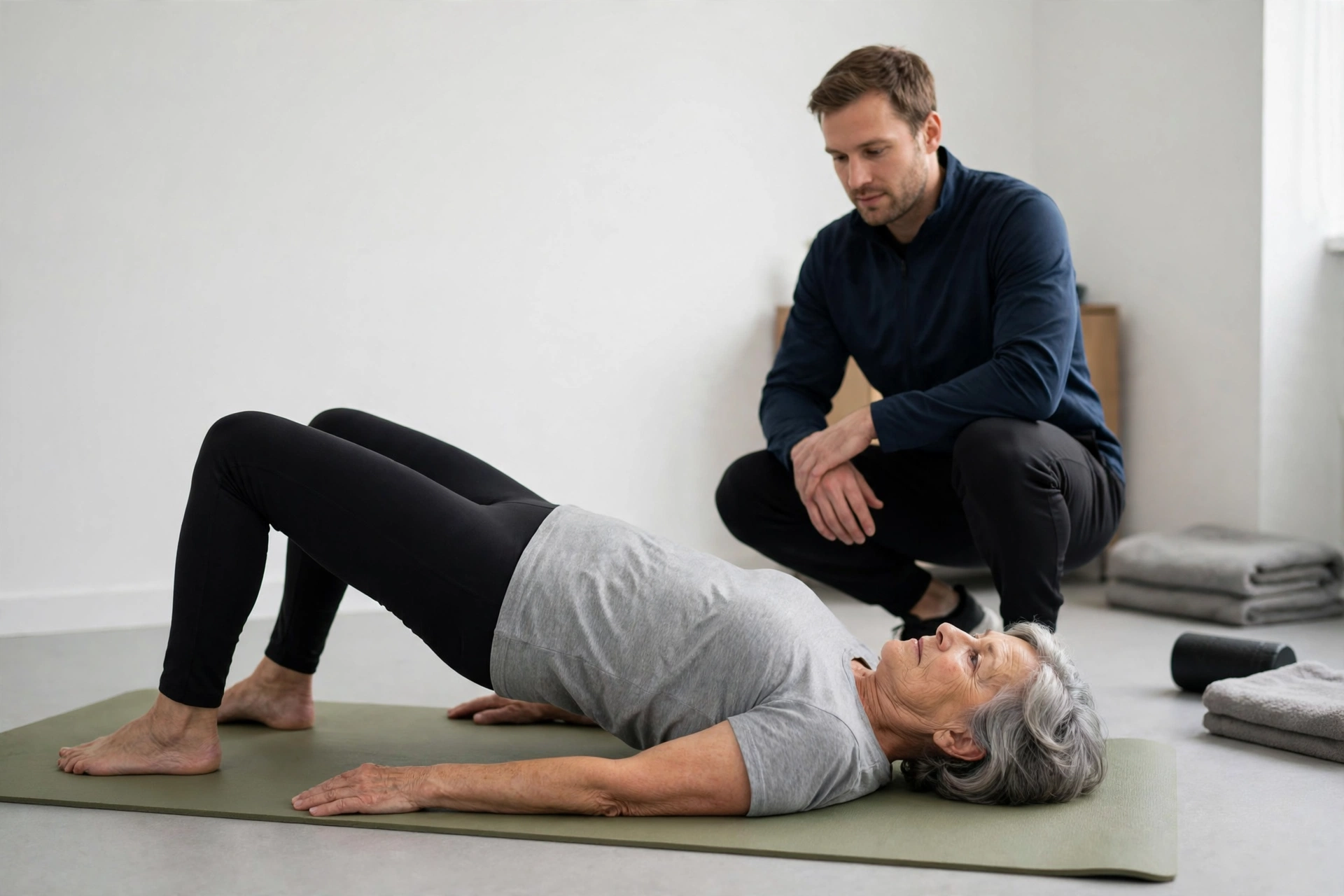
The first session is mostly assessment and planning. Your physiotherapist takes your history, examines your spine, hips, and legs, and sets a baseline: how far you can walk before symptoms start, how strong your legs and core are, how steady your balance is, and which positions relieve your pain. Together you agree on goals that matter to you. You will leave with a home exercise program and clear guidance on how to pace your walking so you stay active without flaring the nerves.
Exercises that gently bend the spine forward are the foundation of stenosis care, because flexion opens the spinal canal and takes pressure off the nerves. These include knee-to-chest stretches, pelvic tilts, and gentle lower-trunk rotations. They are usually comfortable, even relieving, for people with stenosis, unlike back-bending exercises, which tend to provoke symptoms and are generally avoided.
The deep abdominal muscles, the glutes, and the hip muscles act as a support system for the lower back. When they are strong, the pelvis stays in a better position, the back arches less when you stand, and the canal stays more open. Weak glutes are a common finding in stenosis, and they also affect balance and walking. Strengthening progresses in stages, from gentle activation on your back to standing exercises that carry over into daily life.
Staying active is essential, but long, continuous walks often flare stenosis symptoms. The answer is interval walking: walk until symptoms begin, sit or lean forward to relieve them, then walk again. Over weeks, the intervals lengthen and the rests shorten. Stationary cycling is often better tolerated than walking, because the seated, slightly forward position keeps the canal open, and it builds leg strength and endurance without impact.
Leg weakness and altered sensation can make balance worse, and falls are a real risk for seniors with stenosis. Balance training retrains steadiness in a safe, supported way, progressing from standing with support to more challenging tasks as you improve. If dizziness or vertigo is part of your picture, that needs its own assessment, which our guide to vertigo physiotherapy in Brooks explains.
Hands-on treatment can ease stiffness in the lower back and hips and reduce muscle tension, making exercise more comfortable. It is always combined with exercise, because manual therapy alone does not rebuild strength or walking tolerance. Education is just as important: you will learn which positions to favour, how to pace activity through the day, how to set up your chair and bed so your back is not arched for long periods, and how to tell a normal exercise response from a flare-up.
Every program is tailored to the individual, but most spinal stenosis rehabilitation programs follow a similar progression. These are the exercises commonly used. Do not start a new exercise program on your own if you have saddle numbness, bladder or bowel changes, or rapidly worsening leg weakness; get medical care first.
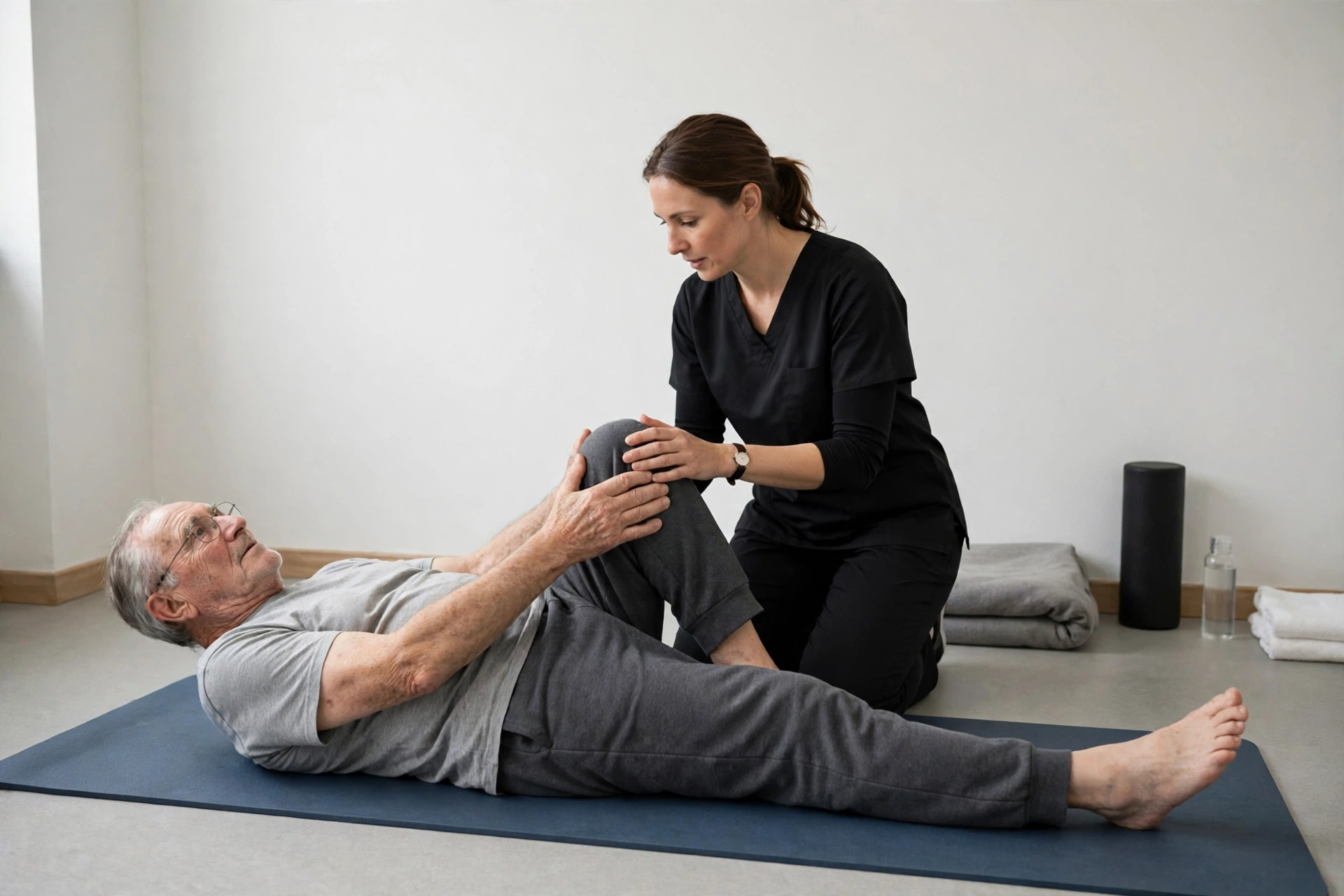
These exercises open the spinal canal and ease stiffness. They are usually the most comfortable starting point.
As the flexion exercises become easy, the program adds strength work for the muscles that support the spine and pelvis.
The final layer rebuilds your walking distance and steadiness for real life.
Your physiotherapist will adjust the exercises, repetitions, and resistance as you progress. Mild muscle effort during exercise is normal, but sharp pain, new numbness, or symptoms that linger well after the session are signs the program needs adjusting.
Spinal stenosis is a long-term condition, and physiotherapy does not widen the canal. What it does is improve how well you function within it: stronger muscles, better posture, longer walking distance, and fewer symptom flare-ups. Improvement is measured in milestones, not dates.
The flexion exercises usually bring early relief, and the core and hip muscles start to switch back on. Walking is broken into intervals, and most people notice that sitting or leaning forward relieves symptoms faster as the program takes hold.
Strength work progresses, balance training becomes more challenging, and walking intervals lengthen. Many people can complete a grocery run or a short community walk with fewer rests by this stage.
By three to six months, people who follow their program consistently usually report their best gains in walking tolerance and daily function. The exercises then become a maintenance routine, two or three sessions a week, because stenosis responds to ongoing activity and worsens with inactivity. If there has been no meaningful improvement after about three months of consistent physiotherapy, the diagnosis and treatment options should be reassessed with your doctor rather than simply pushing the exercises harder.
In Alberta, the funded post-surgical physiotherapy window covers hip and knee replacement surgery. It does not cover conservative care for spinal stenosis. Most people fund spinal stenosis physiotherapy in Brooks through extended health benefits, a workplace plan, a health spending account, or private payment. Check your plan for your annual allowance, whether a doctor’s referral is required, and whether direct billing is available.
Small changes in how you move through the day can make a real difference to your symptoms:
Surgery for spinal stenosis is a last resort, not a first step. Most guidelines recommend a fair trial of conservative care, including physiotherapy, before surgery is discussed, and research comparing exercise therapy with surgery has found similar outcomes for pain and disability in many people.
Surgery may be discussed when symptoms remain severe after several months of consistent conservative care, when leg weakness is progressing, when walking distance is shrinking despite treatment, or when red-flag symptoms such as saddle numbness or bladder changes appear. The common operation is a laminectomy, where the surgeon removes a small part of the bone at the back of the spine to make more room for the nerves. Physiotherapy is valuable on either side of surgery: before it, to build strength and walking tolerance, and after it, to restore function safely.
Yes. The narrowing itself does not reverse, but many people improve significantly with physiotherapy: less pain, longer walking distance, and better balance. Strengthening the core and hips, using flexion-based exercises, and walking in intervals all reduce the pressure on the nerves during daily activity. Surgery is reserved for people whose symptoms remain severe or whose weakness progresses despite conservative care.
Most structured programs run for 8 to 12 weeks, with the best gains in walking tolerance and function often appearing over 3 to 6 months. Because stenosis is a long-term condition, the exercises usually continue as a maintenance routine after formal treatment ends. Your physiotherapist will set milestones based on your walking distance, strength, and balance rather than a fixed calendar.
Leaning forward bends the spine into flexion, which opens the spinal canal slightly and gives the nerves more room. Standing and walking arch the back, which narrows the canal and increases pressure on the nerves. That is why pushing a shopping cart, cycling, or sitting down eases stenosis symptoms, while standing still often does not.
Walking is good, but how you walk matters. Long, continuous walks often flare symptoms, while interval walking, with short rests to sit or lean forward, builds tolerance without a flare. Stationary cycling is also well tolerated by most people with stenosis because the seated, forward-leaning position keeps the canal open.
Avoid exercises that arch the back backward, such as back bends and prone press-ups, heavy lifting with a loaded spine, and high-impact activities like running and jumping. Prolonged standing and sleeping on your stomach also tend to provoke symptoms. Your physiotherapist will guide you on safe alternatives that keep you active.
Spinal stenosis does not have to mean giving up the walks, errands, and activities you enjoy. For many people, a structured physiotherapy program restores walking distance, strength, and confidence, and the evidence supports trying it before considering surgery. Spinal stenosis physiotherapy Brooks patients receive at Mission Health follows that same evidence-based approach. The earlier you start, the sooner the core and hip muscles support your back, the walking intervals lengthen, and daily life feels manageable again.
If your legs ache, tingle, or feel heavy when you walk, and sitting or leaning forward brings relief, book an assessment at Mission Health Physiotherapy in Brooks. Call (403) 794-0111 or email missionhealthpt@gmail.com to book an assessment. The clinic is at 740 Alberta St W, Brooks, AB T1R 1A9. You can usually book without a doctor’s referral, though some insurance plans require one for reimbursement, so check your policy before your first visit.
Your physiotherapist will assess your spine, hips, and legs, explain what is going on in plain language, and build a plan around your goals, whether that is walking further without stopping, standing comfortably in the kitchen, or getting back to the garden.
This article is for general information only and is not a substitute for medical advice. If you develop numbness in the saddle area, new bladder or bowel changes, rapidly worsening leg weakness, or severe pain that does not ease with rest, seek urgent medical care. Always follow the guidance of your physiotherapist or doctor for your individual situation.