
Learn how physiotherapy for back pain in Brooks can help improve movement, strength and recovery. Discover treatment options in this 2026 guide.
Back pain is one of the most common reasons people reduce their physical activity, miss work, avoid exercise, or struggle with everyday movement. It can develop suddenly after lifting something heavy, gradually from repetitive activity, or persist for weeks or months without an obvious single cause.
If you are dealing with persistent discomfort, stiffness, or difficulty moving, Physiotherapy for Back Pain in Brooks may help identify the factors contributing to your symptoms and create a structured plan for recovery.
Back pain is rarely as simple as a weak muscle or a single “out-of-place” structure. Factors such as activity levels, previous injuries, muscle strength, movement patterns, workload, stress, sleep, and overall physical capacity can all influence how back pain develops and persists.
A physiotherapist can assess your individual situation and develop a treatment approach based on your symptoms, goals, and functional limitations.
This 2026 guide explains how physiotherapy may help with back pain, what happens during treatment, which exercises may be recommended, when to seek medical attention, and how to safely return to normal activities.
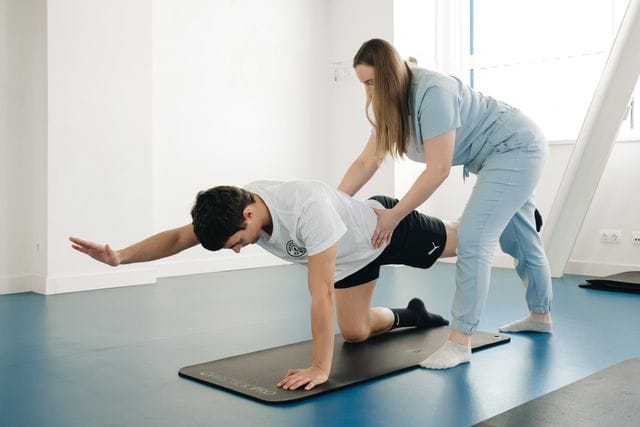
Back pain refers to discomfort or symptoms affecting the spine and surrounding tissues.
It can occur in different areas, including:
Lower back pain is particularly common because the lumbar spine experiences significant loads during everyday activities such as sitting, standing, lifting, bending, walking, and exercising.
Symptoms can vary from person to person.
Some people experience:
The appropriate treatment depends on the underlying cause and the individual’s symptoms.
That is why Physiotherapy for Back Pain in Brooks should begin with a proper assessment rather than immediately choosing a treatment technique.
Back pain can develop for many different reasons.
In some cases, symptoms begin after a specific event such as lifting, falling, or playing sports. In other cases, pain develops gradually.
Potential contributors can include:
However, it is important not to assume that one single factor explains every case.
For example, sitting for long periods does not automatically mean sitting caused your back pain. Similarly, having an MRI finding does not automatically mean that finding is responsible for your symptoms.
A physiotherapy assessment can help identify relevant contributing factors and determine the most appropriate next steps.
You may consider Physiotherapy for Back Pain in Brooks if back pain is:
A physiotherapist can assess your symptoms, movement, strength, and functional capacity.
The goal is not simply to identify where pain is located.
The more useful question is often: What can you currently do, what can you not do, and what needs to improve for you to return to normal activity?
That approach allows rehabilitation to focus on function rather than pain alone.
Physiotherapy for Back Pain in Brooks may involve a combination of different treatment strategies.
Depending on your assessment, treatment may include:
No single treatment works best for everyone.
A person with back pain following a recent sports injury may need a different approach from someone who has experienced recurring lower back pain for several years.
Mission Health Physiotherapy & Sports Rehab can assess musculoskeletal concerns and create individualized rehabilitation plans based on the patient’s needs and goals.
Learn more about Physiotherapy in Brooks and how an individualized assessment can support recovery.
Lower back pain is one of the most common musculoskeletal concerns treated in physiotherapy.
People may experience symptoms when:
The treatment approach depends on the individual’s symptoms and functional limitations.
Physiotherapy for Back Pain in Brooks may focus on improving your ability to gradually tolerate movements and activities that currently cause discomfort.
For example, if bending causes pain, rehabilitation may gradually improve:
The goal is usually not to avoid movement forever.
It is to help you return to movement safely and progressively.
A good physiotherapy assessment should look beyond simply asking where the pain is.
Your physiotherapist may ask about:
The physical assessment may examine:
The physiotherapist can then develop a plan based on your needs.
If appropriate, treatment may also include other Mission Health services, such as Dry Needling in Brooks or Shockwave Therapy in Brooks, depending on the clinical assessment.
Not every patient requires every treatment.
More treatment is not automatically better treatment.
Exercise is commonly included in rehabilitation for many types of back pain.
The specific exercises depend on the person.
A program may focus on improving:
For someone who struggles to lift objects, rehabilitation may gradually include controlled lifting exercises.
Athletes returning to sports may progress toward more demanding, sport-specific movements as their strength and capacity improve.
Meanwhile, someone who has avoided activity because of pain may initially focus on rebuilding confidence and gradually improving tolerance to movement.
The key principle is progression.
Doing too much too quickly can aggravate symptoms. Doing too little for too long can also reduce physical capacity.
A structured rehabilitation plan can help find the appropriate balance.
Short periods of relative rest may sometimes be necessary, particularly after an acute injury.
However, prolonged inactivity is generally not the goal for most non-serious back pain conditions.
Your body is designed to move.
The challenge is determining how much movement is appropriate while symptoms are present.
Physiotherapy for Back Pain in Brooks can help you gradually return to activities such as:
The aim is to progressively build capacity rather than waiting for your body to become perfectly pain-free before moving again.
Many people assume that office work and sitting are automatically responsible for their back pain.
The reality is more complicated.
Sitting itself is not necessarily harmful. However, remaining in one position for long periods can be uncomfortable for some people.
Your back may benefit from:
There is no single perfect sitting posture that every person must maintain throughout the day.
The best position is often one you do not hold continuously for eight hours.
Movement variety matters.
Experiencing back pain does not automatically mean you need to stop exercising.
However, the type and intensity of exercise may need to be modified.
Your physiotherapist may help you determine:
For athletes, a gradual progression is particularly important.
You may be able to perform basic exercises without pain but still lack the capacity required for sprinting, jumping, heavy lifting, or repeated sport-specific movements.
That is why rehabilitation should match your actual goals.
Mission Health also offers Sports Injury Rehabilitation in Brooks for people recovering from sports-related injuries and working toward a safe return to activity.
Sports can place significant physical demands on the spine.
Athletes may develop back symptoms during activities involving:
Back pain in athletes should not automatically be dismissed as ordinary soreness.
Persistent or recurring symptoms deserve assessment.
A sports rehabilitation program may focus on:
The goal should be to prepare the athlete for the demands of their sport.
Being able to walk without pain is not the same as being ready to play a competitive game.
Manual therapy may be included in some physiotherapy treatment plans.
Depending on the condition and therapist’s assessment, this may involve hands-on techniques intended to address mobility or provide short-term symptom relief.
However, manual therapy is generally most useful when integrated with an active rehabilitation plan.
Temporary improvement after a treatment session is useful, but the bigger question is whether you are becoming more capable over time.
A complete plan may combine hands-on treatment with:
The goal is to help you function independently, not create an endless requirement for passive treatment.
For some people, muscular tension or myofascial symptoms may be relevant to their back pain.
In these cases, dry needling may be considered as part of treatment.
Dry needling uses a fine needle to target selected tissues and may help some people with certain musculoskeletal symptoms.
However, it should not be viewed as a complete solution for back pain.
If weakness, reduced capacity, movement limitations, or training errors contribute to the problem, these factors may also need to be addressed.
You can learn more about Dry Needling in Brooks and whether it may be appropriate as part of a broader physiotherapy plan.
Shockwave therapy is another treatment option that may be used for selected musculoskeletal conditions.
It uses acoustic energy delivered through a specialized device.
However, it is not appropriate for every type of back pain.
The right treatment should depend on the diagnosis and clinical findings.
Mission Health offers Shockwave Therapy in Brooks as part of its broader treatment options.
A physiotherapist can determine whether a specific treatment modality is appropriate for your condition.
Back pain is often described according to how long symptoms have been present.
Acute back pain generally refers to symptoms that have developed recently.
It may occur after:
Treatment may focus on managing symptoms while gradually restoring movement and normal activity.
Chronic back pain refers to symptoms that continue over a longer period.
Persistent pain can be more complex because factors such as reduced activity, deconditioning, fear of movement, stress, and sleep can sometimes influence the recovery process.
Physiotherapy for Back Pain in Brooks can help develop a gradual and individualized plan based on your current physical capacity and goals.
Chronic pain should not automatically be interpreted as evidence that your body is continuously being damaged.
Persistent symptoms can be complicated, which is precisely why individualized assessment matters.
Recurring back pain can be frustrating.
Sometimes people experience temporary improvement, return to their normal activities, and then develop symptoms again.
Possible contributors can include:
The answer is not always to avoid activity permanently.
Often, the goal is to build enough physical capacity to tolerate the demands of daily life.
For example, if your job requires lifting, your rehabilitation should eventually prepare you for lifting.
If you play sports, your rehabilitation should progress toward the movements required by that sport.
Work-related back pain can occur in many occupations.
Office workers may experience discomfort associated with prolonged sitting.
Manual workers may experience symptoms related to repetitive lifting or physical demands.
Healthcare professionals, warehouse workers, drivers, tradespeople, and many other workers can also experience back problems.
A physiotherapy program may address your specific work requirements.
For example, rehabilitation may include:
The best rehabilitation program should prepare you for the activities you actually need to perform.
There is no universal answer.
Recovery depends on factors such as:
Some people improve quickly.
Others require a longer rehabilitation process.
A good treatment plan should also evolve.
What you need during the first week of rehabilitation may be very different from what you need several weeks later.
The goal should be measurable progress toward improved function.
There is no guaranteed way to prevent every episode of back pain.
However, maintaining general physical capacity may help you better tolerate the demands of everyday life.
Helpful strategies may include:
Prevention is not about finding a perfect posture or avoiding all bending.
Your back needs to move and tolerate load.
The goal is to build capacity gradually.
Most back pain is not caused by a serious medical condition.
However, some symptoms require urgent medical assessment.
Seek immediate medical attention if back pain is associated with symptoms such as:
A physiotherapist can help with many musculoskeletal conditions, but serious symptoms require appropriate medical evaluation.
Do not attempt to self-treat potentially serious symptoms with stretching videos.
Physiotherapy for Back Pain in Brooks provides an opportunity to assess your symptoms, identify relevant limitations, and develop an individualized recovery plan.
Mission Health Physiotherapy & Sports Rehab provides physiotherapy and rehabilitation services for people dealing with pain, injuries, and movement-related concerns.
Depending on your assessment, treatment may include:
The objective should be practical.
You should know what you are working toward.
Whether your goal is returning to work, exercising without fear, lifting your children, walking comfortably, or returning to sport, your rehabilitation plan should reflect that goal.
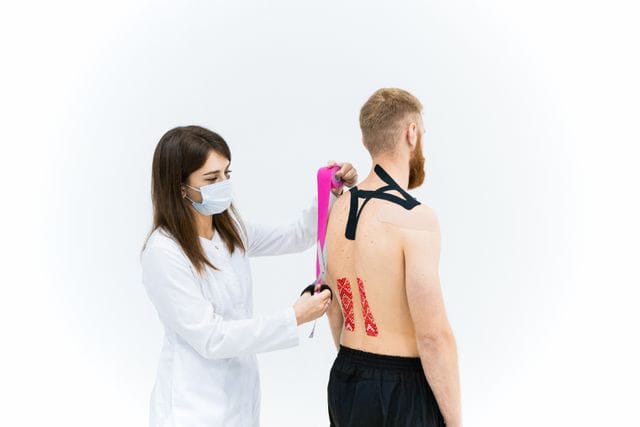
Yes. Physiotherapy may help many people with lower back pain by improving movement, strength, physical capacity, and confidence with everyday activities.
The number of sessions varies depending on your condition, symptoms, goals, and response to treatment.
Some temporary activity modification may be appropriate, but prolonged inactivity is not generally the goal for most non-serious back pain conditions.
Often, some form of exercise can be continued or modified. A physiotherapist can help determine what level of activity is appropriate.
No. Back pain is influenced by many factors, and there is no single perfect posture that prevents every episode of back pain.
Yes. A physiotherapist can develop a gradual rehabilitation program that addresses physical capacity, movement, and functional goals.
No. Imaging is not always necessary for back pain. A healthcare professional can determine whether further investigation is appropriate based on your symptoms and medical history.
Dry needling may be considered for selected muscular or myofascial symptoms, but it should be part of an appropriate overall treatment plan.
Seek urgent medical care if you experience severe weakness, loss of bladder or bowel control, numbness in the saddle area, major trauma, or other serious symptoms.
Yes, many people return to sports after back pain. Rehabilitation should gradually prepare you for the specific physical demands of your activity.
Back pain can be disruptive, frustrating, and sometimes worrying.
But experiencing back pain does not automatically mean you need to stop moving or give up the activities you enjoy.
The right approach depends on understanding your individual symptoms, physical capacity, and goals.
Physiotherapy for Back Pain in Brooks can help you work toward improved movement, strength, confidence, and function through an individualized rehabilitation program.
The goal should not simply be temporary symptom relief.
A stronger rehabilitation strategy focuses on helping you return to the activities that matter in your life, whether that means working, walking, exercising, lifting, playing sports, or simply moving with greater confidence.
If persistent or recurring back pain is affecting your daily life, consider a professional assessment to determine the most appropriate next steps.
For an assessment and individualized treatment plan, visit Mission Health Physiotherapy & Sports Rehab.
You can also explore: