
Get expert knee pain physiotherapy in Brooks with personalized treatment, strengthening, rehabilitation, and recovery support at Mission Health Physiotherapy.
Knee pain can make simple activities such as walking, climbing stairs, exercising, working, or getting in and out of a chair surprisingly difficult. Sometimes the discomfort begins after an obvious injury, while in other cases it develops gradually from overuse, muscle weakness, changes in activity, or age-related joint changes.
For people dealing with ongoing or recurring symptoms, Knee Pain Physiotherapy in Brooks can provide a structured approach to improving movement, building strength, managing pain, and returning to everyday activities.
At Mission Health Physiotherapy & Sports Rehab in Brooks, treatment begins with an individualized assessment rather than a one-size-fits-all exercise program. The physiotherapy team considers your symptoms, movement, strength, injury history, lifestyle, and personal goals when developing a rehabilitation plan.
Whether your knee pain is related to sports, work, arthritis, an old injury, or everyday movement, appropriate physiotherapy can help you understand the problem and work toward better function.
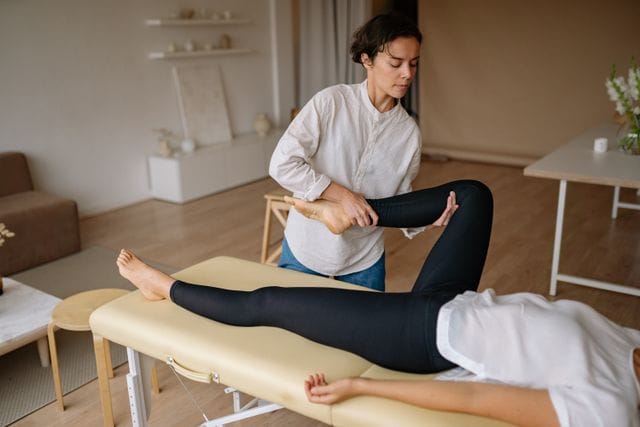
The knee is a complex joint that absorbs significant loads during walking, running, jumping, squatting, and many everyday activities. Because it is involved in so many movements, different tissues and conditions can contribute to discomfort.
Common causes include:
For example, runners may experience symptoms after increasing mileage too quickly, while an athlete may develop pain after a twisting movement or direct impact. Similarly, someone with knee arthritis may notice increasing stiffness and discomfort during walking or stair climbing.
Because several conditions can produce similar symptoms, identifying the contributing factors is an important part of Knee Pain Physiotherapy in Brooks.
Knee problems do not always feel the same. Your symptoms may depend on the underlying cause, the tissues involved, and how much stress is being placed on the joint.
Some common symptoms include:
Some people experience symptoms only during specific activities. Others may notice discomfort even during normal daily movements.
Therefore, persistent symptoms should not automatically be attributed to getting older or simply being active. A proper assessment can help determine whether rehabilitation is appropriate and what factors may be contributing to the problem.
Not every episode of knee discomfort requires physiotherapy. However, professional assessment may be worthwhile when symptoms continue, repeatedly return, or begin interfering with normal activities.
Consider speaking with a physiotherapist if:
MyHealth Alberta also recommends seeking medical attention for concerning symptoms such as severe or increasing pain, inability to put weight on the knee, inability to move the knee, significant deformity, or signs of infection. MyHealth Alberta: Knee Pain or Injury Care Instructions
The purpose of physiotherapy is not simply to make the knee feel better temporarily. Rehabilitation can also focus on improving strength, movement, confidence, and the ability to tolerate everyday or athletic activities.
At Mission Health Physiotherapy & Sports Rehab, physiotherapy begins with an assessment to understand your individual presentation. Treatment may then be adjusted as your symptoms and abilities change.
Your physiotherapist may evaluate:
This information helps create a rehabilitation plan based on your needs.
Exercise is often an important component of knee rehabilitation.
Depending on your condition and goals, your program may include exercises designed to improve:
Exercises can progress over time. Initially, the focus may be on controlling symptoms and restoring basic movement. Later, rehabilitation can become more challenging as your strength and tolerance improve.
Hands-on treatment may be used as part of a broader rehabilitation program. Depending on your assessment, manual techniques can help address joint mobility, muscle tension, or movement restrictions.
Mission Health’s physiotherapy approach includes evidence-based manual therapy alongside exercise, education, and other treatment strategies where appropriate. Physiotherapy in Brooks | Mission Health Physiotherapy
Importantly, manual therapy does not have to be the entire treatment plan. Combining hands-on care with active rehabilitation can help you develop the strength and movement capacity needed for longer-term progress.
Knowing how to manage activity during recovery can make rehabilitation easier.
Your physiotherapist may help you understand:
Instead of completely avoiding movement, the objective is often to find an appropriate level of activity that your knee can tolerate and progressively build capacity from there.
Athletes place substantial demands on their knees. Running, jumping, cutting, pivoting, landing, and rapid changes of direction can all challenge the joint.
A knee injury may involve a ligament, tendon, meniscus, muscle, or another structure. Some injuries happen suddenly, while others develop gradually through repetitive loading.
For athletes, Knee Pain Physiotherapy in Brooks can involve more than basic pain management. Rehabilitation may progressively address strength, balance, coordination, movement control, agility, and sport-specific conditioning.
Mission Health’s sports injury rehabilitation program uses personalized treatment plans and progressive exercises to help athletes work toward a safe return to their activities. Sports Injury Rehab in Brooks | Mission Health Physiotherapy
Returning to sport too quickly can place unnecessary stress on a recovering knee.
Instead, rehabilitation may progress through stages such as:
The exact progression depends on the injury, your recovery, your sport, and your individual assessment.
Osteoarthritis is another common reason people seek physiotherapy for knee pain.
Symptoms may include pain, stiffness, reduced mobility, and difficulty performing activities such as walking or using stairs. When symptoms cause people to move less, the muscles around the knee can become weaker, potentially making everyday activities more challenging.
MyHealth Alberta explains that physiotherapy for knee arthritis can help people improve movement and make activities such as walking and using stairs easier. MyHealth Alberta: Physiotherapy for Knee Arthritis
A physiotherapy program for someone with knee arthritis may include:
The aim is not necessarily to eliminate every symptom immediately. Instead, rehabilitation can help improve your ability to move and participate in activities that matter to you.
Strong supporting muscles can help you perform daily and athletic activities more effectively.
Depending on your condition, rehabilitation may focus on the quadriceps, hamstrings, gluteal muscles, calves, and other muscles involved in lower-limb movement.
However, strengthening should be appropriate for your current ability.
For example, someone with significant pain may initially require simple controlled movements, while an athlete recovering from an injury may eventually need demanding single-leg exercises, jumping drills, or sport-specific conditioning.
Progressive loading is therefore more useful than simply performing the same exercise indefinitely.
Knee rehabilitation is not only about strength.
Balance and movement control are also important, particularly for people returning to sports or recovering from an injury that affected stability.
Your physiotherapist may introduce exercises involving:
As your abilities improve, these exercises can become more challenging.
This approach helps bridge the gap between basic rehabilitation exercises and the movements required during work, recreation, exercise, or sport.
Running places repetitive loads through the lower limbs. Changes in mileage, speed, terrain, footwear, recovery, or training frequency can sometimes contribute to symptoms.
If pain develops after increasing your running volume, stopping all activity indefinitely may not always be the most useful long-term strategy.
Instead, your rehabilitation plan may look at:
A gradual return to running can then be developed based on your symptoms and physical capacity.
Some knee injuries require medical diagnosis or surgical management. Physiotherapy can then form an important part of rehabilitation before or after other medical treatment, depending on the injury.
For example, rehabilitation may be used to restore:
After surgery, rehabilitation is typically guided by the procedure performed, medical recommendations, healing stage, and individual progress.
Your physiotherapist can work within those restrictions and gradually progress your exercise program as appropriate.
Foot and lower-limb mechanics can influence how forces are distributed through the legs during movement.
For some individuals, an assessment of foot mechanics, gait, and overall alignment may be useful when developing a treatment strategy.
Mission Health provides custom orthotics in Brooks and assesses factors including posture, gait, and overall alignment when determining whether orthotics may be appropriate. Custom Orthotics in Brooks | Mission Health Physiotherapy
However, orthotics are not automatically required for every person with knee pain. Their usefulness depends on the individual’s presentation and treatment goals.
There is no single recovery timeline for knee pain.
A mild problem caused by temporary overload may improve relatively quickly, while a significant injury, chronic condition, or post-surgical rehabilitation may require a longer period of structured care.
Recovery can be influenced by:
For this reason, your physiotherapist can provide a more useful recovery estimate after assessing your specific condition.
Your home routine should depend on the cause and severity of your symptoms.
Generally, useful strategies may include:
However, severe symptoms or significant changes in your knee should not be managed solely with home exercises.
MyHealth Alberta advises seeking medical care when symptoms such as severe or increasing pain, inability to bear weight, inability to move the knee, significant deformity, or infection-related signs occur. MyHealth Alberta: Knee Problems and Injuries
Choosing a physiotherapy clinic involves more than finding a convenient location.
At Mission Health Physiotherapy & Sports Rehab in Brooks, treatment is built around individualized assessment and rehabilitation. The clinic provides physiotherapy for people recovering from injuries, managing chronic conditions, and working toward improved physical performance.
Treatment may incorporate:
The clinic’s broader physiotherapy approach emphasizes personalized treatment plans based on each person’s symptoms, lifestyle, and goals. Mission Health Physiotherapy in Brooks
For athletes, the clinic also provides sports injury rehabilitation with progressive exercise, movement training, conditioning, and return-to-sport planning.
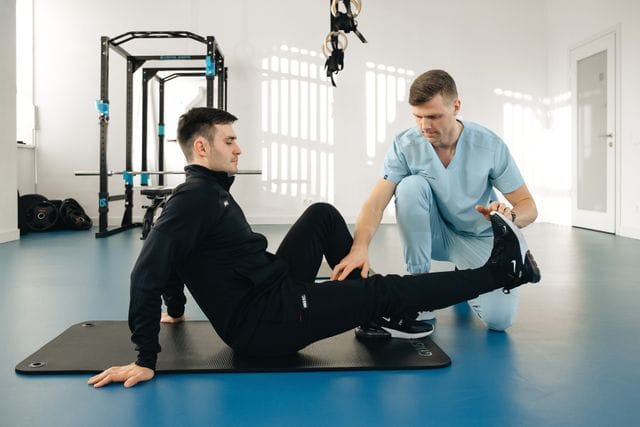
In Alberta, you can generally contact a physiotherapy clinic directly without a doctor’s referral. However, certain insurance plans or specific circumstances may have their own requirements, so it is worth checking your coverage.
Yes. Physiotherapy can help people with knee arthritis improve strength, movement, physical function, and their ability to perform everyday activities. A personalized exercise and education program can be developed based on your symptoms and goals.
Yes. Physiotherapy can be useful during rehabilitation after many sports-related knee injuries. Treatment may focus on restoring movement and strength before progressing toward sport-specific activities.
The frequency depends on your condition, rehabilitation stage, symptoms, and goals. Your physiotherapist can recommend an appropriate schedule after assessment.
Not necessarily. The appropriate level of activity depends on the underlying problem and severity of your symptoms. A physiotherapist can help you determine which activities should be modified and how to progressively rebuild your tolerance.
It can. Previous injuries may contribute to weakness, mobility limitations, altered movement patterns, or reduced confidence. An assessment can help determine which factors may still be affecting your function.
Seek urgent medical attention for severe or increasing pain, inability to put weight on the knee, significant deformity, inability to move the knee, or signs of infection such as increasing redness, warmth, swelling, or fever. MyHealth Alberta: Knee Pain or Injury Care Instructions
Yes. Sports rehabilitation can progressively address strength, balance, movement control, conditioning, and sport-specific demands. The return-to-sport process should be based on your recovery and physical readiness rather than simply a fixed number of days.
Persistent knee pain can affect far more than your workouts. It can change how you walk, work, exercise, use stairs, participate in sports, and enjoy everyday activities.
The right rehabilitation strategy depends on why your knee hurts and what you want to get back to doing. Through assessment, progressive exercise, education, manual therapy, and functional rehabilitation, Knee Pain Physiotherapy in Brooks can help you work toward improved movement and physical capacity.
If knee pain is limiting your activities or has continued despite your own efforts, consider booking an assessment with Mission Health Physiotherapy & Sports Rehab in Brooks.
Mission Health Physiotherapy & Sports Rehab
740 Alberta Street W, Brooks, AB T1R 1A9
Phone: (403) 794-0111
Visit Mission Health Physiotherapy & Sports Rehab to learn more about physiotherapy services in Brooks and book an appointment.