
Sciatica physiotherapy in Brooks can help manage leg pain, improve movement and support recovery with personalized rehabilitation.
Sciatica can make ordinary movements surprisingly difficult. Sitting at work, standing for a long period, getting into a vehicle, walking around the house, or even sleeping can become uncomfortable when pain travels from the lower back or buttock into the leg.
For people searching for sciatica physiotherapy in Brooks, understanding what is causing the symptoms is an important first step. Sciatica is not simply another type of back pain. It involves irritation or pressure affecting the nerve roots that contribute to the sciatic nerve, which can produce symptoms along the buttock and leg. Common symptoms may include shooting pain, tingling, numbness, or weakness. MyHealth Alberta’s sciatica guidance provides additional information about the condition and its common causes.
At Mission Health Physiotherapy & Sports Rehab in Brooks, physiotherapy focuses on understanding your symptoms, assessing movement and function, and developing an individualized rehabilitation plan based on your needs and goals.

The sciatic nerve is formed from nerve roots that originate in the lower back. It travels through the buttock and continues down the back of the leg, with branches extending toward the ankle and foot.
Sciatica develops when one or more of the nerve roots associated with this pathway become irritated or compressed. A herniated or bulging disc is one common cause, although other spinal conditions, injuries, and sources of nerve irritation can also contribute.
Importantly, not every person with leg pain has sciatica. Similar symptoms can occur with other musculoskeletal conditions. Therefore, a proper assessment is useful before assuming that the sciatic nerve is responsible.
Several factors can contribute to sciatic symptoms.
A damaged or herniated disc can irritate a nearby nerve root. This may produce pain or altered sensation that travels from the lower back or buttock into the leg.
Spinal stenosis involves narrowing around structures within the spine. In some people, this can contribute to pressure or irritation around the nerve roots.
Changes associated with arthritis may sometimes reduce available space around spinal structures and contribute to nerve irritation.
A sudden injury or physical strain can affect spinal tissues and may contribute to symptoms involving the lower back and leg.
Repeated lifting, bending, twisting, or other physically demanding activities may aggravate an existing problem, particularly when the body is already experiencing irritation.
The exact cause matters because sciatica treatment in Brooks should be based on the person’s symptoms, examination findings, activity level, and functional limitations rather than using one identical treatment approach for everyone.
Sciatica symptoms can vary considerably between individuals.
Common symptoms include:
Some people experience significant leg symptoms with relatively little back pain. Others may have both lower-back discomfort and symptoms extending into the leg.
According to MyHealth Alberta’s sciatica care information, symptoms can involve pain, numbness, or weakness and may be more noticeable in the leg or foot than in the back.
Not every episode of leg or back pain requires physiotherapy. However, an assessment may be useful when symptoms are interfering with everyday activities, work, exercise, sleep, or mobility.
You may want to consider sciatica physiotherapy in Brooks if:
A physiotherapist can assess how your symptoms behave with different movements and activities and determine whether physiotherapy is appropriate or whether further medical assessment is necessary.
Physiotherapy does not simply focus on where you feel pain. The assessment may consider your spinal movement, strength, mobility, posture, activity tolerance, and functional limitations.
At Mission Health Physiotherapy & Sports Rehab, treatment plans are individualized according to the person’s condition and goals. Their Brooks physiotherapy service includes assessment, personalized treatment planning, exercise programs, manual therapy, education, and strategies for injury prevention.
You can learn more about the clinic’s approach through the Mission Health Physiotherapy in Brooks service page.
Your physiotherapist will begin by discussing your symptoms, medical history, activities, and goals.
The assessment may include examining:
This information helps establish a clearer picture of what may be contributing to your limitations.
Exercise is commonly an important component of rehabilitation.
Depending on your presentation, your physiotherapist may introduce exercises designed to improve:
The appropriate exercises depend on the individual. A movement that feels helpful for one person may aggravate symptoms in another.
For this reason, avoid copying a generic online exercise routine simply because it is labelled as a “sciatica exercise.”
MyHealth Alberta’s sciatica exercise guidance recommends starting exercises slowly and adjusting activity if symptoms worsen.
Manual therapy may be incorporated when appropriate to help address mobility restrictions, muscle tension, or other contributing factors.
However, hands-on treatment is generally only one part of a broader rehabilitation strategy. Exercise, education, movement modification, and gradual return to activity can also be important.
Understanding your symptoms can make rehabilitation easier to manage.
Your physiotherapist may help you understand:
This education can help you become more confident about movement instead of avoiding activity indefinitely.
In many cases, complete inactivity is not the long-term answer.
The appropriate level of activity depends on your symptoms and diagnosis. Some people may tolerate walking well, while others may need temporary modifications to certain activities.
MyHealth Alberta recommends alternating comfortable rest with short periods of walking and increasing walking as tolerated, while avoiding activities that significantly worsen symptoms.
Therefore, the goal is often not simply to “rest until the pain disappears.” Instead, rehabilitation may involve gradually rebuilding movement and physical capacity.
Your physiotherapist can help determine an appropriate progression.
There is no single exercise that works for every person with sciatica.
Depending on the individual assessment, rehabilitation may include exercises for:
Improving trunk strength and control can help you manage physical activities more effectively.
Weakness around the hips can influence how the lower back and legs handle physical demands.
Specific mobility exercises may be introduced when restrictions are contributing to movement limitations.
Gradually increasing comfortable activity can be an important part of recovery.
As symptoms improve, exercises may progress toward movements that resemble your daily activities, work demands, or sports.
If an exercise increases pain travelling further down the leg or causes new neurological symptoms, it should not simply be pushed through. Exercise selection should be individualized.
Brooks residents have different physical demands. Some people spend much of the day sitting, while others work in physically demanding environments.
Farm, industrial, construction, warehouse, trades, and physically active jobs may involve lifting, carrying, bending, prolonged standing, or repetitive movement.
Similarly, recreational athletes may need to manage running, cycling, hockey, gym training, or other activities while recovering.
In these situations, sciatica physiotherapy in Brooks can focus not only on reducing symptoms but also on helping you gradually rebuild the physical capacity required for your normal activities.
Mission Health also provides sports injury rehabilitation in Brooks for people who need structured rehabilitation and a gradual return to physical activity.
If your symptoms developed following a workplace incident, the rehabilitation process may involve additional considerations.
Your treatment may need to address:
Mission Health provides work-related injury physiotherapy in Brooks and supports rehabilitation for workers dealing with injuries sustained on the job.
Dry needling may sometimes be incorporated into a broader physiotherapy program when muscular tension or trigger points are contributing to a person’s symptoms.
It should not be considered a universal treatment for every case of sciatica.
At Mission Health, dry needling is used alongside assessment, exercise, physiotherapy techniques, and individualized advice. The clinic specifically lists sciatica and nerve pain among the conditions that may be addressed through its dry needling service.
Learn more about Dry Needling in Brooks and how it can be integrated into a broader treatment plan.
Your home routine should depend on your symptoms and the advice provided by your healthcare professional.
Some general strategies may include:
Long periods in one position may make symptoms more difficult to manage. Gentle movement and short walks may be more comfortable for some people.
If sitting aggravates your symptoms, consider changing position regularly rather than remaining seated for extended periods.
If a particular activity consistently increases your leg symptoms, modify it while you work on recovery.
Consistency matters. Performing recommended exercises regularly can help build capacity over time.
Trying to return immediately to your previous activity level can sometimes cause a flare-up. A gradual progression is usually more manageable.
Heat or cold may provide temporary symptom relief for some people. However, neither should be considered a treatment for the underlying cause of sciatica.
MyHealth Alberta notes that heat or ice may be used for symptom relief, while also emphasizing activity modification and appropriate care.
If you are uncertain about what is appropriate for your situation, speak with a healthcare professional.
Recovery time varies significantly.
Some episodes improve over several weeks, while persistent or recurring symptoms may require a more structured assessment and rehabilitation approach.
The underlying cause, severity of symptoms, physical demands, activity level, and response to treatment can all influence recovery.
Therefore, there is no responsible way to promise that every person will recover within a specific number of days.
The focus of physiotherapy is to help you understand your symptoms, restore movement and strength, and progressively return to the activities that matter to you.
No.
Imaging is not automatically required for every person with lower-back or leg symptoms. The need for imaging depends on the clinical presentation and whether there are concerns that require further investigation.
MyHealth Alberta notes that MRI can be useful in specific situations, particularly when there are signs of serious conditions or when imaging would help guide management.
A physiotherapy assessment can help identify whether your presentation appears appropriate for conservative rehabilitation or whether referral for further medical assessment should be considered.
Most people with sciatica do not have a medical emergency. Nevertheless, certain symptoms require prompt attention.
Seek urgent medical assessment if you experience significant or worsening neurological symptoms.
According to MyHealth Alberta’s sciatica care guidance, urgent assessment is warranted for symptoms such as new or worsening weakness, numbness or tingling, and particularly loss of bladder or bowel control.
If you are unable to move a leg, emergency care may be required.
Do not attempt to manage serious neurological symptoms through home exercises alone.
There is no guaranteed method of preventing every episode. However, maintaining physical capacity can help you better tolerate everyday and recreational demands.
Helpful long-term habits may include:
For people whose symptoms are connected to work or sport, addressing movement patterns and physical demands may also be useful.
Mission Health Physiotherapy & Sports Rehab provides individualized physiotherapy care in Brooks. The clinic describes its approach as patient-centred and based on comprehensive assessment, personalized treatment planning, exercise, manual therapy, education, and injury prevention.
For someone dealing with sciatic symptoms, this type of approach can be useful because rehabilitation needs are rarely identical from one person to another.
Your treatment may be adjusted according to:
The objective is to help you move with greater confidence and gradually return to the activities that are important to you.
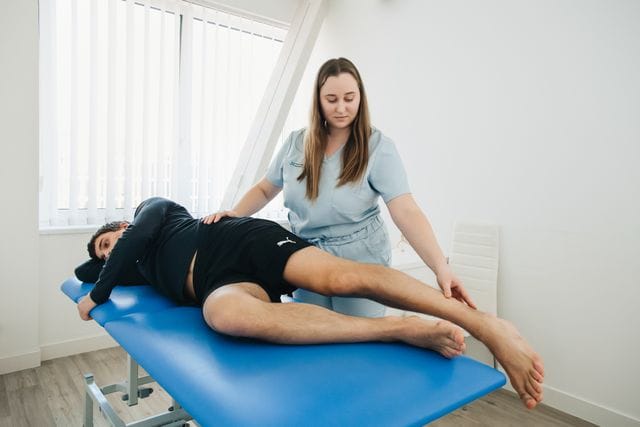
Physiotherapy can be part of treatment for many people with sciatica. The appropriate approach depends on the cause, symptoms, neurological findings, and functional limitations.
A physiotherapist can assess your symptoms and movement and determine whether your presentation is consistent with a musculoskeletal or nerve-related problem. If your symptoms suggest a condition requiring medical investigation, referral may be appropriate.
Many people can walk with sciatica, although tolerance varies. Short, comfortable walks may be appropriate for some people. MyHealth Alberta recommends gradually increasing walking as tolerated rather than remaining inactive for prolonged periods.
Yes. Sciatica can involve numbness, tingling, weakness, or pain along the affected nerve pathway.
Not necessarily. Exercise selection and intensity should be adjusted to your symptoms. A physiotherapist can help determine which movements are appropriate and how to progress them safely.
Yes. Symptoms can recur, particularly when contributing factors have not been addressed. Building strength, maintaining activity, managing physical workloads, and following appropriate rehabilitation strategies may help support long-term function.
Mission Health states that you do not need a doctor’s referral to see a physiotherapist in Alberta. However, insurance requirements can vary, so it is worth checking your individual coverage before booking.
Sciatica can interfere with much more than your lower back. When symptoms travel into the buttock or leg, everyday activities such as sitting, walking, working, exercising, and sleeping may become difficult.
The good news is that many people can manage sciatica with appropriate conservative care, exercise, activity modification, and rehabilitation. The right approach depends on the cause and presentation of your symptoms.
If you are looking for sciatica physiotherapy in Brooks, Mission Health Physiotherapy & Sports Rehab can assess your condition and develop a personalized rehabilitation plan based on your symptoms, movement, lifestyle, and goals.
Brooks Location:
740 Alberta Street W
Brooks, AB T1R 1A9
Phone: (403) 794-0111
Website: www.missionhealthphysio.ca
If leg pain, numbness, tingling, or weakness is affecting your daily life, an appropriate assessment can help you understand what may be happening and what steps to take next.