
Vertigo Physiotherapy in Brooks to help manage dizziness, balance problems and mobility challenges with personalised rehabilitation.
Vertigo Physiotherapy in Brooks may help people manage certain causes of dizziness, balance difficulties, and movement-related symptoms through appropriate assessment and individualised rehabilitation. If you feel that the room is spinning when you turn your head, get out of bed, or look upwards, the symptoms may affect your confidence and everyday activities.
Vertigo is a sensation of movement when you or your surroundings seem to spin, tilt, or move even though no such movement is occurring. It can be associated with inner-ear conditions, including benign paroxysmal positional vertigo (BPPV), although other medical conditions can also cause dizziness.
At Mission Health Physiotherapy, you can explore physiotherapy services and learn about rehabilitation options. This guide explains common vertigo symptoms, vestibular rehabilitation, treatment approaches, and when to seek medical attention in Brooks, Alberta.

Vertigo is different from general light-headedness. People experiencing vertigo often describe a spinning or tilting sensation, while other forms of dizziness may feel more like unsteadiness or feeling faint.
The symptoms can occur briefly or persist for longer periods, depending on the underlying cause.
Common symptoms include:
According to MyHealth Alberta’s vertigo care instructions, vertigo can affect standing, walking, and balance. Therefore, identifying the cause is an important first step towards appropriate care.
Vertigo has several possible causes. Treatment depends on identifying the condition responsible for the symptoms rather than assuming that every episode of dizziness has the same explanation.
BPPV is a common inner-ear condition associated with brief episodes of spinning triggered by specific head movements. Symptoms may occur when rolling over in bed, looking upwards, or bending down.
The episodes often last less than a minute, although repeated movements can trigger further symptoms.
Learn more in MyHealth Alberta’s guide to BPPV.
These conditions involve inflammation affecting structures or nerves associated with balance. Depending on the condition, symptoms may include prolonged vertigo, nausea, and difficulty walking steadily.
A healthcare professional should assess persistent or severe dizziness to determine the likely cause and appropriate management.
Some people experience dizziness or vertigo associated with migraine. Episodes may occur with headaches, sensitivity to light, sensitivity to sound, or other migraine symptoms, although the presentation varies.
Dizziness can also be associated with medication effects, dehydration, blood pressure changes, neurological conditions, and other health concerns.
For this reason, Vertigo Physiotherapy in Brooks should begin with appropriate screening and assessment when physiotherapy is being considered. Medical evaluation may be necessary before rehabilitation starts.
Dizziness can make ordinary tasks feel difficult, especially when symptoms affect walking, turning, or changing positions.
Consider seeking professional advice if you experience:
A physiotherapist with appropriate vestibular rehabilitation training may assess relevant symptoms and determine whether a rehabilitation approach is suitable.
However, new or unexplained vertigo should not automatically be treated as a physiotherapy problem. A medical assessment may be needed to rule out other causes.
Vertigo Physiotherapy in Brooks may help selected patients improve balance, movement tolerance, and daily function when the underlying condition is suitable for rehabilitation.
Alberta Health Services describes vestibular rehabilitation as physical therapy for certain inner-ear problems associated with persistent imbalance, movement-provoked dizziness, and visual motion sensitivity. Treatment can include assessment, customised exercises, and education.
Read more about vestibular rehabilitation from Alberta Health Services.
An assessment may include a review of symptom history, balance, walking, head movements, and the situations that trigger dizziness.
Depending on the presentation and the therapist’s training, specific positional or vestibular tests may be considered. The findings help determine whether vestibular rehabilitation is appropriate or whether medical referral is needed.
BPPV may be treated with specific repositioning manoeuvres, such as the Epley manoeuvre, when the diagnosis and affected side have been identified.
These manoeuvres aim to move displaced particles within the inner ear to a position where they are less likely to trigger symptoms.
The correct technique depends on the diagnosis. Do not assume that the Epley manoeuvre is appropriate for every type of dizziness, particularly if the cause is unknown or neck movement is restricted.
Some people with vestibular conditions experience blurred vision or difficulty keeping their eyes focused while moving their head.
When clinically indicated, gaze stabilisation exercises may help improve coordination between head movement and visual focus. The exercise selection and difficulty should be tailored to the person’s symptoms and tolerance.
Balance exercises may be appropriate for people who remain unsteady after certain vestibular conditions.
Depending on the assessment, rehabilitation may involve controlled standing activities, weight shifting, walking practice, or progressively more challenging balance tasks.
These activities should be performed safely, particularly when dizziness increases the risk of falling.
A rehabilitation plan may also include guidance on managing symptoms, modifying activities temporarily, and progressing towards daily goals.
The aim is to help eligible patients move more confidently while avoiding unnecessary risk. Treatment should be adjusted if symptoms worsen or new symptoms appear.
To explore available care, visit Mission Health Physiotherapy’s Brooks physiotherapy page.
There is no single exercise programme suitable for every person with vertigo. The right approach depends on the cause, symptom pattern, balance ability, and medical findings.
A clinician may recommend one or more of the following when appropriate:
Gaze stabilisation: Controlled eye and head movements designed for selected vestibular conditions.
Balance training: Supported standing or weight-shifting activities intended to improve postural control.
Walking practice: Gradual walking activities when safe and appropriate for the person’s symptoms.
Condition-specific repositioning manoeuvres: Techniques such as the Epley manoeuvre for appropriately diagnosed BPPV.
Habituation exercises: Carefully selected movements that may help some people become more tolerant of specific motion-related symptoms.
Do not begin challenging balance exercises alone if you feel unstable. Likewise, avoid repeatedly provoking severe dizziness in an attempt to make it disappear. Seek professional guidance if you are unsure which exercises are appropriate.
Recovery depends on the underlying diagnosis, the severity of symptoms, and how the person responds to treatment.
Some people with BPPV improve after an appropriate repositioning manoeuvre. Others with persistent vestibular problems may need a structured rehabilitation programme over a longer period.
There is no universal recovery timeline. Progress should be judged by changes in symptoms, balance, movement tolerance, and the ability to resume daily activities.
If vertigo becomes more frequent, worsens, or fails to improve as expected, seek medical reassessment rather than continuing the same exercises without review.
Vertigo and dizziness may increase the risk of falls. Taking sensible precautions can help protect you while the cause is being assessed or treated.
These precautions do not replace medical assessment. If symptoms are new, severe, or unexplained, seek appropriate medical advice.
Seek emergency care immediately if sudden dizziness or vertigo occurs with warning signs such as:
These symptoms may indicate a serious medical emergency. Call 911 in Canada and do not drive yourself to hospital.
You should also seek prompt medical advice for a first episode of unexplained vertigo, worsening symptoms, new hearing-related symptoms, fever, or repeated vomiting.
For more details, consult MyHealth Alberta’s guidance on vertigo and emergency warning signs.
Dizziness and balance difficulties can affect work, exercise, and everyday independence. Appropriate assessment is important because the best treatment depends on the cause of the symptoms.
Mission Health Physiotherapy provides physiotherapy services in Brooks, Alberta. If you are experiencing dizziness or balance problems, contact the clinic to ask whether an appropriate vestibular assessment or rehabilitation service is available for your needs.
A suitable care plan may involve coordination with your physician or another healthcare professional when further diagnosis is necessary.
You can learn more about physiotherapy services in Brooks or visit the Mission Health Physiotherapy website.
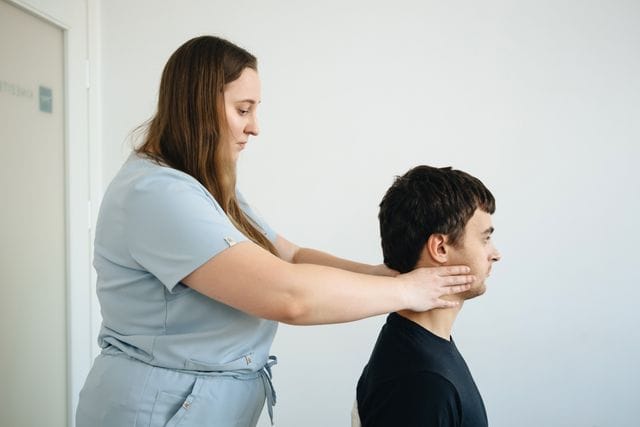
Physiotherapy may help selected people with vestibular conditions through repositioning manoeuvres, balance training, gaze stabilisation, or other condition-specific rehabilitation. Treatment depends on the diagnosis.
No. Vertigo usually describes a spinning or movement sensation, while dizziness is a broader term that can include light-headedness and unsteadiness. The distinction can help guide assessment.
Some people with diagnosed BPPV benefit from specific repositioning manoeuvres. The correct technique depends on the diagnosis and affected side, so assessment is advisable before attempting treatment.
Movement may be part of recovery for some conditions, but safety comes first. Avoid walking without support if you feel unstable, and do not drive while experiencing vertigo.
The duration varies according to the underlying condition, symptom severity, and response to treatment. Some cases improve quickly, while persistent vestibular problems may require a longer rehabilitation programme.
Seek medical assessment for new, unexplained, persistent, or worsening symptoms. Sudden vertigo accompanied by neurological symptoms, chest pain, fainting, or severe difficulty walking requires emergency care.
Visit Mission Health Physiotherapy’s Brooks service page to learn about available services and contact the clinic regarding your needs.
Vertigo can affect balance, confidence, and everyday activities, but the appropriate management depends on identifying its underlying cause.
Vertigo Physiotherapy in Brooks may be beneficial for selected vestibular conditions through personalised rehabilitation, balance training, and appropriate treatment techniques. However, not all dizziness is caused by an inner-ear problem, and unexplained symptoms should be medically assessed.
If dizziness or balance difficulties are affecting your daily routine, seek professional guidance to determine the safest and most appropriate next step.