
Headache physiotherapy in Brooks: learn the causes, symptoms and treatment for tension and cervicogenic headaches, and how physiotherapy reduces their frequency without relying on painkillers alone.
You wake up with a dull ache at the back of your head. By lunchtime it has spread across your forehead like a tight band, and by the end of the day you cannot concentrate on anything. Or the headache starts at the base of your skull, on one side only, and it gets worse every time you turn your neck or sit at your desk. Painkillers take the edge off for a few hours, and then the headache comes back.
If that sounds familiar, you are not alone. Headaches are one of the most common reasons people visit a physiotherapist, and many of them are caused by problems a physiotherapist can fix: stiff neck joints, tight muscles, poor posture, and weak deep neck muscles. This guide explains headache physiotherapy in Brooks in plain language: the types of headache, how to tell them apart, what causes them, and the treatment that works.
A headache is pain felt anywhere in the head, and it is not one condition. There are many types, and they have different causes. Some come from the muscles and joints of the neck. Some come from stress and muscle tension. Some, like migraine, come from the brain itself. Knowing which type you have matters, because the treatment is different.
The two types physiotherapy treats most often are tension-type headaches and cervicogenic headaches. Together, they account for most of the recurring headaches people live with for months or years. Both are driven by physical problems in the neck, shoulders, and upper back, and both respond well to hands-on treatment and exercise.
Tension-type headaches are the most common headache in the world, affecting around 38 percent of people. They feel like a tight band squeezing around your forehead, temples, or the back of your head and neck. The pain is usually mild to moderate, on both sides, and it does not throb. It often builds slowly through the day and is worse after long hours at a desk, in the car, or on your feet.
The main drivers are muscle tension in the neck and shoulders, stress, tiredness, eye strain, and poor posture. The muscles at the base of the skull and across the top of the shoulders stay tight for hours, and that tension refers pain into the head. Tension headaches are not dangerous, but when they happen several times a week they wear you down, disturb your sleep, and make work much harder than it needs to be.
Cervicogenic headaches come from the neck itself. The word means “originating in the neck”, and the pain is referred upward from the joints, discs, or muscles of the upper cervical spine into the head. They account for somewhere between 15 and 20 percent of all headache disorders, and they are often missed, because the headache is the main complaint and the neck problem behind it is easy to overlook.
A cervicogenic headache is usually felt on one side of the head only, starting at the base of the skull and spreading forward to the temple or behind the eye. It is often worse after neck movement or after holding one posture for a long time, and it usually comes with a stiff neck. Because the headache is a symptom of a neck problem, treating the neck is what resolves it.
Migraine is different. It is a neurological condition, not a muscle or joint problem. A migraine usually throbs on one side of the head, comes with nausea, sensitivity to light and sound, and sometimes visual changes before the pain starts. It can last from a few hours to three days, and it often runs in families.
Physiotherapy does not treat migraine itself. But many people with migraine also have neck stiffness, muscle tension, and poor posture that trigger attacks or make them worse. Treating those physical factors can reduce how often attacks happen. If your headaches look like migraine, your physiotherapist will tell you honestly, and may suggest you see your doctor about migraine-specific treatment alongside physiotherapy.
Tension headaches are so common that many people accept them as a normal part of life. They are not. They are a sign that the muscles and joints of your neck and shoulders are overloaded, and they usually have a clear pattern once you know what to look for.
The pain feels like pressure or squeezing, not throbbing. It is on both sides of the head, often starting at the back and spreading forward. It is mild to moderate, so you can usually keep working, but you cannot concentrate properly. It is not made worse by routine physical activity, which is one way to tell it apart from migraine. It often comes with a stiff neck, tight shoulders, and tender spots in the muscles at the base of the skull.
The triggers are familiar to anyone who works at a desk, drives long distances, or does physical work with the arms raised. Hours of sitting with the head forward, looking down at a phone, sleeping with the wrong pillow, and stress all make tension headaches more likely. The good news is that tension headaches are one of the most responsive headache types to physiotherapy. Releasing the tight muscles, improving posture, and strengthening the deep neck muscles usually reduces both how often they happen and how bad they are.
If your headache is always on the same side, starts at the base of your skull, and comes with a stiff neck, there is a good chance it is cervicogenic. This is the headache type physiotherapy is most effective for, because the cause is a physical problem in the neck that can be found and treated directly.
The upper cervical spine, the top two or three joints of the neck, is where the nerves that supply the head begin. When those joints become stiff or irritated, after an injury, years of poor posture, or wear and tear, the brain misreads the signals and feels the pain in the head instead of the neck. That is why the headache is felt on one side, why it starts at the base of the skull, and why it gets worse when you move your neck or hold it still for too long.
The evidence for treating cervicogenic headaches with physiotherapy is strong. A 2023 systematic review found that manual therapy significantly reduces how often these headaches occur, and most patients notice a reduction within the first one to three sessions. The treatment is hands-on: joint mobilisation to restore movement in the stiff upper neck joints, soft tissue release for the tight muscles, and exercises to strengthen the deep neck flexors. Painkillers alone will not fix it. They mask the pain while the neck problem stays exactly the same.
Headaches are often confused with other conditions, because the symptoms overlap. Getting the diagnosis right matters, because the treatment is different. Here is how they compare.
Headache vs neck pain. Neck pain and headache often come together, but they are not the same problem. Neck pain is felt in the neck itself, while a headache is felt in the head. In a cervicogenic headache, the neck is the cause and the head is where the pain is felt. Many people have both at once, and treating the neck usually helps both. If neck pain is your main problem, our guide to physiotherapy for neck pain in Brooks explains how it is assessed and treated.
Headache vs whiplash. Whiplash is an injury, usually from a car accident, where the head is thrown forward and back suddenly. Headaches are one of the most common symptoms after whiplash, along with neck pain and stiffness. But whiplash headaches start after a specific accident. If your headaches began after a car accident, read our guide to whiplash physiotherapy in Brooks. If there was no accident, your headaches are more likely tension-type or cervicogenic.
Headache vs concussion. A concussion is a brain injury, usually from a blow to the head or a fall. Headaches after a concussion come with other symptoms: dizziness, fogginess, trouble concentrating, sensitivity to light and noise, and disturbed sleep. A concussion headache does not follow the pattern of a tension or cervicogenic headache, and it needs a different assessment. If you hit your head and the headache started after that, read our guide to concussion physiotherapy in Brooks and get assessed promptly.
Headache vs vertigo. Headaches and dizziness often appear together, and it is easy to confuse them. Vertigo is the feeling that you or the room is spinning, and it comes from the inner ear or the balance system, not from muscle tension. If spinning is your main symptom, our guide to vertigo physiotherapy in Brooks explains the difference.
Headaches do not usually come from one single cause. They build up when several factors load the neck and shoulders day after day. In Brooks, the patterns we see most often are tied to how people work and live here.
Desk and computer work. Hours of sitting with the head forward and the shoulders rounded loads the muscles at the base of the skull and the top two neck joints. A poorly set up workstation, a laptop screen too low, or a chair without proper support all add to the load.
Driving. Long drives on the highway, with the head held still and the shoulders tense, are a common trigger. Truck drivers and anyone commuting long distances often notice headaches that start during the drive and linger for hours afterward.
Physical work overhead and outdoors. Tradespeople, farmers, and warehouse workers spend long hours with their arms raised or their necks extended. That loads the same upper neck joints and muscles that drive cervicogenic headaches. Working in the cold, with the shoulders hunched up, makes it worse.
Stress and poor sleep. Stress tightens the neck and shoulder muscles, and poor sleep means those muscles never fully recover. The two feed each other: headaches disturb sleep, and poor sleep makes headaches more likely.
A headache assessment at Mission Health is straightforward, and it usually takes one visit to get a clear answer. You do not need a doctor’s referral to see a physiotherapist in Alberta.
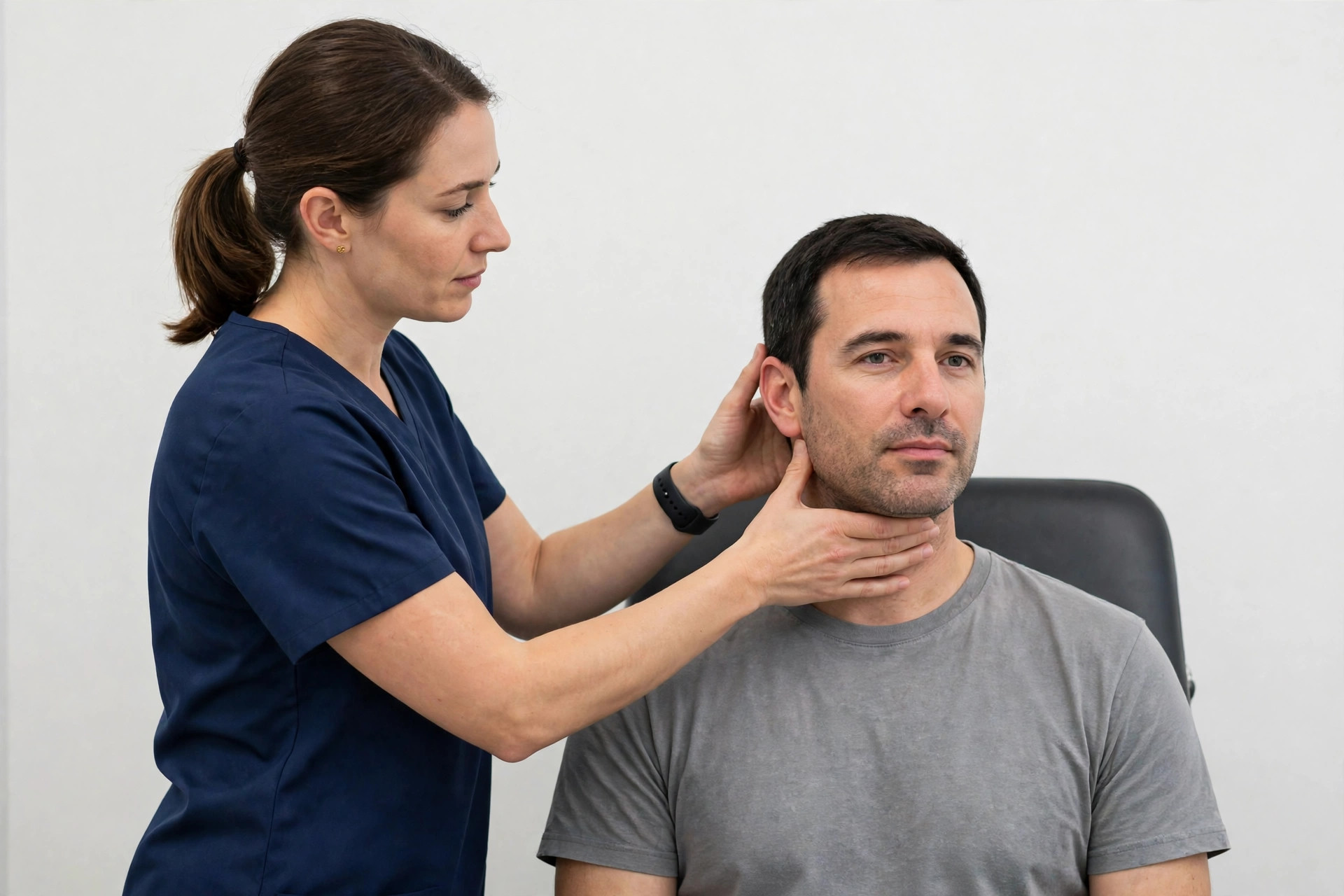
Your physiotherapist will start with your headache history: how often the headaches happen, how long they last, where the pain is felt, what triggers them, and what makes them better or worse. The pattern tells us a lot about which type you have. A headache that is always on one side and starts at the base of the skull points toward the neck. A band-like pressure on both sides points toward tension. A throbbing headache with nausea and light sensitivity points toward migraine.
Next comes the hands-on examination. Your physiotherapist will test how far your neck moves in each direction, feel the joints of the upper neck for stiffness, and press the muscles at the base of the skull and across the shoulders for tender trigger points. They will check your posture, how your shoulder blades move, and the strength of the deep neck muscles that hold your head upright. If pressing a specific neck joint reproduces your headache, that is a strong sign the headache is cervicogenic.
You may also be asked to keep a headache diary for a week or two. It is a simple record of when each headache happens, how long it lasts, how bad it is, and what you were doing before it started. The diary often reveals a pattern you had not noticed: headaches that always follow a long drive, a stressful day, or a night of poor sleep.
Headache treatment works best as a combination, not a single technique. The plan usually has three parts: hands-on treatment to calm the neck down, exercise to rebuild strength and posture, and changes to the daily habits that keep triggering the headaches.
Manual therapy is the hands-on part of treatment, and it is where results tend to come fastest for cervicogenic headaches. Joint mobilisation restores movement to the stiff upper neck joints, especially the top two, where the nerves that refer pain into the head begin. Soft tissue release works on the tight muscles at the base of the skull, the upper trapezius, and the muscles between the shoulder blades. Most patients with cervicogenic headaches notice a meaningful reduction in frequency within the first one to three sessions.
Dry needling places very fine needles into tight, painful trigger points in the neck and shoulder muscles. It can reduce muscle tension and referred pain, and many people find it helps them tolerate their exercises better. It is especially useful when trigger points in the suboccipital muscles at the base of the skull are maintaining the headache pattern and are slow to respond to manual release alone. You can read more in our guide to dry needling in Brooks.
Massage of the neck, shoulders, and upper back reduces muscle tension, improves blood flow, and helps the muscles relax. It is a useful addition to the exercise programme, especially for people whose headaches are driven by stress and muscle tension. It does not fix the underlying joint or strength problem on its own, but it makes the rest of the treatment work better. Learn more in our guide to massage therapy in Brooks.
Exercise is what keeps the headaches from coming back. The programme focuses on strengthening the deep neck flexor muscles that hold the head in a good position, improving thoracic mobility so the upper back moves properly, and building scapular stability so the shoulder blades support the neck instead of loading it. Postural retraining changes the sustained positions that keep loading the same structures day after day.
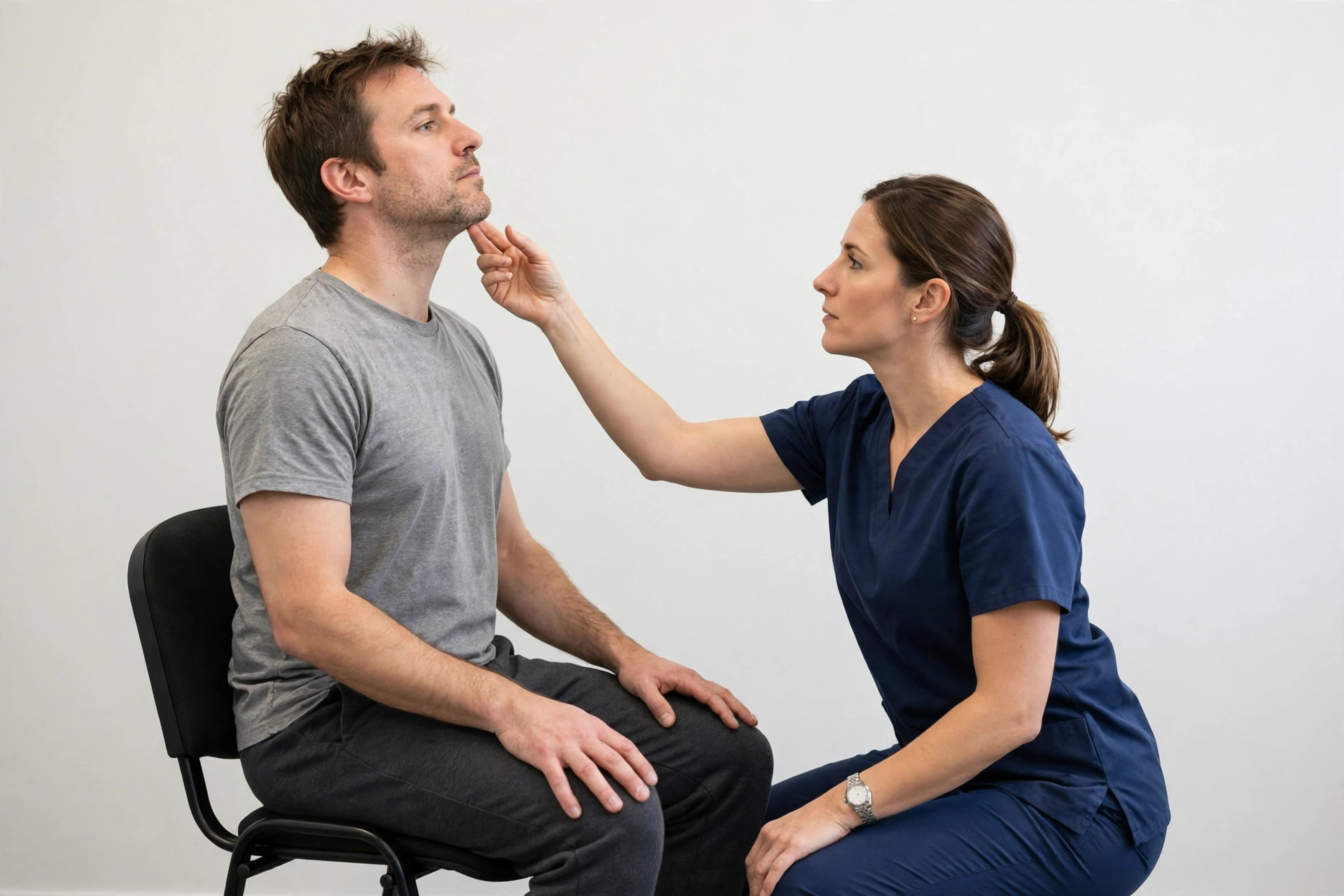
These exercises are safe to start at home, but they are not a substitute for an assessment. If your headaches are sudden, severe, or different from your usual pattern, see a physiotherapist or your doctor first.
Sit tall in your chair, looking straight ahead. Gently draw your chin straight back, as if you are making a double chin, without tilting your head up or down. Hold for five seconds, then relax. Do three sets of ten, once or twice a day. This strengthens the deep neck flexor muscles that hold your head in a good position, and it is the single most important exercise for headache prevention.
Sit tall and drop your right ear toward your right shoulder until you feel a gentle stretch on the left side of your neck. Hold for 30 seconds, breathing slowly, then switch sides. Do two stretches on each side, once or twice a day. This releases the tension in the large muscle that runs from the neck to the shoulder, one of the main drivers of tension headaches.
Sit or stand tall, and gently squeeze your shoulder blades together and slightly down, as if you are trying to hold a pencil between them. Hold for five seconds, then relax. Do three sets of ten, once or twice a day. This builds the muscles that stabilise the shoulder blades and take load off the neck.
Only taking painkillers. Painkillers mask the pain while the neck problem stays exactly the same. Worse, taking them too often can cause medication-overuse headaches, where the painkillers themselves start triggering headaches. If you are taking painkillers more than two or three days a week, talk to your doctor or pharmacist about it.
Ignoring posture. Treatment works, but if you go back to eight hours a day with your head forward at a low laptop screen, the headaches come back. Ergonomics matter: screen at eye level, chair supporting your lower back, feet flat on the floor, and a short break to move every 30 to 45 minutes.
Resting completely. Lying in a dark room helps during a bad headache, but staying inactive for days makes the neck stiffer and the muscles weaker. Gentle movement and walking are better than total rest once the worst of the headache has passed.
Waiting too long to get assessed. Headaches that have been present for months take longer to resolve than headaches caught early. The neck gets stiffer, the muscles get weaker, and the pattern becomes harder to break. If your headaches are happening more than twice a week, or they are getting worse, get assessed now rather than waiting.
For tension and cervicogenic headaches, most people notice a meaningful reduction in headache frequency and intensity within the first one to six sessions. The hands-on treatment often brings relief quickly, especially for cervicogenic headaches, where most patients feel a difference within the first one to three sessions.
Full resolution takes longer. The muscles need weeks to rebuild strength, the posture needs time to change, and the daily habits need to become automatic. A typical plan is four to eight sessions over six to eight weeks, with home exercises in between. Headaches that have been present for months usually take three months or more to fully resolve, because the pattern is well established and the neck has had a long time to stiffen up.
Book an assessment if any of these sound familiar: your headaches happen more than twice a week; they are getting more frequent or more severe; they are always on the same side and start at the base of your skull; they come with a stiff neck; painkillers help less than they used to; or your headaches are interfering with work, sleep, or daily life.
Seek urgent medical attention sooner, by calling 911 or going to emergency care, if you notice any of these red flags: a sudden severe headache unlike any you have had before; a headache with new weakness or numbness, speech changes, fainting, or new confusion; a headache with fever and a stiff neck; a new seizure; or a headache after significant head trauma that is getting worse. These are uncommon, but they need prompt checking.
You do not need a doctor’s referral to see a physiotherapist in Alberta. At your first appointment, the physiotherapist will ask about your headache history, test your neck movement and strength, and build a plan around what is actually driving your headaches.
Yes, for the two most common types. Tension-type headaches and cervicogenic headaches are driven by muscle tension, stiff neck joints, poor posture, and weak deep neck muscles, and all of those are things physiotherapy treats directly. The evidence is strongest for cervicogenic headaches, where manual therapy significantly reduces how often they occur. Migraine is a neurological condition and is not primarily treated by physiotherapy, although treating neck and muscle factors can reduce how often attacks happen.
Most people notice a meaningful reduction in headache frequency and intensity within the first one to six sessions. A typical plan is four to eight sessions over six to eight weeks, with home exercises in between. Headaches that have been present for months usually take around three months to fully resolve. Your physiotherapist will give you a clearer estimate after the first assessment.
A mild increase in headache or neck soreness for a day after the first one or two sessions is common, especially after hands-on treatment. It usually settles within 24 to 48 hours. If the pain is sharp, lasts longer than two days, or is getting worse session after session, tell your physiotherapist so the treatment can be adjusted.
Do not stop prescribed medication without talking to your doctor or pharmacist. But be aware that taking over-the-counter painkillers more than two or three days a week can cause medication-overuse headaches, where the painkillers themselves trigger headaches. As physiotherapy reduces your headache frequency, most people find they need painkillers less often.
Most headaches are not caused by anything serious. But your physiotherapist screens for red flags at the first visit: sudden severe headache, new weakness or numbness, speech changes, fainting, confusion, fever with a stiff neck, or a headache after significant trauma. If any of those are present, you will be referred for urgent medical care straight away.
Headaches are frustrating, because they affect everything: your work, your sleep, your mood, and your ability to enjoy the day. But many of them have a physical cause that can be found and fixed. The people who recover best get assessed early, understand which type of headache they have, and follow a plan that treats the neck, rebuilds strength, and changes the daily habits that keep triggering the pain.
If headaches are happening more than twice a week, or they are getting worse, do not wait and hope they go away. The earlier you start treatment, the faster you recover.
If you live in Brooks or the surrounding area and headaches are interfering with your life, book an assessment at Mission Health Physiotherapy for headache physiotherapy in Brooks. We will find out exactly what is driving your headaches, explain it in plain language, and build a plan that gets them under control.
Mission Health Physiotherapy
740 Alberta St W, Brooks, AB T1R 1A9
Phone: +1 403-794-0111
Email: missionhealthpt@gmail.com
Website: www.missionhealthphysio.ca
Book your headache assessment today and take the first step toward fewer headaches.