
Neck pain can make ordinary activities more difficult than they should be. Turning your head while driving, working at a computer, sleeping comfortably, exercising, or looking up and down may all become challenging when pain and stiffness are present.
For people experiencing persistent discomfort or reduced mobility, Physiotherapy for Neck Pain in Brooks may provide a structured approach to understanding the problem and improving movement and function.
Symptoms can develop gradually, appear after an injury, or occur without one obvious cause. Neck pain may be influenced by long periods in one position, repetitive activities, sports injuries, motor vehicle accidents, sudden increases in physical demands, and previous injuries.
However, neck pain is rarely explained by one simple issue. Blaming everything on “poor posture” may sound convenient, but the human body is considerably more complicated than that.
A physiotherapy assessment can help identify relevant factors, assess how symptoms affect movement, and develop a rehabilitation plan based on your individual goals.
This guide explains what can contribute to neck pain, how Physiotherapy for Neck Pain in Brooks may help, what to expect during treatment, and when medical assessment may be necessary.

Neck pain refers to discomfort affecting the cervical spine and the surrounding muscles, joints, and soft tissues.
Symptoms may affect:
Pain can vary considerably from one person to another. For example, some people experience a dull ache, while others notice sharp discomfort, stiffness, reduced movement, or pain during specific activities.
Neck pain may also interfere with everyday tasks such as:
According to Alberta health information, neck pain can sometimes spread toward the shoulders, upper back, or arms and may also be associated with headaches or reduced ability to turn the head comfortably.
The appropriate treatment depends on the individual. Therefore, Physiotherapy for Neck Pain in Brooks should begin with a proper assessment rather than assuming every case requires the same exercises or treatment techniques.
Neck pain can develop for many different reasons.
Potential contributing factors include:
In some cases, the symptoms begin after a specific event. In other situations, discomfort develops gradually over time.
For example, someone may notice pain after increasing their gym training too quickly. Another person may experience symptoms after spending long periods working in one position. Meanwhile, an athlete may develop neck discomfort following contact, repetitive loading, or a sports injury.
The important point is that one explanation does not fit everyone.
Neck symptoms can present in several ways.
Common symptoms may include:
Some individuals may also experience symptoms extending into nearby areas.
For instance, nerve-related symptoms may sometimes include pain, numbness, tingling, or weakness affecting the arm or hand. Symptoms of this type should be appropriately assessed rather than ignored.
Physiotherapy for Neck Pain in Brooks may involve a combination of assessment, education, exercise, movement rehabilitation, and hands-on treatment when appropriate.
Depending on your symptoms and functional limitations, a physiotherapy plan may include:
Mission Health provides physiotherapy services in Brooks with individualized assessment and treatment planning based on each person’s needs and goals.
The exact treatment plan should depend on your condition.
There is no single exercise that works for every person with neck pain. Similarly, one treatment technique is unlikely to solve every possible cause of neck discomfort.
A proper assessment helps the physiotherapist understand both your symptoms and how those symptoms affect your daily life.
Your physiotherapist may ask about:
The physical assessment may also consider:
This information helps create a more individualized rehabilitation plan.
Someone who wants to return to weight training, for example, may need a different rehabilitation strategy from someone whose primary goal is working comfortably at a desk.
Neck stiffness can make simple movements uncomfortable.
You may find it difficult to:
Treatment may focus on gradually improving movement and increasing tolerance to everyday activities.
Depending on the assessment, rehabilitation may include:
The goal should not be to aggressively force the neck through painful movement.
Instead, rehabilitation often involves gradually improving your ability to move, work, and participate in normal activities.
Desk work is frequently blamed for neck pain.
The reality is more nuanced.
Spending several hours at a computer can contribute to discomfort for some people, particularly when someone remains in the same position for extended periods. However, there is no universally perfect posture that guarantees freedom from neck pain.
A more practical strategy may involve:
Your neck is designed to move. Expecting it to remain in one perfectly controlled position for eight hours is not a particularly realistic strategy.
Movement variety is often more useful than trying to maintain one rigid posture throughout the day.
Neck and shoulder discomfort can sometimes occur together.
The muscles and structures around these areas work together during many everyday movements. Nevertheless, shoulder pain and neck pain do not always come from the same source.
A physiotherapy assessment can help determine whether your symptoms appear to involve:
Treatment can then focus on the factors most relevant to your symptoms and functional limitations.
Some people experience both neck discomfort and headaches.
However, headaches can have many different causes. Therefore, it is not appropriate to assume that every headache is caused by neck tension.
When musculoskeletal factors appear relevant, a physiotherapist may assess neck movement, surrounding muscles, posture-related demands, and physical function.
Persistent, severe, unusual, or worsening headaches should receive appropriate medical evaluation.
In other words, do not automatically blame your neck for every headache. The neck has enough accusations already.
Exercise is often an important part of rehabilitation.
Depending on the individual, a physiotherapy program may focus on:
The most appropriate exercises depend on your symptoms, current capacity, and goals.
Early rehabilitation may involve relatively simple movements. As your physical capacity improves, the program can gradually progress toward more demanding activities.
For someone returning to physical work, rehabilitation may eventually include movements that reflect workplace demands.
An athlete, on the other hand, may need to progress toward sport-specific strength, conditioning, and movement requirements.
The goal is not simply to perform exercises in the clinic. Rehabilitation should prepare you for the activities you actually need to perform.
Neck rehabilitation should not focus entirely on stretching.
Mobility can be important, but physical capacity matters as well.
Strengthening may help improve your ability to tolerate:
The exercises used should match your current ability.
Starting with the most difficult exercise is not automatically more effective. In fact, progressing too quickly may aggravate symptoms.
A gradual approach allows physical capacity to develop over time.
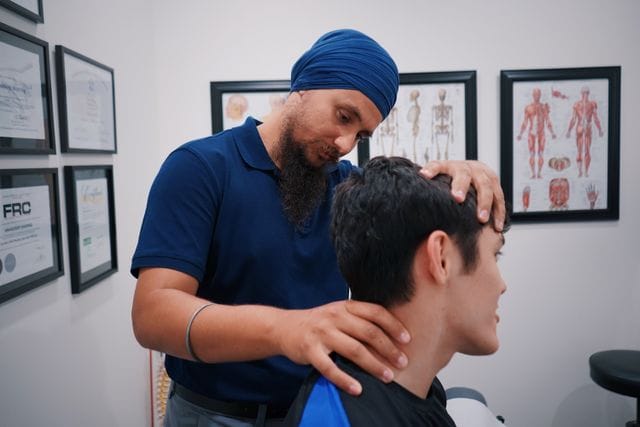
Manual therapy may be included in a physiotherapy treatment plan.
Depending on the assessment, hands-on techniques may be used to address symptoms or movement limitations.
However, manual therapy should generally be part of a broader rehabilitation strategy.
A comprehensive plan may also include:
Alberta health guidance notes that manual therapy may include approaches such as massage and mobilization, while exercise and self-management remain important components of care.
Temporary symptom relief can be useful. Long-term rehabilitation, however, should also focus on improving your ability to function independently.
For selected musculoskeletal conditions, dry needling may be considered when a qualified physiotherapist determines that it is appropriate.
Dry needling can be used as part of a broader treatment plan for certain muscular symptoms.
Mission Health offers dry needling services in Brooks as part of its available physiotherapy treatment options.
However, dry needling is not automatically necessary for everyone with neck pain.
If reduced strength, limited physical capacity, repetitive demands, or other movement-related factors contribute to your symptoms, those issues may also need to be addressed.
A treatment plan should focus on what the individual needs rather than using every available technique simply because it exists.
Athletes may experience neck discomfort in a range of activities.
Depending on the sport, the neck may be exposed to:
Returning to sport should involve more than waiting for symptoms to disappear.
Rehabilitation may need to address:
Mission Health offers sports injury rehabilitation in Brooks for athletes and active individuals working toward a safe return to activity.
Being able to turn your head comfortably during everyday life is not necessarily the same as being ready for a competitive sport.
The final stages of rehabilitation should reflect the actual demands of the activity you plan to return to.
Neck symptoms can occur after a motor vehicle accident.
The type and severity of symptoms can vary significantly from one person to another. Appropriate assessment is particularly important when symptoms persist or interfere with normal activities.
Depending on the injury and clinical assessment, rehabilitation may focus on gradually restoring:
The treatment approach should always depend on the individual’s condition and healthcare needs.
Symptoms that develop recently are generally classified as acute neck pain.
It may occur after:
Early management may focus on maintaining or gradually restoring comfortable movement while appropriately modifying activities.
Chronic neck pain refers to symptoms that continue over a longer period.
Persistent symptoms can be influenced by several factors, including:
Physiotherapy for Neck Pain in Brooks may help develop a structured rehabilitation strategy based on your current abilities and functional goals.
Chronic pain does not automatically mean your body is continuously being damaged. Persistent symptoms can be complex, which is exactly why an individualized approach matters.
Recurring neck pain can be frustrating.
Sometimes symptoms improve for a while before returning.
Potential contributors may include:
The goal is not necessarily to avoid every movement that has ever caused discomfort.
Instead, rehabilitation may focus on building enough physical capacity to better tolerate the demands of daily life.
For example, if your work requires repetitive movement, your rehabilitation may eventually need to prepare you for those specific demands.
Similarly, if you play sports, your rehabilitation should eventually reflect the physical demands of your chosen activity.
As a result, avoidance alone rarely builds capacity.
Neck discomfort can sometimes affect sleep.
You may find it difficult to:
The relationship between sleep and pain can also work in both directions.
Poor sleep may influence how people experience pain, while discomfort can make restful sleep more difficult.
If neck pain consistently interferes with sleep, discussing the problem with an appropriate healthcare professional may help determine the next steps.
Recovery time varies considerably.
Factors that may influence progress include:
Some people improve relatively quickly.
Others may require a longer rehabilitation process.
A good treatment plan should evolve as your capacity changes.
Early rehabilitation might focus on restoring comfortable movement. Later stages may place greater emphasis on strength, endurance, and returning to specific activities.
The objective should be progress toward meaningful functional goals rather than simply counting the number of treatment sessions.
There is no guaranteed method for preventing every episode of neck pain.
However, maintaining general physical capacity may help you tolerate everyday demands more effectively.
Useful strategies may include:
Prevention is not about finding one magical posture.
A more realistic goal is building the physical capacity needed to handle your daily activities.
Many cases of neck pain are related to musculoskeletal issues. However, some symptoms require medical assessment.
Seek appropriate medical attention when neck pain is associated with:
Symptoms such as persistent numbness, tingling, or weakness affecting the arms or hands should also be appropriately assessed.
Physiotherapy can be valuable for many musculoskeletal conditions, but serious symptoms require the appropriate level of medical care.
Physiotherapy for Neck Pain in Brooks provides an opportunity to receive an individualized assessment and rehabilitation plan based on your symptoms and goals.
Mission Health Physiotherapy & Sports Rehab provides physiotherapy services in Brooks and offers a range of rehabilitation options for pain, injuries, and movement-related concerns.
Depending on your assessment, your treatment plan may include:
The objective should be practical.
Whether your goal is working more comfortably, returning to the gym, driving without restriction, improving mobility, or participating in sports, rehabilitation should connect directly to that goal.
Physiotherapy may help people with certain types of musculoskeletal neck pain by addressing movement, strength, physical capacity, and functional limitations.
The number of sessions varies depending on your symptoms, condition, goals, and response to treatment.
In many cases, some form of activity or exercise can be continued or modified. A physiotherapist can help determine an appropriate level of activity for your individual situation.
Not necessarily. Neck pain can involve many factors, and there is no single posture that explains every case.
Dry needling may be considered for selected muscular symptoms when clinically appropriate as part of a broader treatment plan.
Yes, rehabilitation may help address movement, strength, conditioning, and the physical demands involved in returning to a specific sport or activity.
Some people experience both neck discomfort and headaches. However, headaches can have many causes and should not automatically be attributed to the neck.
The appropriate level of activity depends on the condition. Prolonged complete inactivity is not always necessary for non-serious musculoskeletal neck pain.
Neck pain associated with significant trauma, severe weakness, major sensory changes, loss of coordination, or rapidly worsening symptoms should receive appropriate medical assessment.
Maintaining physical activity, building strength, gradually progressing exercise, managing changes in workload, and addressing recurring symptoms may help improve your ability to tolerate daily demands.
Neck pain can interfere with work, exercise, driving, sleep, and everyday movement.
The right approach depends on understanding your individual symptoms, physical capacity, and functional goals.
Physiotherapy for Neck Pain in Brooks may help you work toward improved movement, strength, confidence, and function through an individualized rehabilitation program.
The goal should be more than temporary symptom relief.
A strong rehabilitation strategy focuses on helping you build the physical capacity needed for your real life. That may involve working, exercising, driving, lifting, playing sports, or simply moving more comfortably.
If persistent or recurring neck pain is affecting your daily activities, a professional assessment may help determine the most appropriate next steps.