
Knee replacement rehabilitation Brooks patients trust starts right after surgery, and it is the part of recovery that decides how well your new knee will work for the rest of your life. Your surgeon replaced the damaged joint, but it is the weeks of guided movement, exercise, and practice afterwards that teach the new knee how to bend, straighten, and carry your weight again.
If you have just had a total knee replacement, or your surgery is coming up soon, this guide explains exactly what to expect. You will learn what happens in the first six weeks, how much your knee should bend at each stage, when you can walk without a walker, which exercises matter most, and how Alberta Health Services funded physiotherapy works here in Alberta.
Most people in Brooks have their knee replacement surgery at a hospital in Medicine Hat, Lethbridge, or Calgary, and then come home to recover. That is where knee replacement rehabilitation in Brooks begins, and where Mission Health Physiotherapy can help you through every step. This guide is general information. Always follow your own surgeon's instructions first.
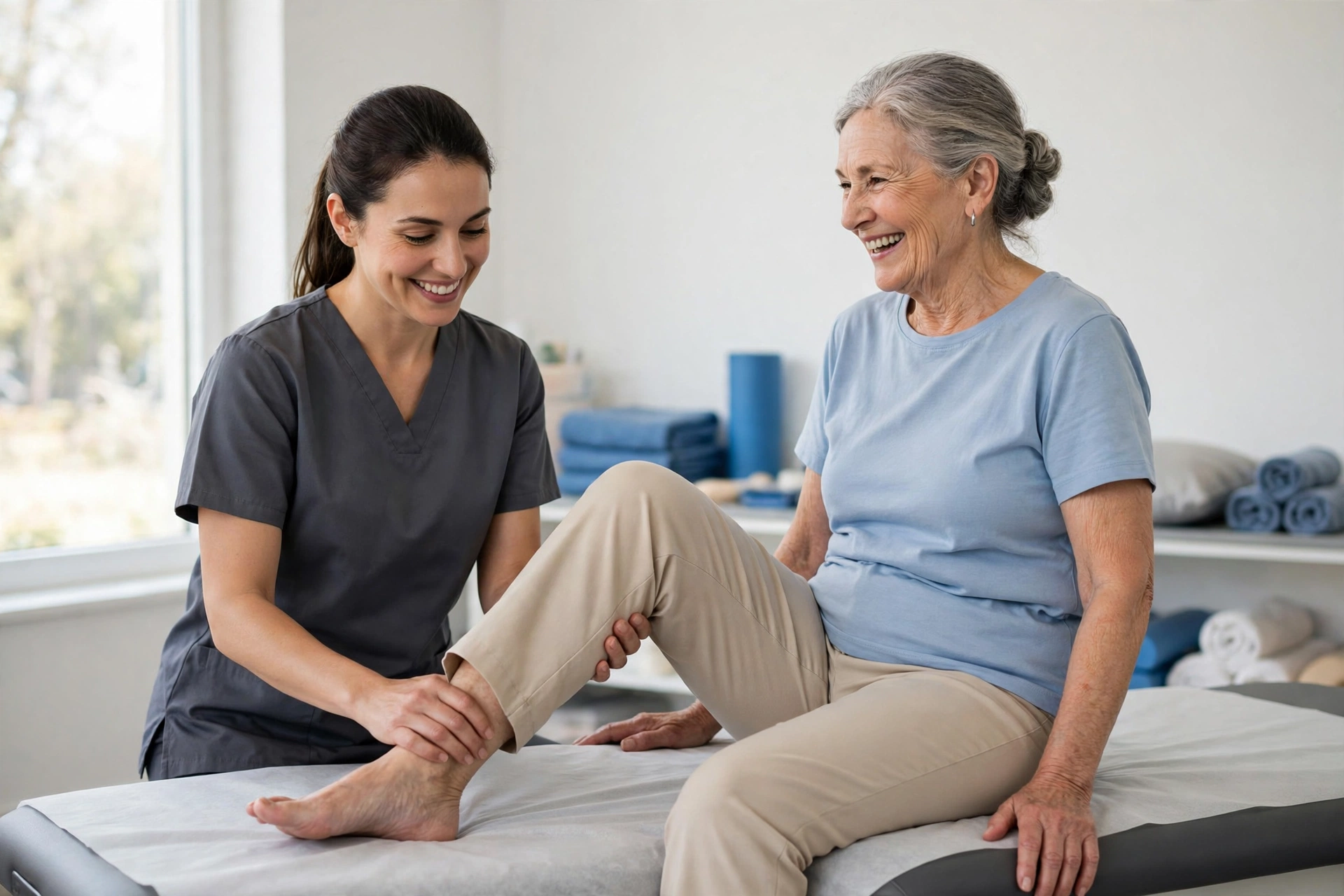
A total knee replacement, also called total knee arthroplasty, is an operation in which the surgeon removes the worn-out ends of the thigh bone and shin bone and replaces them with metal and plastic parts that glide smoothly together. Most knee replacements are done because of knee arthritis, where the cartilage that cushions the joint has worn away and bone rubs on bone. If arthritis is the reason for your surgery, our guide to arthritis physiotherapy in Brooks explains how the condition develops and why the joint becomes so painful.
The operation fixes the joint itself, but it does not finish the job. After surgery, the muscles around the knee are weak, the joint is stiff and swollen, and the brain has to relearn how to move a leg that feels different. That is what rehabilitation is for.
In simple words, knee replacement rehabilitation Brooks physiotherapists provide is a step-by-step program of exercises, hands-on treatment, and walking practice that restores three things: bend and straightening, strength, and confidence. The program is not the same for everyone. Your physiotherapist adjusts it to your age, your fitness before surgery, whether one or both knees were replaced, and any other health conditions you have.
Why does it matter so much? Because the first few weeks after surgery set the pattern for the whole recovery. Scar tissue forms quickly around a new knee. If the knee is not moved and bent regularly in those early weeks, it stiffens, and that stiffness becomes much harder to fix later. Research and clinical experience both point the same way: people who start moving early, within the first day after surgery, and who keep up their home exercises, regain their bend faster, walk sooner, and report less pain at three months than people who rest too much.
Rehabilitation also protects the rest of your body. When one knee hurts, you walk differently, and that changed pattern can strain your hips, your lower back, and even your neck and shoulders. A good program corrects your walking pattern early so those extra aches never take hold. It also rebuilds your confidence, because many people are nervous about trusting a new knee, and that fear keeps them sitting still, which is the worst thing for recovery.
The first six weeks of knee replacement rehabilitation Brooks patients follow are the most important weeks of the whole recovery. Here is what usually happens, week by week. Every person is different, and your surgeon may set different limits, so always follow your own surgeon's instructions first.
Physiotherapy starts on the day of surgery or the next morning. A hospital physiotherapist will help you sit on the edge of the bed, stand up, and take your first steps with a walker. You will also start your first exercises: ankle pumps to keep blood moving, quadriceps sets to wake up the thigh muscle, and gentle heel slides to begin bending the knee.
Pain medicine is given on a regular schedule in these first days, not only when the pain becomes severe. Ice packs and elevation help control swelling. Before you go home, usually within one to three days, you will practise getting in and out of bed, getting on and off a chair, and going up and down a few stairs with your walker.
The first two weeks at home are about routine. Your home exercise program, usually two or three short sessions a day, matters more than anything else. Swelling and bruising are at their worst during this time, and the knee often feels tight and warm. That is normal, and it improves a little every day.
Your staples or stitches usually come out around day 12 to 14. Your first outpatient physiotherapy appointment usually happens in this window too. At that visit, your physiotherapist measures how far your knee bends and straightens, checks your walking, and sets your home program for the next stage.
By the third week, the wound has healed, the swelling is starting to settle, and the knee bends more easily. Most people move from a walker to a cane during this stage, and walking distances grow from a few steps around the house to short walks outside.
This is also when the stationary bike usually enters the program. At first you rock the pedals back and forth without going all the way around. Once your knee bends past about 100 degrees, full revolutions become possible, and cycling becomes one of the best ways to keep the knee moving without loading it heavily.
By six weeks, most people walk without any aid, at least around the house, and many are walking around the block. Your knee should bend to about 110 degrees by now. You will usually see your surgeon for a follow-up appointment at six weeks, and that visit is a good moment to ask about driving, returning to work, and any activities you are keen to restart.
After a knee replacement, two movements matter most. Flexion is bending the knee. Extension is straightening it fully. You need both, but extension is the one people forget, and it matters enormously for walking without a limp.
Straightening first. A knee that cannot fully straighten forces you to walk with a bent knee, which tires the thigh muscle and strains the joint. Work on extension from day one: several times a day, sit or lie with your heel resting on a rolled towel and let gravity gently straighten the knee. Do not rest with a pillow under your knee, because that holds the knee in a bent position for hours.
Bending targets are different at every stage. These are the goals most surgeons and physiotherapists use:
For daily life, 90 degrees of bend is enough for walking and going up stairs. You need about 100 to 110 degrees for most daily activities, like getting in and out of a car and sitting down comfortably. Cycling needs around 110 degrees, and kneeling or squatting needs more still.
The exercises that build bend are simple: heel slides lying down, seated knee bends letting gravity do the work, and gentle rocking on a stationary bike. Do them little and often, several times a day, rather than one long painful session. A mild stretch or ache during the exercise is normal. Sharp pain is not, and if your bend stops improving for two weeks, tell your physiotherapist early. Hands-on treatment can help a stiff knee, but it works best when the problem is caught early, not months later.
During knee replacement rehabilitation Brooks patients learn to walk again in stages, and each stage has a clear goal. Rushing a stage usually backfires, because a poor walking pattern becomes a habit that is hard to break.
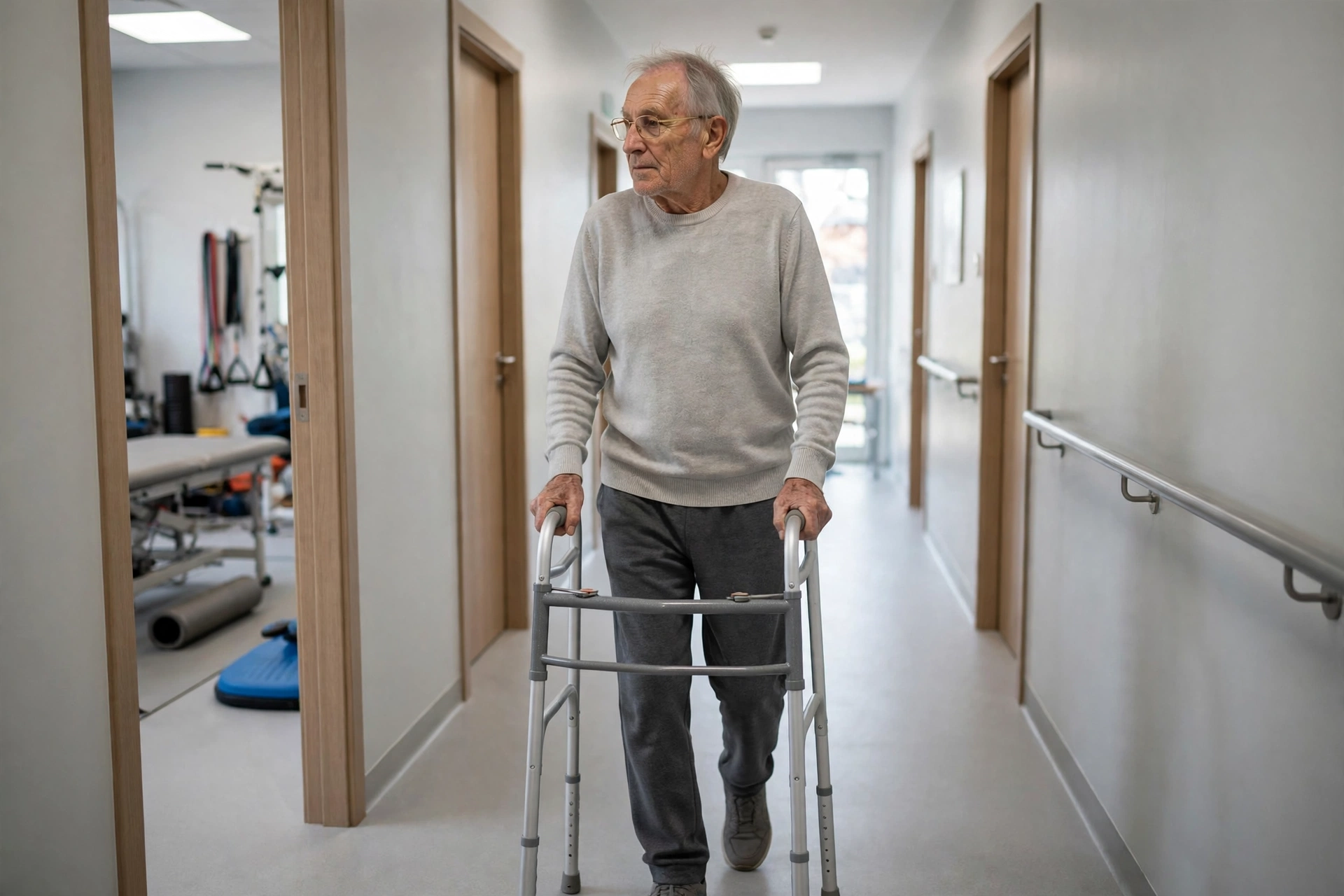
Stage 1 is the walker. For the first one to two weeks, a walker gives you the most support and the most confidence. Stand tall, step forward with the operated leg first, then bring the other leg through. Try not to lean heavily over the walker. Hunching forward puts strain on your neck and shoulders, and that kind of strain can linger long after the knee has healed. If leaning on a walker or cane has left your neck and shoulders sore, that is common and it usually settles as your walking improves. Our guide to physiotherapy for neck pain in Brooks explains how that kind of pain is treated, and the same hands-on care and exercises that help a sore neck after a car accident, described in our guide to whiplash physiotherapy in Brooks, also help a neck strained by weeks of leaning on a walker.
Stage 2 is the cane. When you can put full weight through the operated leg without pain, your physiotherapist will move you to a cane, held in the hand opposite the operated knee. The cane takes some of the load and helps your balance while your muscles get stronger. Use it for every walk, even short ones around the house, until your physiotherapist says you no longer need it.
Stage 3 is walking on your own. Most people reach this stage between four and six weeks. Your physiotherapist will check that your step length is even, your knee straightens when your heel hits the ground, and you are not limping to one side. A small limp that feels harmless can become a lasting habit, so it is worth correcting early.
Walking distance builds gradually. Start with short walks around the house, then around the block, then longer walks on flat ground. Uneven ground, gravel, and curbs come later, once your balance is reliable. Good shoes help: flat, supportive shoes with a low heel and a firm sole. Avoid slippers and loose sandals, which are a fall risk when your balance is still shaky.
After knee replacement surgery, the quadriceps muscle on the front of the thigh often switches off. Surgeons call this quadriceps lag, and it is the reason your leg can feel weak and unreliable even though the new joint is strong. Rebuilding that muscle is the central job of the middle weeks of rehabilitation.
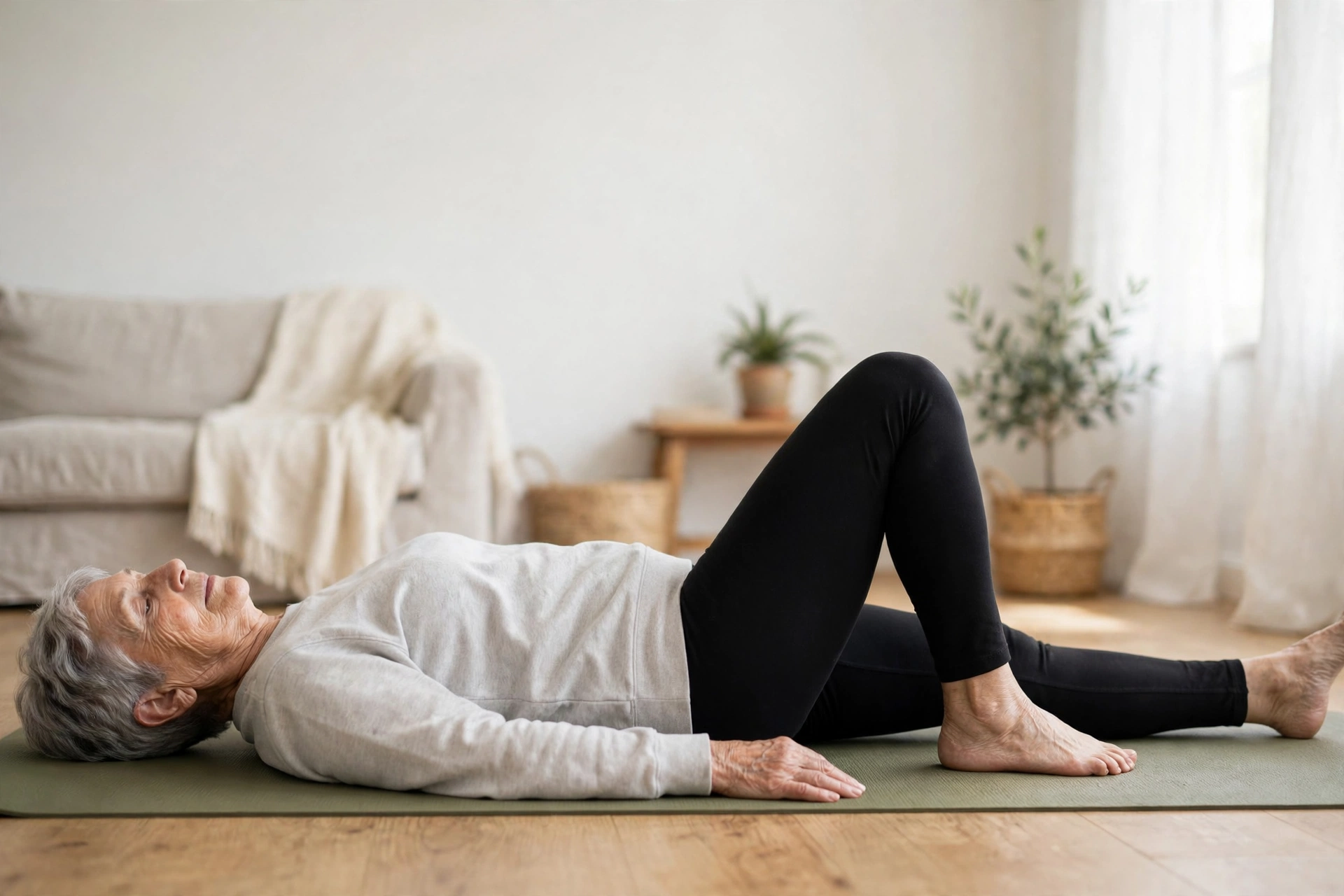
These are the exercises your physiotherapist will most likely give you. Do them exactly as instructed, and never push through sharp pain.
Frequency matters more than duration. Two or three short sessions a day, 10 to 15 minutes each, work better than one long session that leaves the knee hot and swollen. And the stationary bike, once your bend allows it, is one of the best tools in the whole program: it moves the knee through its range hundreds of times without loading it heavily.
Some pain and swelling after knee replacement is normal, and it lasts longer than most people expect. Swelling often comes and goes for three to six months, usually worse after a busy day or a hard exercise session. That does not mean something is wrong.
Ice is your best friend in the first weeks. Apply an ice pack or cold pack to the knee for 15 to 20 minutes, several times a day, especially after exercise. Always put a thin cloth between the ice and your skin, and never fall asleep with ice on your knee.
Elevation helps too. When you rest, raise your leg so the foot is above the level of your heart, with the knee supported and straight, not bent over a pillow. Fifteen to twenty minutes of elevation a few times a day makes a real difference to swelling. Compression stockings, if your surgeon prescribed them, also help, so wear them as directed.
Take your pain medicine as prescribed, especially in the first two weeks. Many people make the mistake of waiting until the pain is severe, but medicine works better when it is taken before the pain peaks. If you are worried about your medicine, talk to your surgeon or pharmacist rather than stopping it on your own.
Learn the difference between hurt and harm. A mild ache or a feeling of tightness during and after exercise is normal and expected. Sharp pain, a sudden increase in swelling, or pain that keeps you awake all night is a signal to slow down and talk to your physiotherapist. Rest is part of the program too: a knee worked hard all day without rest will swell, stiffen, and bend less the next day.
Knee replacement rehabilitation Brooks patients receive within the first 12 weeks after surgery may be covered by Alberta Health Services. AHS offers a limited number of funded physiotherapy visits at contracted clinics for people who have had a total or partial hip or knee replacement within the last 12 weeks.
Here is what that means in practice. The funding covers an initial assessment and a set number of treatment visits. Funding for care that starts later than 12 weeks after surgery needs approval from an AHS program coordinator, and the treatment itself must be approved by AHS within 84 days of surgery to be eligible. Exercise equipment and supplies are not covered by the program.
The practical point is simple: do not wait. The 12-week window starts on the day of your surgery, not on the day you feel ready. Book your first physiotherapy appointment early, even if your first visit is just an assessment and a home program. If your surgery is coming up, find out about this funding now, before the operation, so your first appointment is already booked for the week you come home.
Sleep is often the hardest part of the first few weeks. The knee aches at night, finding a comfortable position is difficult, and poor sleep makes everything else harder, including pain. Poor sleep and ongoing pain can also trigger headaches, and if headaches are part of your recovery, our guide to headache physiotherapy in Brooks explains how physiotherapy can help.
Sleep on your back for the first few weeks, with your leg straight and supported. After a few weeks, you can try sleeping on your side with a pillow between your knees. Never sleep with a pillow under your knee, because it holds the joint bent all night and makes straightening harder the next day.
For sitting, choose a firm chair with armrests and a seat high enough that your feet rest flat on the floor. Low, soft couches are the enemy in the first weeks: they are hard to get out of and they hold your knee bent. Get up and move every hour, even if it is only a short walk to the kitchen. When you sit for a meal or to watch television, straighten the knee out in front of you from time to time instead of keeping it bent.
Driving depends on which knee was replaced and whether your car is automatic. For a right knee replacement, most surgeons advise waiting four to six weeks. For a left knee with an automatic car, it can be sooner. You must be off narcotic pain medicine, able to move your foot quickly from the gas to the brake, and able to do an emergency stop without hesitation. Check with your surgeon and your insurance company before you drive. A good test in an empty parking lot, with someone beside you, is worth doing before your first real trip.
Most recoveries go smoothly, but some signs need urgent attention. Call your surgeon, call Health Link at 811, or go to the emergency department if you notice any of these:
Some things that feel worrying are actually normal. Mild warmth around the knee, swelling after activity, clicking or clunking sounds from the new joint, and numbness in the skin around the scar are all common and usually settle over time. When in doubt, call. Your surgical team would always rather hear from you early than late.
Knee replacement rehabilitation Brooks patients do at Mission Health starts with a full one-on-one assessment. We measure how far your knee bends and straightens, test your strength and balance, watch how you walk, and listen to what matters most to you, whether that is walking to the mailbox, getting back to work, or playing with your grandchildren.
From there, we build a program around your goals: hands-on treatment to improve bend and reduce stiffness, a home exercise program that progresses week by week, gait retraining so you walk evenly again, and balance work so you feel steady on your feet. We also help with the practical side of recovery: how to get in and out of a car, how to manage stairs safely, and when you are ready to return to driving and daily activities.
You do not need to travel to Medicine Hat or Calgary for your rehabilitation. Our Brooks clinic is at 740 Alberta St W, Brooks, AB T1R 1A9. Call us at +1 403-794-0111 or email missionhealthpt@gmail.com to book an assessment. The sooner you start, the better your new knee will work.
Most people need knee replacement rehabilitation Brooks clinics provide for about 12 weeks of guided sessions, with a home program that continues beyond that. The biggest gains happen in the first three months, but strength and flexibility keep improving for up to a year after surgery.
By six weeks, the usual target is about 110 degrees of bend with the knee able to straighten fully to 0 degrees. If you are behind that target, see your physiotherapist promptly. Hands-on treatment and a changed exercise program can help, but stiffness is much easier to fix at six weeks than at six months.
Most people move from a walker to a cane in the second or third week, and walk without any aid between four and six weeks. Your physiotherapist will make the call based on your strength, balance, and walking pattern, not just the calendar.
For a right knee replacement, most surgeons advise waiting four to six weeks. For a left knee with an automatic car, it is often sooner. You must be off narcotic pain medicine and able to do an emergency stop comfortably. Always confirm with your surgeon and your insurer.
Alberta Health Services funds an initial assessment and a set number of physiotherapy visits at contracted clinics for total or partial knee replacement within 12 weeks of surgery, with funding approved within 84 days. Ask your surgeon's office or Health Link at 811 to confirm your eligibility.
Do not wait and hope. Tell your physiotherapist as soon as your bend stops improving, ideally within the first six weeks. Hands-on mobilisation, a changed home program, and sometimes a referral back to your surgeon can get things moving again. The earlier a stiff knee is treated, the better the result.
Knee replacement rehabilitation Brooks patients stick with is the difference between a knee that works and a knee that stays stiff. The surgery gives you a new joint. Rehabilitation teaches that joint how to move, and teaches you how to trust it again.
Start early, do your exercises little and often, keep your appointments, and ask for help the moment something stalls. If you have recently had a knee replacement, or your surgery is coming up, call Mission Health Physiotherapy in Brooks at +1 403-794-0111 to book an assessment. We will help you get back to walking, and back to your life.