
Arthritis is one of the most common reasons people in Brooks visit a physiotherapist. If your knees ache when you climb the stairs, your hands feel stiff in the morning, or your hip hurts after a walk, you are not alone. Arthritis affects about 1 in 5 Canadian adults, and it is one of the leading causes of pain and stiffness in people over 50. The good news is that physiotherapy can help. It cannot cure arthritis, but it can reduce pain, improve movement, and help you stay active and independent for years to come. In this guide, we explain what arthritis is, the difference between osteoarthritis and rheumatoid arthritis, how physiotherapy helps, the safest exercises you can do at home, and what to do when a flare-up hits. We also cover winter stiffness, a real problem in Brooks, and when you need to see a rheumatologist instead of a physiotherapist.
Arthritis is not one disease. It is a word that covers more than 100 different conditions that affect the joints. A joint is the place where two bones meet, like your knee, hip, shoulder, or the small joints in your fingers. In a healthy joint, the ends of the bones are covered with smooth cartilage, and the joint is lined with a thin tissue that makes a small amount of fluid. This lets the bones glide over each other without pain. In arthritis, something goes wrong with this system. The cartilage wears down, the lining becomes inflamed, or the immune system attacks the joint. The result is pain, stiffness, swelling, and less movement.
Arthritis can affect one joint or many joints. It can come on slowly over years, or it can appear more quickly. Some types get worse with age and wear, while others are caused by the immune system and can affect people of any age. Arthritis does not only affect older people. Young adults and even children can develop certain types, though it is most common after 50. In Brooks, we see arthritis most often in the knees, hips, hands, and lower back. If you have joint pain that lasts more than a few weeks, it is worth getting it checked. Early treatment makes a real difference, because the sooner you start moving the joint the right way, the slower the stiffness sets in.
The two most common types of arthritis are osteoarthritis and rheumatoid arthritis. They sound similar, but they are very different conditions, and they need different treatment.
Osteoarthritis, often called OA, is the most common type. It is a wear-and-tear condition. Over years of use, the cartilage that cushions the joint slowly wears away. The bones then rub against each other, which causes pain and stiffness. OA usually affects one or a few joints, most often the knees, hips, hands, and spine. It tends to get worse slowly, and pain is often worse after activity and better with rest. Age, previous joint injuries, being overweight, and jobs that involve heavy lifting or kneeling all increase the risk.
Rheumatoid arthritis, often called RA, is an autoimmune disease. This means the body’s own immune system mistakenly attacks the lining of the joints. This causes inflammation, swelling, and pain. Unlike OA, RA usually affects many joints at the same time, often on both sides of the body, for example both hands or both knees. RA can also cause fatigue, low-grade fever, and a general feeling of being unwell. It can affect people of any age, including young adults, and it needs medical treatment from a rheumatologist.
The key difference is simple: osteoarthritis is mainly a problem of wear and tear, while rheumatoid arthritis is a problem of inflammation caused by the immune system. Physiotherapy helps both types, but the approach is different. For OA, the focus is on strengthening the muscles around the joint, improving movement, and reducing the load on the joint. For RA, the focus is on gentle movement, managing flare-ups, and protecting the joints during active inflammation. Your physiotherapist will work out which type you have and plan treatment around it.
Arthritis does not always look the same. The signs depend on which joints are affected and which type of arthritis you have. But there are some common signs to watch for. Pain in a joint is the most common sign. It may be a dull ache or a sharp pain. It may be worse in the morning, after sitting for a long time, or after activity. Stiffness is another common sign, especially in the morning or after rest. If your joints feel stiff for more than 30 minutes after waking up, that is worth noting. Swelling around a joint, warmth, or redness can also be signs, especially with rheumatoid arthritis. You may also notice that a joint does not move as far as it used to, or that it makes a grinding or clicking sound.
Knee arthritis is the most common type we see in Brooks. It often causes pain when climbing stairs, squatting, or getting up from a chair. The knee may feel stiff after sitting, and it may swell after a long walk. Some people notice a grinding feeling when they bend the knee. If knee pain is your main problem, our guide to knee pain physiotherapy in Brooks explains how we assess and treat it.
Hip arthritis often causes pain in the groin or the front of the thigh, and sometimes the pain spreads down to the knee. Walking, standing for long periods, or getting in and out of a car becomes harder. You may notice a limp, or that you cannot spread your legs as far as before. Our hip pain physiotherapy guide covers the exercises and hands-on treatment that help the hip move better.
The small joints of the fingers can become stiff and swollen, making it hard to grip things, open jars, or button a shirt. The base of the thumb is a common spot. Morning stiffness in the hands that lasts more than half an hour is a sign worth checking, especially if both hands are affected the same way.
In the shoulder, arthritis can limit how far you can raise your arm or reach behind your back. In the spine, it can cause stiffness and aching in the lower back or neck, often worse in the morning and better once you start moving. If shoulder pain is your main concern, our shoulder pain guide explains the difference between arthritis and other shoulder problems. Back pain from arthritis is covered in our complete back pain guide for Brooks.
Arthritis is not just a medical problem. It changes how you live your day. Getting out of bed in the morning can be slow and sore. Climbing the stairs to your bedroom, carrying groceries, or getting up from a low chair can all become harder. For many people in Brooks, the cold months make it worse, and walking on icy sidewalks in winter feels risky when your knees or hips are already stiff.
Work can be affected too. If your job involves standing, lifting, kneeling, or using your hands all day, arthritis can make a full shift painful. Some people cut back their hours or change how they do tasks. Hobbies suffer as well. Gardening, fishing, walking the dog, or playing with grandchildren all need joints that move well. When they do not, people start doing less, and doing less makes the joints stiffer. It becomes a cycle. The goal of physiotherapy is to break that cycle: reduce the pain enough that you can move more, and move more so the joints stay looser and stronger.
Physiotherapy does not cure arthritis, and no honest clinic will tell you it does. What it does is help you live better with it. The first thing physiotherapy does is reduce pain. Hands-on treatment, gentle joint movement, and heat or cold can calm a sore joint. The second thing it does is build strength. Strong muscles around a joint take load off the joint itself. For example, stronger thigh muscles reduce the pressure on an arthritic knee with every step. The third thing it does is restore movement. Stiff joints lose range, and a physiotherapist works to get that range back gradually and safely.
Physiotherapy also teaches you how to move well. Small changes in how you sit, stand, lift, and walk can take a surprising amount of strain off an arthritic joint. Your physiotherapist will also give you a home exercise program, so you can keep improving between visits. If you are over 65 and new to physiotherapy, our beginner’s guide to physical therapy for seniors in Canada explains how to start safely. And if you have other health conditions, like diabetes or heart disease, your physiotherapist will take those into account and keep the program safe for you. Most people notice a difference within a few weeks of regular treatment and home exercise, though arthritis is a long-term condition and the best results come from sticking with the program.
Your first visit is an assessment, not a treatment session. Your physiotherapist will ask about your pain: where it is, when it started, what makes it better or worse, and how it affects your daily life. They will ask about your medical history, any medicines you take, and whether anyone in your family has arthritis. Then they will examine the joint. They will check how far it moves, how strong the muscles around it are, whether it is swollen or warm, and how you walk and move.
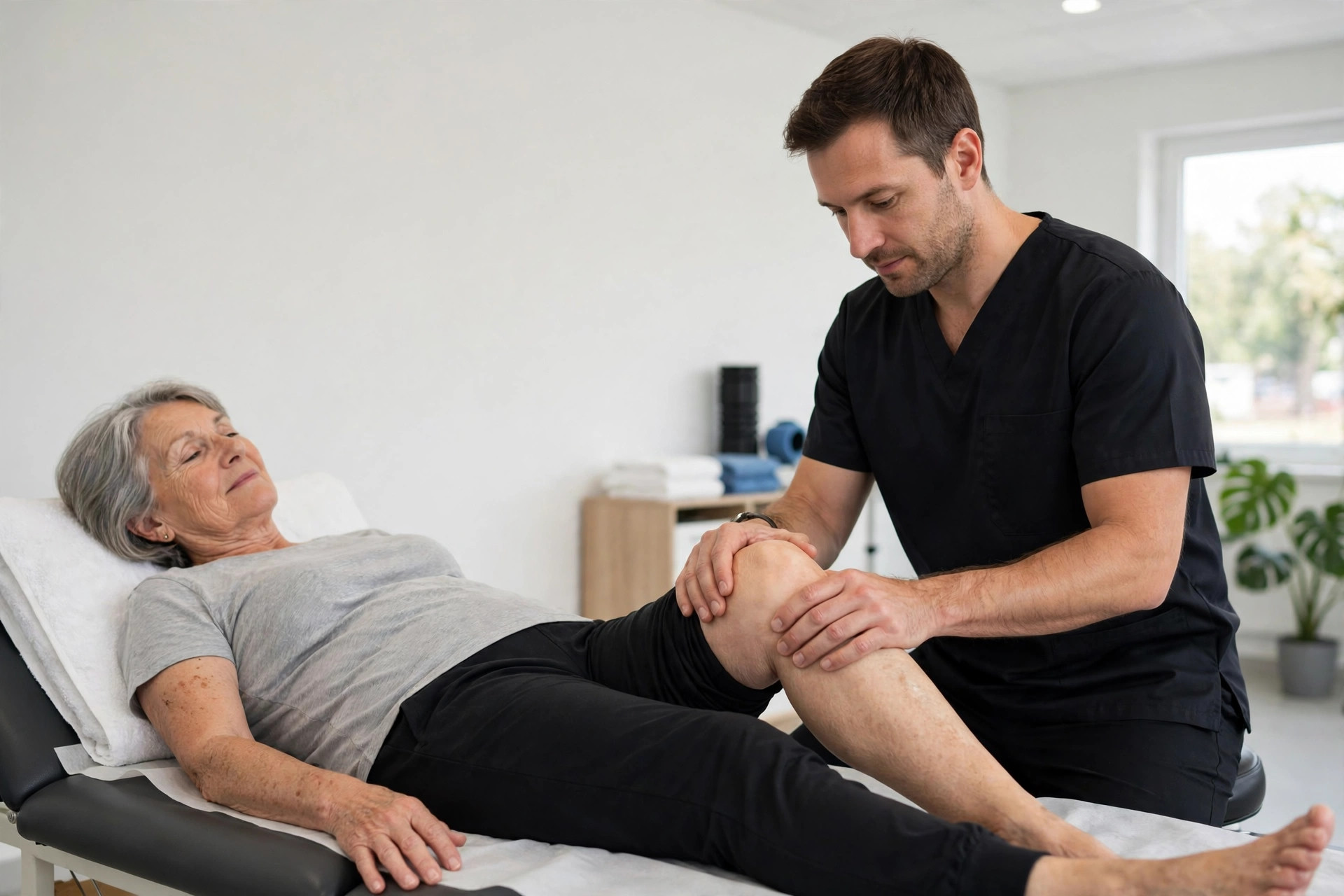
Based on the assessment, your physiotherapist will explain what they found in plain words, and what the plan is. The plan usually includes hands-on treatment, a set of exercises to do at home, and advice on activity and pain management. You will also talk about your goals. Some people want to walk without pain. Others want to get back to work, or play with their grandchildren, or simply get up from a chair without wincing. Your goals shape the plan. A first appointment usually takes about 45 minutes to an hour. You do not need a doctor’s referral to book one.
Exercise is one of the best treatments for arthritis, and it is also the one people are most afraid of. It seems wrong to move a joint that hurts. But the right kind of exercise, done gently and regularly, reduces pain and stiffness over time. The key is to choose exercises that strengthen the muscles without hammering the joint. Here are six safe exercises your physiotherapist may include in your program. Start gently, and stop if an exercise causes sharp pain.
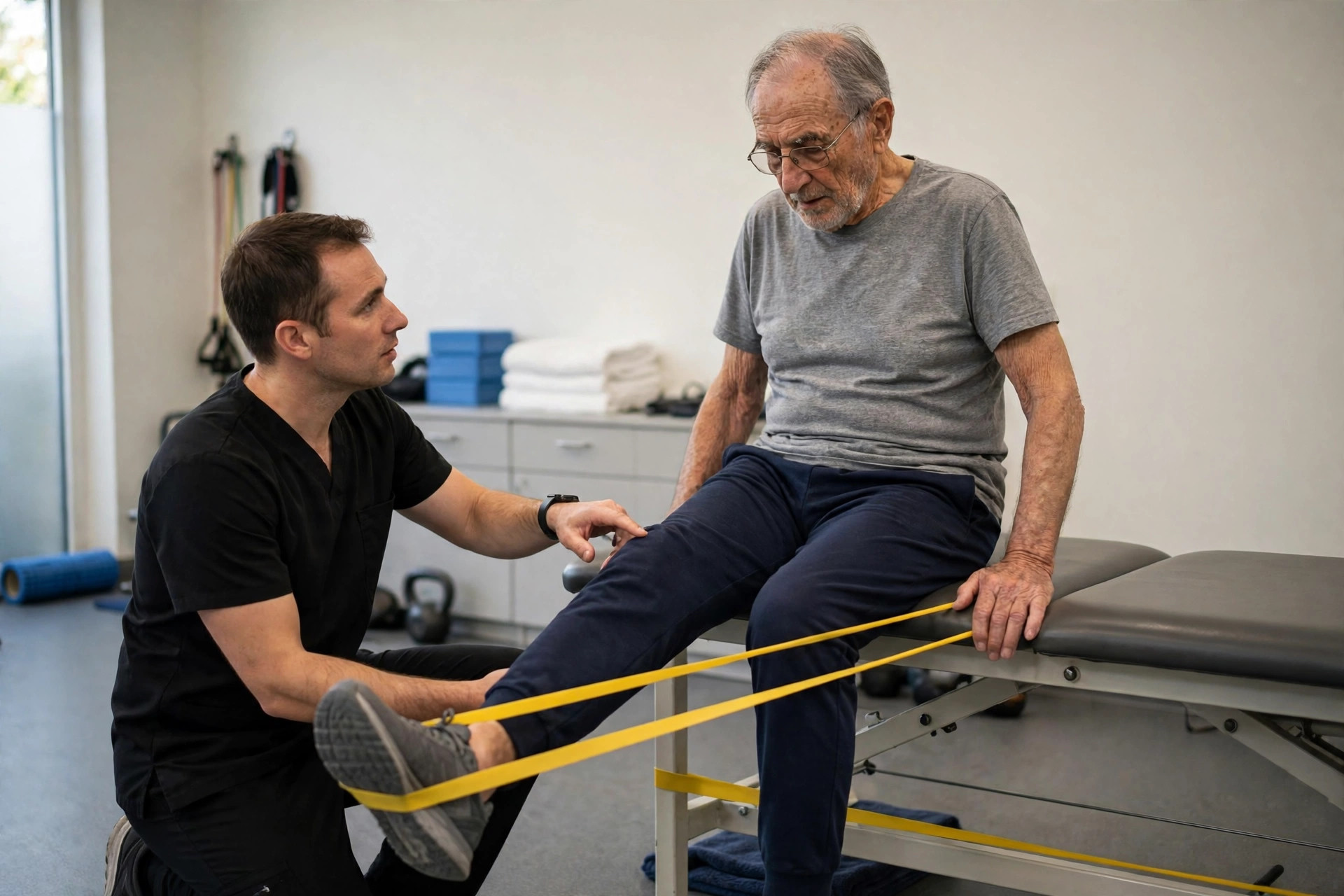
Sit in a chair with your feet flat on the floor. Slowly straighten one knee until your leg is out in front of you, hold for three seconds, then lower it back down. Do 10 repetitions on each leg. This strengthens the thigh muscles that support the knee.
Lie on your back with your legs straight. Slowly slide one heel towards your buttock, bending the knee as far as comfortable, then slide it back out. Do 10 repetitions on each leg. This keeps the knee moving through its full range.
Lie on your back with your knees bent and your feet flat on the floor. Tighten your stomach muscles, then lift your hips off the floor until your body forms a straight line from shoulders to knees. Hold for five seconds, then lower slowly. Do 10 repetitions. This strengthens the hips and the muscles that protect the lower back.
Stand behind a chair and hold the back for support. Rise up onto your toes, hold for two seconds, then lower slowly. Do 10 to 15 repetitions. This strengthens the calves and improves balance, which helps you walk more steadily.
Sit or stand with your arms relaxed. Roll your shoulders forward in slow circles 10 times, then backward 10 times. Then make small arm circles, gradually making them larger. This keeps the shoulder joints moving and reduces stiffness.
Walking is one of the best exercises for arthritis. It is low impact, it keeps the joints moving, and it builds stamina. Start with 10 minutes a day on flat ground, and add a few minutes each week. Wear supportive shoes, and walk on even surfaces when your joints are sore. If walking outdoors in winter feels risky, walk indoors at a mall or community centre.
Not all exercise helps. High-impact activities like running on hard surfaces, jumping, or heavy lifting can put too much force through an arthritic joint and make pain worse. Deep squats and lunges are also hard on arthritic knees. If an activity causes pain that lasts more than two hours after you stop, it was too much. Ease back and try a gentler version.
Some daily habits make arthritis worse too. Sitting in one position for a long time stiffens the joints, so get up and move every 30 to 45 minutes. Carrying heavy bags on one side loads one hip and one knee more than the other, so split the weight evenly. Sleeping on a very soft mattress can leave your back and hips aching in the morning. And ignoring pain is never a good idea. Pain is your body’s way of telling you something needs attention. If a joint is hot, very swollen, or much more painful than usual, rest it and call your physiotherapist or your doctor.
Arthritis is not steady. Most people have good days and bad days, and sometimes the pain flares up for a few days for no clear reason. A flare-up does not mean your arthritis is getting worse permanently. It usually settles. But having a plan helps you get through it without panic.
First, rest the sore joint for a day or two, but do not stop moving altogether. Gentle movement, like slow walking or the heel slides from the exercise section, keeps the joint from seizing up. Second, use cold on a hot, swollen joint, and heat on a stiff, achy joint. A bag of frozen peas wrapped in a towel works well for cold. A hot water bottle or a warm shower works for heat. Use either for 15 to 20 minutes at a time. Third, keep taking any medicine your doctor has prescribed, and do not increase the dose without asking. Fourth, use your walking aids if you have them. A cane or a walker is not a sign of giving up. It takes load off the joint and lets you keep moving safely. Fifth, if the flare-up lasts more than a week, or the joint becomes very hot, red, and swollen, or you develop a fever, call your doctor. These can be signs of something more than a normal flare-up.
Brooks winters are long and cold, and cold weather is one of the most common complaints from people with arthritis. Many people feel stiffer and sorer when the temperature drops. The reason is not fully understood, but cold can make muscles tighten, and changes in air pressure may affect the tissues around a joint. Whatever the cause, there are practical ways to cope.
Keep your joints warm. Wear layers, gloves, and warm socks, and consider a knee sleeve or thermal leggings on very cold days. Warm up before going outside. A few minutes of gentle movement indoors, or a warm shower, loosens stiff joints before you face the cold. Keep moving through winter. It is tempting to stay indoors and sit all day, but inactivity makes stiffness worse. Walk indoors if the sidewalks are icy. Watch your footing. Icy sidewalks are a fall risk, especially if your knees or hips are already unsteady. Wear boots with good grip, use a cane if you need one, and take your time. And keep your vitamin D up. With less sunlight in winter, many Albertans are low in vitamin D, which matters for bone health. Ask your doctor whether a supplement makes sense for you.
Joint pain in the shoulder or neck is not always arthritis, and it helps to know the difference. Frozen shoulder is a condition where the shoulder capsule tightens and the shoulder becomes very stiff and painful, often for months. Unlike arthritis, frozen shoulder usually affects only one shoulder, and it often follows an injury or a period of not using the arm. The stiffness is severe, and raising the arm becomes almost impossible. Rotator cuff pain comes from the tendons around the shoulder. It usually hurts when you lift your arm or reach overhead, and it is often worse at night. The shoulder may feel weak, but it is not usually as stiff as a frozen shoulder. Neck pain is usually felt in the neck and upper back, and it can spread into the shoulders or arms. It is often caused by poor posture, muscle strain, or a pinched nerve, rather than arthritis in the joint itself.
Arthritis in the shoulder is different. It usually comes on slowly, affects the joint itself, and causes a deep ache and gradual loss of movement. If you are not sure which problem you have, an assessment will sort it out. Our guides to shoulder pain and neck pain physiotherapy in Brooks explain these conditions in more detail, and your physiotherapist can tell you which one matches your symptoms.
Physiotherapy helps most people with arthritis, but there are times when you also need a medical specialist. If your joints are hot, red, and swollen, and you have a fever, see your doctor promptly. If your pain is getting worse quickly, or you are losing the ability to use a joint, that also needs medical attention. If you have rheumatoid arthritis, you need a rheumatologist, a doctor who specialises in arthritis. Rheumatologists prescribe medicines that slow the disease and protect the joints from damage. These medicines work best when started early, so do not delay.
You may also need imaging, like an X-ray, if your doctor wants to see how much the joint has changed. And in some cases, when the joint is badly worn and physiotherapy and medicine are no longer enough, joint replacement surgery may be discussed. That is a decision for you and your doctor, and physiotherapy has a role before and after surgery too. If you are unsure whether you need a rheumatologist, ask your physiotherapist. They can tell you whether your symptoms point to inflammatory arthritis, and they can suggest you talk to your family doctor about a referral.
No. There is no cure for arthritis at the moment. But physiotherapy can reduce pain, improve movement, and help you stay active and independent. For many people, regular exercise and hands-on treatment make a bigger difference than they expect. The goal is not to cure the joint, but to help you live well with it.
Yes, when the exercise is the right kind and done at the right level. Gentle, low-impact exercise is one of the best treatments for arthritis. It strengthens the muscles, keeps the joints moving, and reduces stiffness. High-impact exercise and heavy lifting can make it worse, so it is important to get a program that is tailored to your joints. Your physiotherapist will show you which exercises are safe for you.
It depends on your arthritis, your goals, and how you respond. Many people notice improvement after four to six sessions, with a home exercise program to continue between visits. Arthritis is a long-term condition, so some people come back for a check-in every few months, or when they have a flare-up. Your physiotherapist will give you an honest estimate after your first assessment.
Use cold on a joint that is hot, swollen, or inflamed. Use heat on a joint that is stiff and achy. Both should be used for 15 to 20 minutes at a time, with a towel between the heat or cold source and your skin. If you are not sure which one to use, ask your physiotherapist.
No. There is no good evidence that cracking your knuckles causes arthritis. It is a common worry, but studies have not found a link. If your knuckles are stiff or sore, that is a different matter, and it is worth getting checked.
Arthritis can change how you move, but it does not have to take over your life. With the right exercises, hands-on treatment, and a plan for flare-ups, most people with arthritis in Brooks stay active, independent, and doing the things they enjoy. If joint pain is holding you back, book an assessment at Mission Health Physiotherapy. We will find out what is going on, explain it in plain words, and build a plan around your goals. Our Cochrane clinic also offers arthritis care, so if you live closer to Cochrane, our arthritis management guide for Cochrane has the details for that location. You do not need a referral to start. The sooner you begin, the sooner you can move with less pain.