
If your hip aches when you get out of bed in the morning, stiffens up after sitting through a drive, or catches when you climb the stairs, you are not alone. Hip osteoarthritis is one of the most common reasons adults over 50 visit a physiotherapist, and it is also one of the most treatable. The pain can feel worrying, especially when simple things like putting on socks or walking to the shops start to hurt, but an arthritic hip does not have to mean giving up the life you enjoy.
Hip osteoarthritis physiotherapy Brooks patients trust helps people move with less pain, build strength around the joint, and stay active for longer. Physiotherapy cannot reverse the changes inside the joint, but research consistently shows it is the first-line treatment for hip osteoarthritis, and many people find they can delay or even avoid surgery with the right program. This guide explains what it is, what causes it, how physiotherapy helps, which exercises work, and when to seek help sooner rather than later.

Your hip is a ball-and-socket joint. The ball at the top of your thigh bone fits into a socket in your pelvis, and both surfaces are covered with smooth cartilage that lets the joint glide easily. Hip osteoarthritis happens when that cartilage gradually wears down. The bone underneath can thicken, small bony growths called bone spurs can form, and the joint can become inflamed.
The word “wear and tear” is often used, but it can be misleading. Hip osteoarthritis is not simply the result of using your hip too much. It is a whole-joint condition influenced by age, genetics, past injuries, body weight, and how the joint has been loaded over a lifetime. Some people have visible changes on an X-ray and feel almost no pain, while others have mild changes and a great deal of pain. The picture on a scan does not tell the whole story.
Osteoarthritis is the most common form of arthritis in Canada, and the hip is one of the joints most often involved. You can read more on the Arthritis Society Canada osteoarthritis page.
Hip osteoarthritis physiotherapy Brooks clinics treat this condition every week. It is worth knowing that hip osteoarthritis is different from other causes of hip pain. Pain on the outside of the hip, for example, is often hip bursitis rather than arthritis, and a deep ache in the buttock can be piriformis syndrome. A physiotherapy assessment sorts out which one is really causing your pain, because the treatment for each is different.
Hip osteoarthritis usually develops slowly, over months or years. Early on, the pain may come and go, then it tends to become more regular, although it still varies from day to day. Common symptoms include:
Symptoms often flare up for a few days or weeks and then settle again. Cold, damp weather, a sudden increase in activity, or a long day on your feet can all trigger one. A flare does not mean the joint is getting permanently worse.
Nobody can point to a single cause of hip osteoarthritis. It develops from a mix of factors, and several of them are within your control.
Age. The risk rises with age. Most people who develop hip osteoarthritis are over 50, although it can appear earlier, especially after an injury.
Family history. If a parent or sibling has osteoarthritis, your own risk is higher. The shape of your hip joint is partly inherited, and some hip shapes load the cartilage unevenly.
Previous injury or surgery. A hip fracture, a dislocation, or a labral tear in younger years can damage the cartilage and raise the risk of arthritis decades later. This is one reason athletes and people with physically demanding jobs sometimes develop it earlier.
Body weight. Carrying extra weight increases the load on the hip with every step. Even modest weight loss can reduce hip pain noticeably.
Repetitive loading and occupation. Jobs that involve heavy lifting, farming, or construction can increase the risk, although regular moderate exercise does not cause osteoarthritis. People who exercise regularly tend to have healthier joints than people who are inactive.
Other joint problems. Conditions such as rheumatoid arthritis, or a hip that did not develop normally in childhood, can lead to osteoarthritis later in life.
Weak hip muscles. Weak gluteal and thigh muscles mean the joint takes more load than it should. This is the risk factor physiotherapy can do the most about, and it is why strengthening exercises are the centrepiece of treatment.
You cannot change your age or your family history, but strength, weight, activity levels, and how you move are all things you can work on. That is where hip osteoarthritis physiotherapy Brooks makes its biggest difference.
A hip osteoarthritis physiotherapy Brooks assessment is a conversation first and a physical examination second. There is nothing to be nervous about, and you do not need a referral. In Alberta, you can book directly with a physiotherapist, although some extended health plans ask for a referral for reimbursement, so it is worth checking your policy.
At your first appointment, your physiotherapist will:
X-rays and other scans are not always needed. Hip osteoarthritis can often be diagnosed from your history and examination alone, and guidelines recommend against routine imaging when the picture is clear. If your physiotherapist is unsure, or if surgery might be on the horizon, they will suggest you see your doctor about an X-ray. A scan result alone never decides your treatment plan.
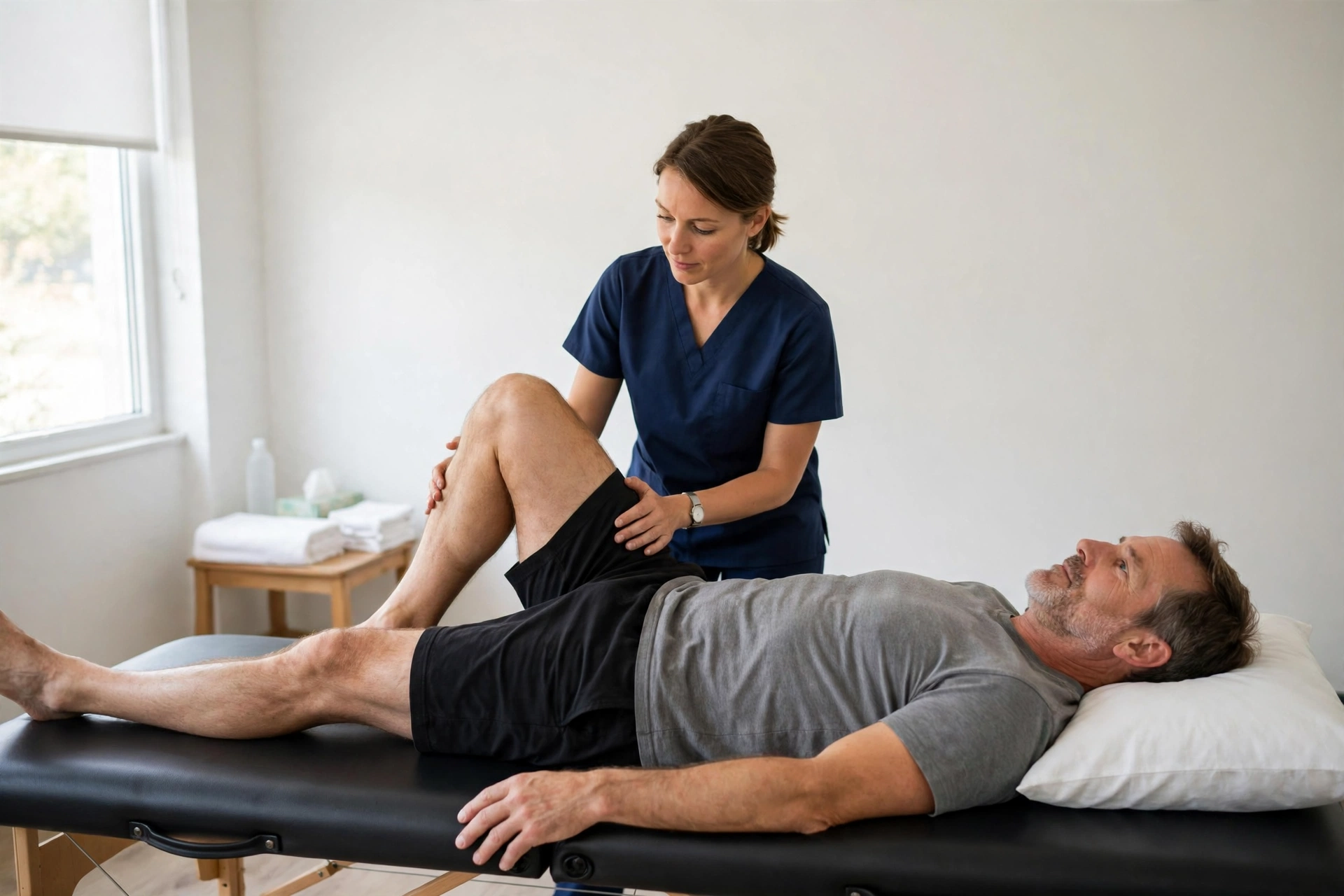
There is no single treatment that fixes hip osteoarthritis. The best results come from a program built around you, combining several approaches that reinforce each other.
Exercise is the most important part of treatment, recommended as first-line care by arthritis guidelines around the world. A program usually has three parts: strengthening, flexibility, and low-impact aerobic activity. Your physiotherapist teaches you the exercises, checks your technique, and progresses them as you get stronger. Most people notice a real difference within six to eight weeks of consistent work. Stronger muscles take load off the joint, and that is what reduces the pain.
Hands-on treatment can ease pain and stiffness, especially in the early weeks when movement hurts. Techniques include gentle joint mobilisations, soft tissue massage around the hip and thigh, and stretching of tight muscles. Manual therapy works best alongside exercise, and it is used to help you move well enough to do your exercises comfortably.
Understanding your condition changes how you manage it. Your physiotherapist will explain which activities are safe, how to pace yourself through the day, and how to handle flare-ups. Many people are afraid that moving will damage the joint further. In most cases the opposite is true: gentle, regular movement keeps the joint healthier. Learning the difference between the normal ache of an exercised muscle and the sharp pain that means “stop” gives you confidence to stay active.
A walking stick used correctly, in the hand opposite the sore hip, can take a surprising amount of load off the joint and reduce limping. Supportive, cushioned footwear also helps.
If weight is contributing to your hip pain, your physiotherapist can talk honestly about it and help you find activity you can do comfortably, such as walking in water or cycling. Even a small, gradual reduction in weight lowers the load on the hip with every step. This is never about blame; it is simply one more lever you can pull.
Heat, cold, and in some cases TENS can help manage pain during a flare. These are supporting tools, not the main treatment, and your physiotherapist will show you how to use them safely at home.
Not everyone with hip osteoarthritis needs surgery. For those who do, physiotherapy beforehand makes a real difference, because people who go into a hip replacement stronger and more mobile tend to recover faster. If you have already had a replacement, our hip replacement rehabilitation program guides you step by step through recovery.
The exercises below are the ones physiotherapists use most often in a hip osteoarthritis physiotherapy Brooks program. They are general ideas, not a prescription. Start gently, move slowly, and stop if you feel a sharp pain. If you have had hip surgery, follow your surgeon’s instructions first.
Glute bridges. Lie on your back with your knees bent and your feet flat on the floor. Tighten your buttocks and lift your hips until your body forms a straight line from shoulders to knees. Hold for five seconds, then lower slowly. Start with 8 to 10 repetitions. Bridges strengthen the glutes, the muscles that stabilise your hip every time you take a step.
Side-lying leg lifts. Lie on your good side with your sore leg on top, keeping your body in a straight line. Lift the top leg slowly, keeping it straight, then lower it with control. Start with 8 to 10 repetitions. This targets the muscles on the outside of the hip, which are often weak in hip osteoarthritis.
Chair stands. Sit near the front of a firm chair with arms, feet flat on the floor. Stand up slowly without pushing too hard through your hands, then sit back down with control. Start with 5 to 8 repetitions. This is one of the best functional exercises there is, because it trains the exact movement that hurts most people.
Standing hip extensions. Hold the back of a sturdy chair for balance. Keeping your back straight, lift one leg slowly behind you, tightening your buttock, then lower it. Start with 8 to 10 repetitions on each side. This strengthens the glutes and improves your balance.
Knee to chest. Lie on your back on a bed with one knee bent and that foot flat. Slowly bring the other knee toward your chest, only as far as comfortable. Hold for a few slow breaths, then lower it gently. Repeat on each side. Stop if you feel a sharp pinch in the groin.
Knee fall-outs. Lie on your back with both knees bent and feet flat. Let one knee fall slowly out to the side, only as far as comfortable, then bring it back. Repeat on each side. This gently maintains the hip’s ability to rotate.
Seated hip march. Sit tall near the front of a sturdy chair. Lift one knee a few inches, lower it, then switch sides. This keeps the hip moving and builds gentle strength at the same time.
Walking, stationary cycling, swimming, and water walking are all excellent for hip osteoarthritis. Water is especially kind, because it supports your weight while giving your muscles something to work against. Aim to build up gradually toward 150 minutes of moderate activity a week, in whatever chunks suit you. Shorter walks spread through the day count just as much as one long walk.
A simple rule during exercise: keep your pain at or below about 3 or 4 out of 10. Mild discomfort that settles within a day is normal. Sharp pain, or pain that stays worse the next day, means you did too much.
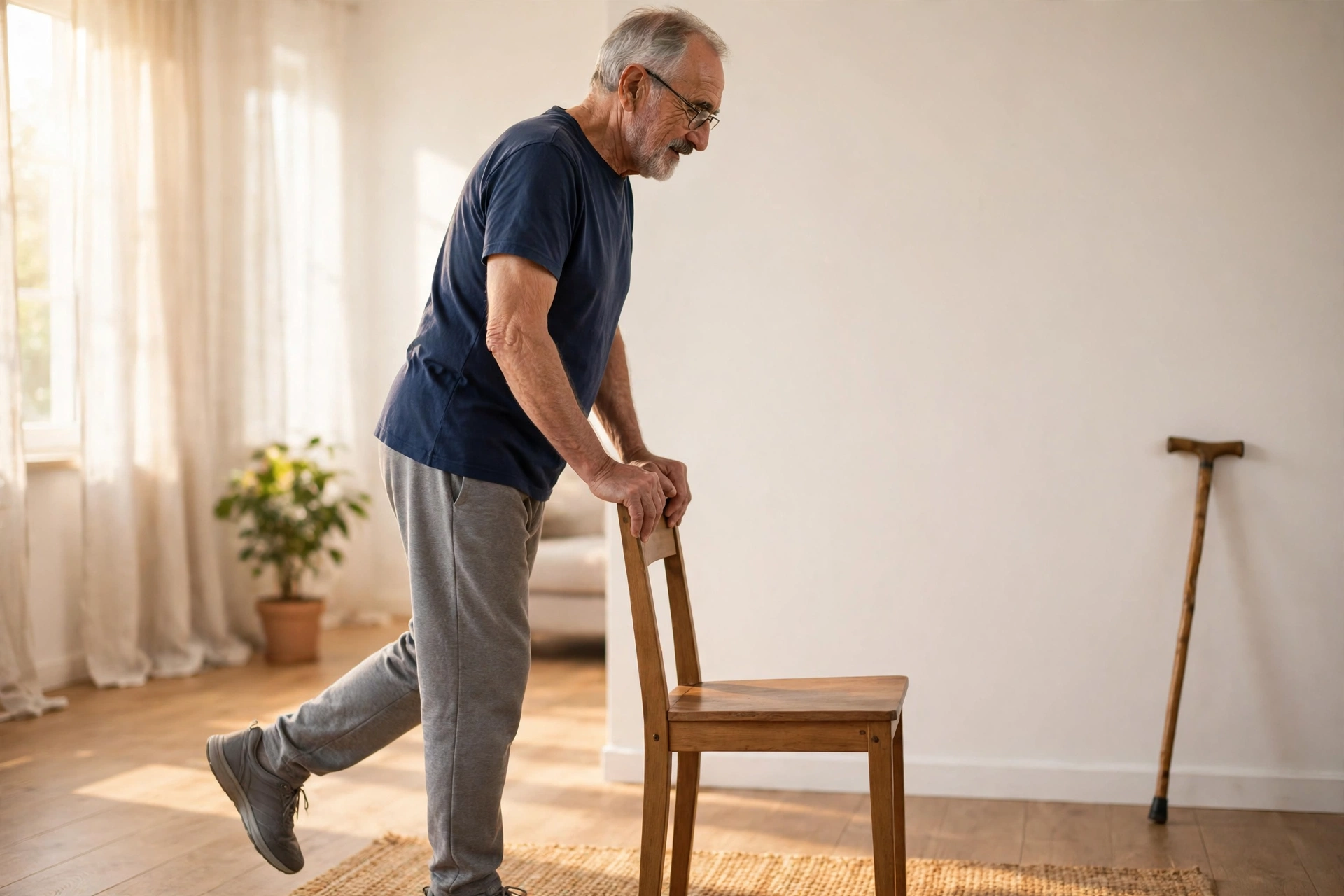
Small changes at home can make a painful hip much easier to live with, and your hip osteoarthritis physiotherapy Brooks team can suggest more that fit your home.
These tips do not replace treatment, but they reduce the daily load on your hip while your exercise program builds strength underneath.
Just as important as what you do is what you stop doing. A few habits make hip osteoarthritis worse:
Hip osteoarthritis is a long-term condition, but it is not a one-way slide. A hip osteoarthritis physiotherapy Brooks program gives you structure and support, and with it most people improve meaningfully, staying active for years without surgery.
In the first two to four weeks of physiotherapy, most people notice less stiffness and a little less pain with daily tasks. Between six and twelve weeks, strength and walking distance usually improve clearly, and stairs and getting up from a chair become easier. After three months, many people have built a routine they can maintain on their own, with occasional check-ins.
Exercise helps pain by a modest amount on average, but it helps strength and function a great deal, and those decide whether you can do the things you care about. The people who do best keep the exercises going after the formal program ends, even a short daily routine of ten minutes. Flare-ups will still happen, but each one tends to be shorter and easier to manage when the muscles around the hip are strong.
For some people, despite good physiotherapy, the joint wears to the point where a hip replacement is the right choice. That is not a failure. Modern hip replacements are very successful, and people who arrive at surgery strong and mobile recover faster. If that day comes, your physiotherapist will help you prepare, and our team will guide your rehabilitation afterwards.
Hip osteoarthritis usually develops slowly, but some symptoms need urgent medical attention. See your doctor promptly, or go to urgent care, if you notice any of these:
If your hip pain is new, steadily worsening, or not improving after a few weeks of self-care, book an assessment. Early help is almost always simpler and more effective than waiting until the pain takes over your daily life.
People in Brooks and the surrounding area come to Mission Health Physiotherapy because the care is personal, practical, and based on evidence rather than guesswork.
Whether your goal is to walk further, sleep better, get back to gardening, or simply get through the day with less pain, we will work toward it with you, one step at a time.
No. Physiotherapy cannot reverse the changes inside the joint or regrow cartilage. What it can do, and does very well, is reduce pain, improve strength and flexibility, and help you keep doing the things that matter to you. For many people, that is enough to avoid surgery for years.
Yes. Walking is one of the best activities for an arthritic hip, as long as you build up gradually. Start with short walks and add a few minutes at a time. If walking makes your pain worse the next day, shorten the walk and spread it through the day instead.
Most people feel some improvement within two to four weeks of starting hip osteoarthritis physiotherapy Brooks treatment, and clearer gains in strength and walking by six to twelve weeks. The exact timeline depends on how severe the arthritis is, how weak the muscles are, and how consistently you do your home exercises.
Keep moving, gently. Rest helps during a bad flare for a day or two, but long rest weakens the muscles and stiffens the joint. The right approach is gentle, regular movement within your pain limits, not bed rest and not pushing through sharp pain.
Usually not. Hip osteoarthritis can often be diagnosed from your history and examination. If your physiotherapist thinks imaging would change your treatment, or if surgery is being considered, they will suggest you speak with your doctor about an X-ray.
Surgery is worth discussing with your doctor when pain regularly stops you sleeping, walking, or doing daily tasks despite a good course of physiotherapy, and when painkillers and activity changes are no longer enough. The decision is based on how much the hip limits your life, and physiotherapy remains valuable both before and after surgery.
If hip pain is slowing you down, you do not have to live with it. Book your hip osteoarthritis physiotherapy Brooks assessment at Mission Health Physiotherapy and Sports Rehab, 740 Alberta Street West, Brooks, Alberta. Call (403) 794-0111 to get started. You do not need a referral, and the first step is simply a conversation about your hip and what you want to get back to.
Disclaimer: This article is general information about hip osteoarthritis and is not a substitute for an assessment by a qualified health professional. If you have concerns about your hip, please speak with a physiotherapist or your doctor.