
Get groin strain physiotherapy in Brooks to reduce pain, rebuild strength, and safely return to work, exercise, and sport.
A groin strain can happen suddenly during sprinting, skating, kicking, jumping, or changing direction. It can also develop from repetitive activity, heavy lifting, or a sudden increase in training. According to MyHealth Alberta’s groin strain care instructions, groin strains can occur during activities such as running, skating, soccer, basketball, lifting, pushing, and pulling.
At Mission Health Physiotherapy & Sports Rehab, treatment can focus on identifying the source of your symptoms, restoring movement and strength, and gradually preparing you for your normal activities.

A groin strain occurs when one or more muscles around the inner thigh and groin are overstretched or torn.
The injury can range from a mild muscle strain to a more significant tear. Common symptoms include:
MyHealth Alberta notes that a more significant groin strain may cause limping, swelling, bruising, and pain when raising the affected knee.
Several activities can place considerable stress on the muscles around the groin.
Rapid acceleration, deceleration, cutting, and pivoting can place high demands on the inner-thigh muscles.
Soccer, hockey, basketball, skating, and similar activities involve repeated running, kicking, jumping, and lateral movements.
Groin strains are not limited to athletes. Lifting, pushing, pulling, and other physically demanding activities can also cause an injury.
Increasing your running distance, sprinting, or sports participation too quickly can overload tissues that are not prepared for the additional demand.
A minor strain may improve with appropriate home care and activity modification. However, an assessment can be useful when symptoms continue or interfere with your normal activities.
Consider groin strain physiotherapy in Brooks if:
A physiotherapist can assess your movement, strength, and functional limitations and create a rehabilitation plan around your needs.
Mission Health’s Physiotherapy in Brooks service uses individualized assessment, exercise, manual therapy, education, and rehabilitation strategies.
For a groin strain, treatment may progress through several stages.
High-intensity activities such as sprinting, kicking, jumping, and cutting may need to be reduced while they remain painful.
MyHealth Alberta recommends resting and protecting the injured area and avoiding intense activities while pain is still present.
Once symptoms begin to settle, controlled hip and leg movements may help restore comfortable mobility.
Your rehabilitation may gradually target:
Strength is increased progressively as your tolerance improves.
Later rehabilitation can include squats, lunges, single-leg exercises, running drills, lateral movements, and other activities relevant to your work or sport.
Being able to walk without pain does not necessarily mean you are ready to return to sport.
A gradual progression may include:
Mission Health’s Sports Injury Rehab in Brooks service specifically identifies groin strains among the sports injuries it treats. The program uses progressive rehabilitation and sport-specific conditioning to help athletes work toward a safe return to activity.
You may still be able to remain active depending on the severity of your injury.
However, activities that significantly reproduce your symptoms should be modified. A runner, for example, may temporarily reduce sprinting while continuing appropriately selected lower-impact activities.
MyHealth Alberta recommends avoiding intense activities while pain is present and gradually returning to normal activities as symptoms improve.
The appropriate activity level should depend on your symptoms and stage of recovery.
The right exercises depend on the severity and stage of the injury.
A rehabilitation program may include:
MyHealth Alberta notes that stretching and strengthening can help support a gradual return to normal activities, with progression based on symptoms and recovery.
Rather than following a generic online routine, exercise selection should be based on your specific injury and current tolerance.
Dry needling may be considered as one component of an individualized physiotherapy program when appropriate.
Mission Health’s Dry Needling in Brooks service explains that dry needling can be integrated with exercise, physiotherapy techniques, and personalized advice.
It should not replace progressive strengthening or appropriate injury management. Your physiotherapist can determine whether it has a useful role in your rehabilitation.
Recovery depends on the severity of the injury.
A minor strain may improve within several weeks, while a more significant injury can require longer rehabilitation. MyHealth Alberta states that a minor groin injury may take 4 to 6 weeks or longer to heal.
Recovery can also depend on:
Therefore, returning to full activity based only on a fixed number of days is not always appropriate.
Yes. Recurring groin problems can occur when strength and movement capacity have not been fully restored or when demanding activity is resumed too quickly.
A complete rehabilitation plan may address:
The objective is to prepare your body for the actual demands of your work, exercise, or sport.
No.
Groin pain can also be related to hip problems, hernias, stress injuries, or other conditions. MyHealth Alberta’s information on groin problems and injuries explains that several conditions can produce symptoms in the groin area.
A painful lump or swelling, for example, may indicate a condition that needs medical assessment rather than physiotherapy alone.
Seek medical attention if you experience severe or worsening pain, significant swelling, numbness, weakness, inability to move the leg, or inability to put weight on the affected leg.
Mission Health Physiotherapy & Sports Rehab provides personalized physiotherapy and sports rehabilitation in Brooks.
Its sports rehabilitation service specifically mentions groin strains and focuses on individualized assessment, progressive strengthening, movement training, and sport-specific preparation.
Your rehabilitation plan may include:
Yes. Physiotherapy can help restore movement, strength, and physical capacity while guiding a gradual return to normal activities.
Not necessarily. High-intensity activities that increase pain should generally be reduced initially. As symptoms improve, appropriate activity can gradually be reintroduced.
A mild strain may still allow walking. However, if you cannot put weight on the affected leg, medical assessment is recommended.
Yes. Progressive rehabilitation can rebuild strength, running ability, agility, and sport-specific movement before full participation.
Yes. Hip conditions can produce groin pain, which is why an accurate assessment is important.
A groin strain can interfere with sports, exercise, physical work, and everyday movement. Recovery should involve more than simply waiting for the pain to disappear.
Progressive strengthening, appropriate activity modification, movement training, and a gradual return to sport or work can help rebuild physical capacity.
If you are looking for groin strain physiotherapy in Brooks, Mission Health Physiotherapy & Sports Rehab can assess your symptoms and develop a rehabilitation plan around your activities and goals.
Mission Health Physiotherapy & Sports Rehab
740 Alberta Street W
Brooks, AB T1R 1A9
Phone: (403) 794-0111Groin strain physiotherapy in Brooks can help reduce pain, restore strength, and support a gradual return to work, exercise, and sport.
A groin strain can happen suddenly during sprinting, skating, kicking, jumping, or changing direction. It can also develop from repetitive activity, heavy lifting, or a sudden increase in training. According to MyHealth Alberta’s groin strain care instructions, groin strains can occur during activities such as running, skating, soccer, basketball, lifting, pushing, and pulling.
At Mission Health Physiotherapy & Sports Rehab, treatment can focus on identifying the source of your symptoms, restoring movement and strength, and gradually preparing you for your normal activities.
A groin strain occurs when one or more muscles around the inner thigh and groin are overstretched or torn.
The injury can range from a mild muscle strain to a more significant tear. Common symptoms include:
MyHealth Alberta notes that a more significant groin strain may cause limping, swelling, bruising, and pain when raising the affected knee.
Several activities can place considerable stress on the muscles around the groin.
Rapid acceleration, deceleration, cutting, and pivoting can place high demands on the inner-thigh muscles.
Soccer, hockey, basketball, skating, and similar activities involve repeated running, kicking, jumping, and lateral movements.
Groin strains are not limited to athletes. Lifting, pushing, pulling, and other physically demanding activities can also cause an injury.
Increasing your running distance, sprinting, or sports participation too quickly can overload tissues that are not prepared for the additional demand.
A minor strain may improve with appropriate home care and activity modification. However, an assessment can be useful when symptoms continue or interfere with your normal activities.
Consider groin strain physiotherapy in Brooks if:
A physiotherapist can assess your movement, strength, and functional limitations and create a rehabilitation plan around your needs.
Mission Health’s Physiotherapy in Brooks service uses individualized assessment, exercise, manual therapy, education, and rehabilitation strategies.
For a groin strain, treatment may progress through several stages.
High-intensity activities such as sprinting, kicking, jumping, and cutting may need to be reduced while they remain painful.
MyHealth Alberta recommends resting and protecting the injured area and avoiding intense activities while pain is still present.
Once symptoms begin to settle, controlled hip and leg movements may help restore comfortable mobility.
Your rehabilitation may gradually target:
Strength is increased progressively as your tolerance improves.
Later rehabilitation can include squats, lunges, single-leg exercises, running drills, lateral movements, and other activities relevant to your work or sport.
Being able to walk without pain does not necessarily mean you are ready to return to sport.
A gradual progression may include:
Mission Health’s Sports Injury Rehab in Brooks service specifically identifies groin strains among the sports injuries it treats. The program uses progressive rehabilitation and sport-specific conditioning to help athletes work toward a safe return to activity.
You may still be able to remain active depending on the severity of your injury.
However, activities that significantly reproduce your symptoms should be modified. A runner, for example, may temporarily reduce sprinting while continuing appropriately selected lower-impact activities.
MyHealth Alberta recommends avoiding intense activities while pain is present and gradually returning to normal activities as symptoms improve.
The appropriate activity level should depend on your symptoms and stage of recovery.
The right exercises depend on the severity and stage of the injury.
A rehabilitation program may include:
MyHealth Alberta notes that stretching and strengthening can help support a gradual return to normal activities, with progression based on symptoms and recovery.
Rather than following a generic online routine, exercise selection should be based on your specific injury and current tolerance.
Dry needling may be considered as one component of an individualized physiotherapy program when appropriate.
Mission Health’s Dry Needling in Brooks service explains that dry needling can be integrated with exercise, physiotherapy techniques, and personalized advice.
It should not replace progressive strengthening or appropriate injury management. Your physiotherapist can determine whether it has a useful role in your rehabilitation.
Recovery depends on the severity of the injury.
A minor strain may improve within several weeks, while a more significant injury can require longer rehabilitation. MyHealth Alberta states that a minor groin injury may take 4 to 6 weeks or longer to heal.
Recovery can also depend on:
Therefore, returning to full activity based only on a fixed number of days is not always appropriate.
Yes. Recurring groin problems can occur when strength and movement capacity have not been fully restored or when demanding activity is resumed too quickly.
A complete rehabilitation plan may address:
The objective is to prepare your body for the actual demands of your work, exercise, or sport.
No.
Groin pain can also be related to hip problems, hernias, stress injuries, or other conditions. MyHealth Alberta’s information on groin problems and injuries explains that several conditions can produce symptoms in the groin area.
A painful lump or swelling, for example, may indicate a condition that needs medical assessment rather than physiotherapy alone.
Seek medical attention if you experience severe or worsening pain, significant swelling, numbness, weakness, inability to move the leg, or inability to put weight on the affected leg.
Mission Health Physiotherapy & Sports Rehab provides personalized physiotherapy and sports rehabilitation in Brooks.
Its sports rehabilitation service specifically mentions groin strains and focuses on individualized assessment, progressive strengthening, movement training, and sport-specific preparation.
Your rehabilitation plan may include:
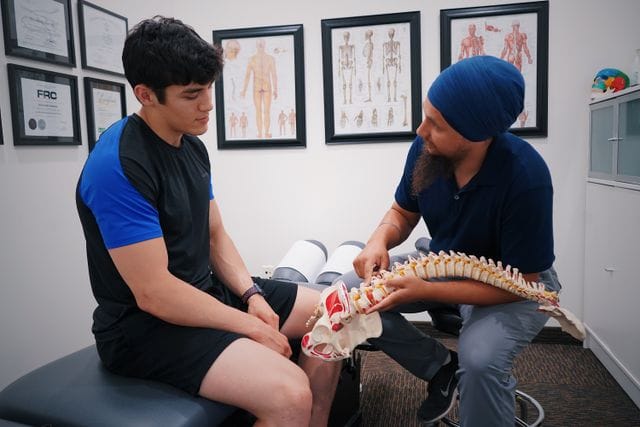
Yes. Physiotherapy can help restore movement, strength, and physical capacity while guiding a gradual return to normal activities.
Not necessarily. High-intensity activities that increase pain should generally be reduced initially. As symptoms improve, appropriate activity can gradually be reintroduced.
A mild strain may still allow walking. However, if you cannot put weight on the affected leg, medical assessment is recommended.
Yes. Progressive rehabilitation can rebuild strength, running ability, agility, and sport-specific movement before full participation.
Yes. Hip conditions can produce groin pain, which is why an accurate assessment is important.
A groin strain can interfere with sports, exercise, physical work, and everyday movement. Recovery should involve more than simply waiting for the pain to disappear.
Progressive strengthening, appropriate activity modification, movement training, and a gradual return to sport or work can help rebuild physical capacity.
If you are looking for groin strain physiotherapy in Brooks, Mission Health Physiotherapy & Sports Rehab can assess your symptoms and develop a rehabilitation plan around your activities and goals.
Mission Health Physiotherapy & Sports Rehab
740 Alberta Street W
Brooks, AB T1R 1A9
Phone: (403) 794-0111