
A sports injury can happen in seconds. A sudden twist during soccer, an awkward landing after a jump, a strained muscle during a sprint, or persistent knee pain after running can quickly turn an active lifestyle into weeks of frustration.
The difficult part is often knowing what to do next.
Should you rest? Should you continue exercising? Is the pain something that will disappear on its own? Or is it time to see a physiotherapist?
For athletes and active individuals, Sports Injury Physiotherapy in Brooks can provide a structured path from injury to recovery. Physiotherapy can help address pain, restore movement, rebuild strength, improve physical function, and prepare the body for a safe return to sport.
Mission Health Physiotherapy & Sports Rehab in Brooks provides personalized care for athletes, recreational players, weekend warriors, and active individuals. Its approach considers the injury, the individual’s goals, activity requirements, and stage of recovery.
If you are dealing with a sports injury and are unsure whether professional care is necessary, this guide explains when to seek help, what rehabilitation can involve, and how physiotherapy can support a safer return to the activities you enjoy.
Sports Injury Physiotherapy in Brooks is focused on helping people recover from sports and activity-related injuries while restoring the physical abilities needed for their lifestyle or sport.
It is not limited to treating pain.
A physiotherapist may assess your movement, strength, flexibility, balance, coordination, joint mobility, and functional ability. The assessment can also consider how the injury occurred, your previous injury history, training routine, sport, and recovery goals.
For example, a runner experiencing knee pain may need more than treatment for the painful area. Rehabilitation may also look at lower-body strength, mobility, running mechanics, training load, and movement control.
Likewise, someone recovering from an ankle sprain may need to regain balance, strength, stability, and confidence before returning to running or a sport involving sudden changes of direction.
Mission Health’s Brooks physiotherapy service uses an individualized approach that begins with assessment and considers each person’s needs, lifestyle, and goals.
Not every minor ache requires professional treatment.
Temporary muscle soreness after an unfamiliar workout may improve with appropriate recovery. However, persistent pain, weakness, restricted movement, or recurring injuries should not simply be ignored.
Here are some situations where Sports Injury Physiotherapy in Brooks may be appropriate.
If pain continues despite reducing activity or taking time to recover, it may be worth getting the problem assessed.
Persistent pain does not automatically mean that you have a serious injury. It may simply mean that the affected tissue has not recovered sufficiently or that something continues to place stress on the area.
A physiotherapy assessment can help identify movement or strength limitations and determine an appropriate rehabilitation strategy.
Difficulty walking, running, jumping, lifting, climbing stairs, or using an affected joint normally is a sign that your injury is affecting function.
For example, someone with knee pain may begin shifting their weight to the other leg. Someone with an ankle injury may change the way they walk.
These compensations can affect movement elsewhere in the body.
A structured rehabilitation program can gradually restore mobility and controlled movement.
Weakness is common after an injury, especially when activity has been reduced.
The problem is that returning to sport before sufficient strength has returned can leave you less prepared for the demands of your activity.
Sports Injury Physiotherapy in Brooks may include progressive strengthening exercises that become more challenging as your capacity improves.
The aim is not to make you strong for the sake of it. It is to rebuild the strength you actually need for your daily activities and sport.
Recurring injuries deserve more attention than another round of rest.
If you repeatedly develop the same ankle, knee, shoulder, hamstring, or tendon problem, there may be contributing factors that have not been addressed.
These can include:
A physiotherapist can assess these factors and develop a plan aimed at reducing the likelihood of another setback.
One of the most common mistakes after an injury is returning because the pain has decreased.
Feeling better is encouraging, but pain reduction does not necessarily mean that strength, endurance, coordination, balance, and confidence have fully returned.
A progressive rehabilitation plan can help prepare your body for increasingly demanding movements before you return to full-intensity activity.
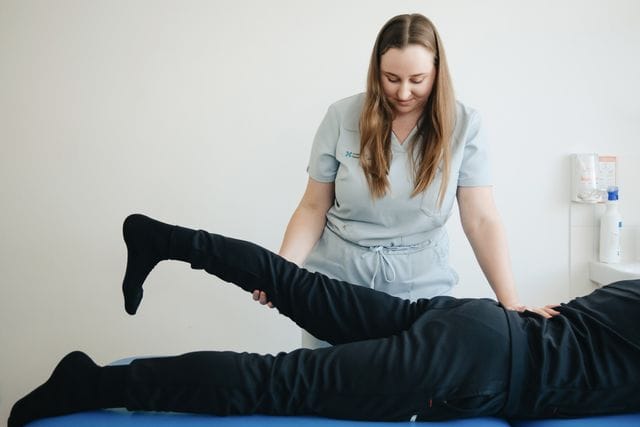
Sports injuries range from sudden traumatic injuries to conditions that develop gradually because of repeated stress.
Mission Health’s Brooks sports injury rehabilitation service addresses acute injuries, overuse injuries, post-surgical rehabilitation, and concussion-related rehabilitation.
Ankle sprains are common in sports that involve running, jumping, landing, or sudden changes of direction.
Pain, swelling, bruising, and difficulty bearing weight can occur after an ankle injury.
Recovery may involve restoring range of motion, strength, balance, and stability before progressing to running and sport-specific activities.
Muscle strains can affect areas such as the hamstrings, calves, groin, and other muscles.
A common mistake is returning to sprinting or high-intensity activity as soon as the pain decreases.
The injured muscle may still need progressive strengthening and conditioning before it can tolerate the demands of sport.
Tendon pain can develop when a tendon is exposed to repeated loading that exceeds its current capacity.
Examples include certain Achilles, patellar, and elbow tendon problems.
Rehabilitation often involves managing activity levels and progressively loading the affected tissue rather than simply stopping all movement indefinitely.
Knee pain is common among runners, cyclists, hockey players, soccer players, gym-goers, and other active individuals.
The cause can vary considerably.
An assessment may consider hip and leg strength, mobility, balance, movement patterns, previous injuries, and training demands.
Shoulder problems are common in activities involving repeated overhead or upper-body movements.
Swimming, throwing sports, volleyball, strength training, and certain occupational activities can place significant demands on the shoulder.
Treatment may involve restoring mobility, improving strength and movement control, and gradually rebuilding tolerance to the activities that caused or aggravated the symptoms.
Running places repeated stress on the lower limbs.
Sudden increases in distance, speed, frequency, hills, or training intensity can change the demands placed on the body.
If you develop persistent pain while running, a physiotherapy assessment can help identify factors that may be contributing to the problem and determine how activity can be modified while you recover.
Understanding the difference between acute and overuse injuries can help explain why rehabilitation strategies differ.
Acute injuries occur suddenly.
Examples include:
The initial symptoms may be obvious, but the full effect on strength and function can become clearer as the acute stage settles.
Rehabilitation can then progress toward restoring mobility, strength, stability, and sport-specific function.
Overuse injuries usually develop gradually.
There may not be one specific moment when the injury occurred.
Instead, repeated loading can gradually exceed the body’s ability to adapt.
This can happen when training volume increases too quickly, recovery is inadequate, or an individual suddenly returns to high levels of activity after a period of inactivity.
Canada’s public health guidance also recommends increasing physical activity gradually as skills, abilities, and confidence improve, rather than making sudden increases in activity.
A good rehabilitation plan starts with understanding the problem.
During an assessment for Sports Injury Physiotherapy in Brooks, your physiotherapist may ask about:
The physical assessment may examine:
Mission Health’s Brooks sports injury service describes the first appointment as a detailed assessment of the injury, sport, training routine, goals, range of motion, strength, and joint stability.
This assessment helps establish where you are now and what needs to improve.
There is no universal rehabilitation program.
Your treatment should reflect your injury, current ability, goals, and activity demands.
Early rehabilitation may focus on managing symptoms and restoring comfortable movement.
Depending on the injury, treatment may include hands-on techniques, exercise, education, and other appropriate physiotherapy interventions.
Mission Health’s sports injury rehabilitation service describes the use of hands-on techniques and other treatment methods alongside progressive exercise.
Restricted mobility can affect how you walk, run, lift, jump, or perform sport-specific movements.
Targeted mobility exercises may be introduced according to your assessment.
The objective is useful movement that supports function and recovery, rather than flexibility for its own sake.
Strength training is often a major part of rehabilitation.
After an injury, reduced activity can cause weakness. Progressive resistance exercises can help rebuild the capacity of the affected muscles and surrounding structures.
The difficulty can increase gradually as your body adapts.
Balance and coordination are particularly important following many lower-limb injuries.
An athlete may be able to walk comfortably but still struggle to control a single-leg landing or rapid change of direction.
Rehabilitation can progress from simple balance exercises toward movements that more closely resemble the demands of the sport.
Later-stage rehabilitation should begin to reflect your actual activity.
A runner may progress toward running drills.
A soccer player may need acceleration, deceleration, cutting, and kicking movements.
A hockey player may require skating-related conditioning.
Mission Health specifically describes incorporating sport-specific movements, drills, and conditioning as part of the return-to-sport process.
This is where rehabilitation stops being merely about “feeling better” and starts preparing you for what you actually want to do.
Pain can disappear before physical capacity has fully returned.
Pain can disappear before your physical capacity has fully returned. You might jog comfortably but still struggle with sprinting. Lifting a light weight may feel fine, while repeated heavy movements remain difficult. After an ankle injury, you may also walk normally but still have poor single-leg balance. These differences are why returning directly to full-intensity activity can place unnecessary stress on a recovering body.
Returning directly to full-intensity activity can expose the recovering area to a workload it is not ready to handle.
That is why a gradual return to activity is often more sensible than going from complete rest directly into competition.
Rehabilitation should not stop simply because the pain has improved.
A useful rehabilitation program also considers why the injury occurred and what can be changed.
Mission Health’s Brooks physiotherapy service highlights movement assessment, exercise, education, injury prevention, and lifestyle guidance as components of its approach.
Depending on the injury, prevention strategies may involve:
No rehabilitation program can guarantee that an injury will never happen again. Sports involve unpredictable movements and external factors.
The realistic goal is to improve physical capacity and address factors that can be modified.
Training load is often overlooked.
Imagine someone who has not exercised consistently for several months and suddenly decides to train five days a week.
Their motivation may have increased overnight.
Their physical capacity has not.
That mismatch can increase stress on muscles, tendons, and joints.
A better approach is to build activity progressively.
Canada’s public health guidance recommends starting physical activity slowly and gradually increasing the amount as ability and confidence improve. It also emphasizes recovery, hydration, nutrition, sleep, and appropriate cooldown practices.
For athletes returning from injury, this principle becomes even more important.
You do not have to be a professional athlete to benefit from sports rehabilitation.
Weekend athletes often experience a unique problem: their activity level can vary dramatically throughout the week.
Someone may spend Monday to Friday working at a desk and then participate in a highly demanding recreational sport on Saturday.
The problem is not recreational sport itself.
The problem is asking the body to perform at a high level without sufficient preparation.
Sports Injury Physiotherapy in Brooks can help recreational athletes recover from injuries, improve physical capacity, and prepare for the activities they enjoy.
Your goal may not be winning a championship.
It may simply be playing hockey with friends without worrying about your knee.
That still counts.
Competitive athletes often have more demanding rehabilitation requirements.
Their sport may involve:
Rehabilitation therefore needs to consider the athlete’s training schedule and the specific physical requirements of the sport.
Mission Health notes that its Brooks sports rehabilitation approach considers sport-specific requirements and can involve coordination with other healthcare professionals and coaches where appropriate.
The objective is to create a realistic progression from injury to training and, eventually, competition.
Yes.
Post-surgical rehabilitation may be an important part of restoring mobility, strength, function, and confidence after an orthopedic or sports-related procedure.
The rehabilitation timeline depends heavily on the surgery and the individual’s recovery.
A physiotherapist can work within the medical team’s recommendations and gradually progress exercises and functional activities.
Mission Health lists post-surgical rehabilitation among the areas addressed through its sports injury rehabilitation service.
Concussions require particular care because they involve the brain rather than simply a muscle or joint.
Symptoms can include headache, dizziness, balance problems, nausea, fatigue, confusion, sleep changes, sensitivity to light or noise, and difficulty concentrating.
If you think you have suffered a concussion, stop the activity and seek appropriate medical assessment.
In Canada, medical assessment of a head injury is important, and doctors or nurse practitioners are responsible for medical assessment and diagnosis, with some provincial differences. Healthcare professionals such as physiotherapists may be involved in ongoing rehabilitation when appropriate.
Do not use physiotherapy as a reason to skip medical assessment after a suspected concussion.
For serious symptoms such as loss of consciousness, seizure, repeated vomiting, worsening severe headache, double vision, or new weakness or numbness, seek urgent medical attention.
For additional information, readers can consult the Government of Canada’s concussion guidance.
Massage therapy and physiotherapy serve different purposes, but they can complement one another depending on the individual’s needs.
Massage therapy may help address muscle tension, promote relaxation, and support general physical well-being.
Mission Health provides both physiotherapy and massage therapy at its Brooks and Cochrane locations.
However, massage should not be considered a replacement for rehabilitation when an injury requires progressive strengthening, movement retraining, or functional rehabilitation.
If you are unsure which service is appropriate, an assessment can help determine the best starting point.
Dry needling is another treatment option that may be considered for certain musculoskeletal problems.
Mission Health describes dry needling as a technique involving fine sterile needles inserted into specific muscle trigger points and notes that it can be integrated with physiotherapy, exercise, and personalized advice.
It is not appropriate for every person or every injury, so the decision should be based on an individual assessment.
If you are interested in this treatment, you can learn more about Mission Health’s approach to dry needling therapy.
Rehabilitation does not only happen inside the clinic.
Depending on your injury and treatment plan, you may receive exercises to complete at home.
Consistency matters.
A good exercise program is not particularly useful if it is performed once and then forgotten.
Follow the exercise frequency, intensity, and progression recommended by your physiotherapist.
If an exercise causes unexpected or increasing symptoms, discuss it with your physiotherapist rather than simply pushing through or abandoning the entire program.
Preparing for a physiotherapy appointment is straightforward.
Wear comfortable clothing that allows the affected body area to be assessed and allows you to move easily.
It can also help to know:
Mission Health recommends comfortable clothing that allows easy movement during physiotherapy appointments.
There is no universal recovery timeline.
A minor ankle sprain and a major post-surgical injury obviously do not follow the same schedule.
Recovery can depend on:
The best estimate comes after an individual assessment.
Mission Health also notes that recovery timelines vary according to factors such as injury severity, individual healing, and sporting level.
Be suspicious of anyone promising an exact recovery date before properly assessing the injury. Human bodies did not sign that contract.
Choosing a physiotherapy clinic is about more than finding the nearest available appointment.
For sports injuries, rehabilitation should reflect your actual activity and goals.
Mission Health Physiotherapy & Sports Rehab in Brooks provides personalized physiotherapy and sports injury rehabilitation for athletes and active individuals. The clinic’s approach includes assessment, individualized treatment, progressive exercise, sport-specific rehabilitation, performance development, and injury-prevention education.
Its broader physiotherapy service also focuses on identifying contributing factors, developing individualized treatment plans, providing exercise guidance, and helping patients maintain progress beyond the clinic.
You can learn more about the clinic’s physiotherapy services in Brooks or explore its dedicated Sports Injury Rehab in Brooks service.
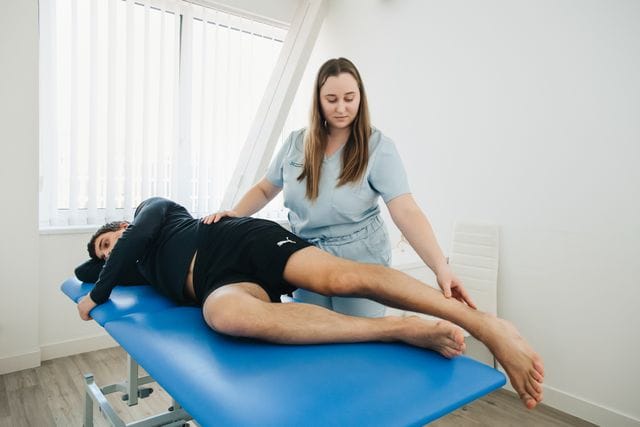
Mission Health states that you can contact its Brooks clinic directly to arrange a physiotherapy appointment. If your injury requires medical assessment or another type of healthcare service, your physiotherapist can advise you about the appropriate next step.
No. Sports rehabilitation can be useful for competitive athletes, recreational athletes, runners, gym-goers, weekend warriors, and active people recovering from an injury.
The rehabilitation plan should reflect your actual goals.
Physiotherapy can be part of rehabilitation for many musculoskeletal and sports-related problems, including sprains, strains, tendon problems, knee pain, shoulder injuries, overuse injuries, and post-surgical rehabilitation.
The appropriate treatment depends on the individual’s assessment.
Yes. A physiotherapist can assess possible contributing factors such as weakness, mobility limitations, movement control, training demands, and previous injury.
Addressing those factors may help reduce the risk of recurrence.
There is no standard number of appointments.
The required treatment depends on the injury, severity, recovery progress, goals, and rehabilitation requirements.
In many cases, modified activity may be possible, but the appropriate level depends on your injury.
Your physiotherapist can help determine what movements are appropriate and how activity can be progressed safely.
Returning before sufficient strength, movement control, endurance, and function have returned may increase the risk of aggravating the injury or experiencing another setback.
A gradual return-to-sport progression can help prepare the body for increasing physical demands.
Physiotherapy can identify modifiable factors such as weakness, mobility restrictions, movement-control issues, and inappropriate training progression.
A personalized exercise and education program can help improve physical capacity and support injury prevention.
Yes. Rehabilitation after surgery may focus on restoring mobility, strength, function, balance, and confidence.
The exact program depends on the procedure and the instructions of your medical team.
Depending on your needs, massage therapy may complement physiotherapy by addressing muscle tension and supporting relaxation.
However, massage does not replace rehabilitation when progressive exercise and functional retraining are required.
Wear loose, comfortable clothing that allows the physiotherapist to examine the affected area and assess movement. Mission Health recommends clothing that makes movement easy.
A sports injury does not necessarily mean giving up the activities you enjoy.
The bigger mistake is assuming that the disappearance of pain automatically means your body is ready for full-intensity activity.
Recovery may require restoring mobility, rebuilding strength, improving balance and coordination, increasing physical capacity, and gradually exposing the body to the demands of your sport.
Sports Injury Physiotherapy in Brooks can provide a structured approach to that process.
Whether you are a competitive athlete, recreational player, runner, gym enthusiast, or weekend warrior, the objective is not simply to get through the injury.
It is to recover properly, return to activity with greater confidence, and reduce the likelihood of another setback.
If persistent pain, weakness, restricted movement, or a recurring injury is keeping you away from the activities you enjoy, consider speaking with a qualified physiotherapist.
Mission Health Physiotherapy & Sports Rehab
740 Alberta Street W
Brooks, AB T1R 1A9, Canada
Phone: +1 403-794-0111
Website: missionhealthphysio.ca
You can visit the Mission Health website to learn more about physiotherapy, sports rehabilitation, massage therapy, and other services available in Brooks and Cochrane.