
Get plantar fasciitis physiotherapy in Brooks to reduce heel pain, improve foot function, and support a gradual return to daily activity.
That sharp pain under your heel during the first few steps of the morning can make even a normal day uncomfortable. Walking around the house, standing at work, exercising, or going for a run may become difficult when heel pain keeps returning.
For people searching for plantar fasciitis physiotherapy in Brooks, understanding the condition and its possible causes is an important first step. Plantar fasciitis is one of the most common causes of heel pain and affects the plantar fascia, the strong band of tissue that supports the arch of the foot.
At Mission Health Physiotherapy & Sports Rehab in Brooks, treatment can focus on identifying factors contributing to your symptoms, improving foot and lower-limb function, and gradually helping you return to your normal activities.
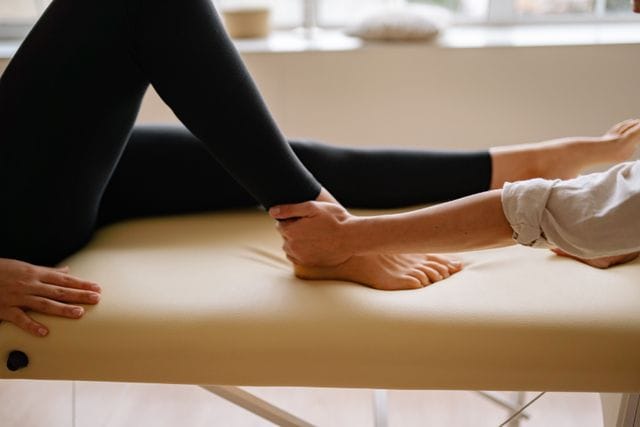
The plantar fascia runs along the bottom of the foot, connecting the heel area toward the toes and helping support the arch.
Repeated loading can irritate this tissue and contribute to heel pain. The problem can be associated with running, prolonged standing or walking, hard surfaces, tight calf muscles, certain foot structures, and footwear that does not provide adequate support.
One of the most recognizable features is pain during the first few steps after getting out of bed or after sitting for an extended period. The discomfort may improve after several steps but return later after prolonged activity.
Symptoms can vary between individuals, but common signs include:
For some people, the pain is most noticeable in the morning. Others may notice it more after work, exercise, or a long period of standing.
According to MyHealth Alberta’s plantar fasciitis guidance, symptoms can become more noticeable with standing, walking, running, climbing stairs, or other activities that load the heel.
There is not always one single cause.
Instead, plantar fasciitis can develop when the foot is repeatedly exposed to loads that exceed its current capacity.
A rapid increase in walking, running, sports, or exercise can place additional stress on the plantar fascia.
For example, someone who suddenly starts running several kilometres each day after being relatively inactive may be placing considerably more load through the feet than they are accustomed to.
People who spend several hours standing or walking for work may experience repeated stress through the heel.
This can be particularly relevant for workers whose jobs involve hard floors, repetitive walking, lifting, or long periods on their feet.
Running creates repeated loading through the foot and lower limb.
Training volume, recovery, footwear, running surfaces, and strength can all influence how well the body tolerates this load.
Limited calf flexibility can affect ankle movement and may influence how forces are transferred through the foot during walking and running.
People with high arches or flat feet may distribute forces differently through the foot. These factors do not automatically mean someone will develop plantar fasciitis, but they can be relevant when assessing persistent heel pain.
Worn-out or poorly fitting footwear may make symptoms more difficult to manage.
Supportive footwear and appropriately cushioned soles may help reduce stress on the heel while symptoms are settling.
Not every episode of heel pain requires physiotherapy. However, professional assessment can be useful when symptoms are persistent or interfere with your normal activities.
You may want to consider plantar fasciitis physiotherapy in Brooks if:
A physiotherapist can assess your foot, ankle, calf, movement patterns, strength, activity levels, and functional limitations.
This is particularly useful because not every case of heel pain is caused by plantar fasciitis.
Diagnosis generally involves a clinical assessment.
Your healthcare professional may ask about:
They may also examine how you stand, walk, and move your foot and ankle.
Other conditions can produce similar symptoms, including stress injuries and nerve-related problems. Therefore, persistent heel pain should not automatically be labelled as plantar fasciitis without appropriate assessment.
A rehabilitation program should be based on your individual symptoms and contributing factors.
Mission Health’s Physiotherapy in Brooks service focuses on assessment, personalized treatment planning, exercise, manual therapy, education, and injury-prevention strategies.
For plantar heel pain, physiotherapy may include several components.
Your physiotherapist may assess:
The purpose is to understand what may be contributing to your symptoms and what your foot currently tolerates.
Calf and plantar fascia stretching may be included when appropriate.
MyHealth Alberta recommends calf and plantar fascia stretching as part of conservative management. Its plantar fasciitis exercise guidance also provides examples of stretching and strengthening exercises.
However, exercises should be selected according to your presentation. More stretching is not automatically better.
Strengthening can help your foot and lower limb tolerate physical demands more effectively.
A rehabilitation program may gradually target:
As symptoms improve, the difficulty and loading of the exercises can be increased.
You may not need to stop all physical activity.
Instead, the goal can be to temporarily modify activities that significantly aggravate your heel while maintaining movements that you can tolerate.
For example, a runner may temporarily reduce running volume while continuing other lower-impact activities.
Manual therapy may be incorporated when appropriate to address mobility restrictions or muscle tension.
However, hands-on treatment is generally only one component of rehabilitation. Exercise, activity modification, education, and progressive loading may also be important.
Understanding what is contributing to your symptoms can make recovery easier to manage.
Your physiotherapist may provide guidance about:
The goal is to help you become more confident managing your condition.
Orthotics may be useful for some people, particularly when foot mechanics and load distribution are relevant to their symptoms.
Mission Health provides Custom Orthotics in Brooks, with assessment of foot mechanics and individualized orthotic solutions.
MyHealth Alberta also notes that heel cups and shoe inserts may help cushion the heel and reduce stress on the plantar fascia.
However, orthotics are not automatically necessary for everyone with plantar fasciitis.
A physiotherapist can assess whether footwear changes, inserts, custom orthotics, strengthening, or a combination of approaches may be appropriate for you.
Dry needling may be incorporated into a broader physiotherapy plan in selected cases.
Mission Health’s Dry Needling in Brooks service lists plantar fasciitis and other foot pain among conditions that may be addressed with this technique.
The clinic describes dry needling as an integrated treatment that can be combined with exercise, physiotherapy techniques, and personalized advice.
It should not be viewed as a standalone solution for every case. Your physiotherapist can determine whether it is appropriate based on your assessment.
In many cases, walking is still possible.
The issue is that excessive walking can continue loading the heel when your current capacity is already reduced.
MyHealth Alberta recommends reducing activities that cause pain and temporarily switching to activities that place less stress on the heel when necessary. Activity can then be gradually increased as symptoms improve.
Therefore, complete inactivity is not necessarily the goal. Instead, rehabilitation often involves finding an activity level that your foot can tolerate and progressively building capacity.
You may still be able to exercise, but some activities may need to be modified.
If running causes significant heel pain, for example, temporarily reducing running volume may be appropriate while you work on strength and mobility.
Your physiotherapist can help determine:
MyHealth Alberta specifically advises athletes not to ignore or attempt to “run through” plantar fasciitis pain because this can contribute to a chronic problem.
For runners, rehabilitation should consider more than just heel pain.
Your physiotherapist may look at:
A sudden increase in mileage can expose the plantar fascia to more loading than it is prepared to handle.
Mission Health also offers Sports Injury Rehab in Brooks for athletes and active individuals who need structured rehabilitation and progressive return-to-sport planning.
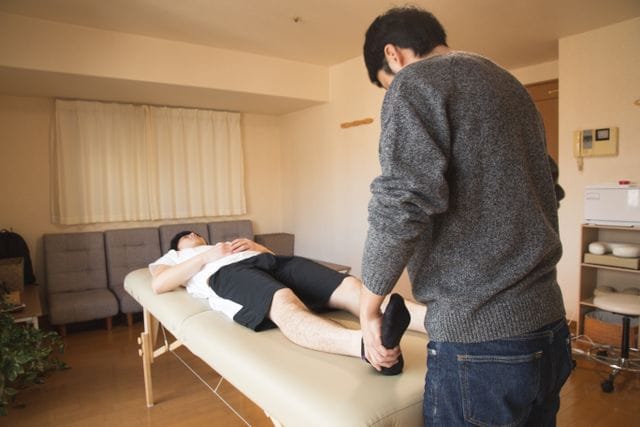
Some simple strategies may help manage plantar heel pain.
Choose footwear with appropriate cushioning and support rather than spending long periods barefoot if that aggravates your symptoms.
Temporarily reduce running, prolonged standing, or walking on hard surfaces if these activities significantly increase your pain.
Calf stretching may be included as part of your home program when appropriate.
Progressive strengthening can help improve your ability to tolerate everyday and athletic loads.
If you are returning to running or sport, increase your workload gradually rather than immediately returning to your previous volume.
Plantar fasciitis can take time to settle. Consistency with an appropriate rehabilitation program is generally more useful than repeatedly switching between treatments.
MyHealth Alberta notes that pain can improve within several weeks, although complete recovery may take considerably longer in some cases.
There is no single recovery timeline.
Some people improve within weeks, while others experience symptoms for several months.
Recovery can be influenced by:
The goal should therefore be measured through improvements in walking tolerance, morning pain, strength, activity levels, and overall function rather than expecting a guaranteed recovery date.
Yes, symptoms can return.
Returning too quickly to previous activity levels, suddenly increasing training volume, continuing with unsuitable footwear, or failing to rebuild strength may increase the likelihood of recurring symptoms.
For runners and athletes, rehabilitation can include progressive loading and sport-specific conditioning.
For people who spend long hours standing at work, treatment may focus more heavily on footwear, load management, strength, and work-related movement demands.
No.
A heel spur is a bony growth that can develop around the heel. Having a heel spur does not necessarily mean it is the main cause of your pain.
MyHealth Alberta explains that heel symptoms are often caused by the underlying soft-tissue problem rather than the spur itself.
This is another reason why identifying the actual source of heel pain is important rather than focusing only on an X-ray finding.
Most heel pain is not an emergency. However, certain symptoms warrant medical assessment.
Seek prompt medical attention if heel pain occurs with:
MyHealth Alberta recommends medical assessment when heel pain is accompanied by fever, redness, warmth, numbness, tingling, inability to bear weight, or persistent symptoms that do not improve with home care.
Mission Health Physiotherapy & Sports Rehab provides personalized physiotherapy services in Brooks.
The clinic’s approach includes assessment, individualized treatment planning, exercise, manual therapy, education, and injury-prevention strategies.
For plantar heel pain, this individualized approach is important because two people with similar symptoms may have very different contributing factors.
Your treatment plan may include:
If your heel pain is also affecting your general mobility, the clinic’s broader Physiotherapy in Brooks service can provide a more comprehensive rehabilitation approach.
Physiotherapy can be part of conservative management for plantar fasciitis. Treatment may include exercise, mobility work, activity modification, education, and other techniques based on the individual’s presentation.
There is no guaranteed fastest treatment. Recovery depends on the severity and duration of symptoms and how well contributing factors are managed.
Not necessarily. However, if walking significantly increases your pain, temporarily reducing the amount or changing the activity may be appropriate.
Orthotics may help some people by changing how load is distributed through the foot or cushioning the heel. They are not universally necessary and are generally best considered as part of a broader management plan.
Some cases improve with appropriate self-care and time. However, persistent symptoms should not simply be ignored, especially when they interfere with work, walking, exercise, or sleep.
No. Plantar fasciitis is one common cause of heel pain, but other conditions can cause similar symptoms.
Yes. Running repeatedly loads the foot and plantar fascia. Sudden changes in training volume, inadequate recovery, or other contributing factors can increase the stress placed on the foot.
Yes. Plantar fasciitis can affect one foot or both feet.
Persistent heel pain can make everyday activities frustrating. Getting out of bed, walking to work, standing for long periods, exercising, or returning to running can all become more difficult when plantar heel pain continues.
Plantar fasciitis is a common cause of heel pain, but effective management depends on understanding the individual’s symptoms and contributing factors.
A combination of appropriate activity modification, progressive strengthening, mobility work, footwear considerations, and physiotherapy may help support recovery.
If you are searching for plantar fasciitis physiotherapy in Brooks, Mission Health Physiotherapy & Sports Rehab can assess your foot and movement patterns and develop a rehabilitation plan around your daily activities, work requirements, and fitness goals.
Brooks Location:
740 Alberta Street W
Brooks, AB T1R 1A9
Phone: (403) 794-0111
Website: missionhealthphysio.ca
Take persistent heel pain seriously, understand what may be contributing to it, and work toward a gradual return to normal movement and activity.