
IT Band Syndrome Physiotherapy in Brooks for outside knee or hip pain, strengthening, rehabilitation and a safe return to activity.
Pain on the outside of your knee or hip can make running, cycling, climbing stairs, and other activities increasingly uncomfortable. If the pain keeps returning during exercise, IT Band Syndrome Physiotherapy in Brooks can help identify contributing factors and create a progressive rehabilitation plan.
Iliotibial band syndrome, commonly called IT band syndrome, involves irritation and pain around the iliotibial band, a strong band of tissue that runs along the outside of the thigh from the hip toward the knee. It is commonly associated with repetitive activities such as running and cycling. MyHealth Alberta’s information on iliotibial band syndrome provides additional information about the condition and its treatment.
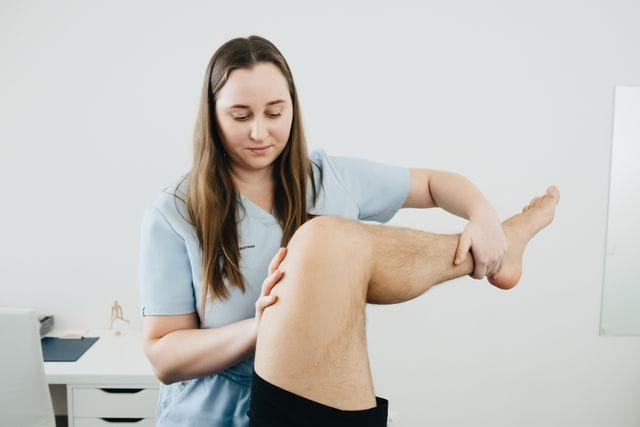
The iliotibial band helps stabilize the hip and knee during movement. When repetitive activity places excessive stress on the area, irritation can develop around the outside of the hip or knee.
Symptoms may include:
According to MyHealth Alberta’s IT Band Syndrome Care Instructions, the condition is commonly associated with repetitive activities and may affect runners, cyclists, and people participating in other aerobic activities.
IT band pain can develop when the tissues around the hip and knee are repeatedly exposed to loads they are not currently prepared to tolerate.
Running involves thousands of repeated movements. Increasing distance, speed, hills, or training frequency too quickly can increase the demand on the hip and knee.
Cycling involves repetitive hip and knee movement. Changes in training volume, resistance, or riding habits may contribute to symptoms.
A rapid increase in exercise intensity or duration can leave the body with insufficient time to adapt.
Reduced strength around the hips and legs may affect movement control during running or other activities.
Restrictions around the hip, thigh, or lower leg may influence how forces are distributed during movement.
Occasional muscle soreness after exercise does not necessarily require physiotherapy. However, persistent or recurring pain deserves closer attention.
Consider IT Band Syndrome Physiotherapy in Brooks if:
A physiotherapist can assess your symptoms, strength, mobility, balance, movement patterns, and activity demands to determine what may be contributing to the problem.
You can also explore Physiotherapy in Brooks to learn more about Mission Health’s physiotherapy services.
Treatment should be based on the individual’s symptoms and activity requirements rather than using the same exercise program for everyone.
Your physiotherapist may assess:
This helps identify potential contributors to your symptoms.
Mission Health’s Sports Injury Rehab in Brooks uses individualized assessments and treatment plans based on the injury, sport, goals, and stage of recovery.
You may not need to completely stop exercising.
Instead, certain activities may need to be reduced or temporarily modified while symptoms settle. Lower-impact alternatives can sometimes help you remain active without repeatedly aggravating the painful area.
MyHealth Alberta recommends changing or avoiding activities that cause pain and suggests lower-stress options such as walking instead of jogging, stationary cycling with low resistance, swimming, or water exercise when appropriate.
Strength development can become an important part of rehabilitation.
Depending on your assessment, exercises may target:
The objective is to gradually improve your ability to control and tolerate movement.
For runners, rehabilitation should eventually address the demands of running rather than stopping at basic strengthening.
A return-to-running plan may gradually increase:
Progression should be based on how your symptoms respond.
The right exercises depend on your symptoms, strength, mobility, and recovery stage.
Potential exercises may include:
MyHealth Alberta provides an IT Band Syndrome exercise program that includes an iliotibial band stretch.
Strengthening the hip muscles can help improve lower-limb control during activities such as walking, running, and climbing stairs.
Exercises that strengthen the gluteal muscles may be incorporated when weakness or poor hip control is identified.
Single-leg balance and controlled movement exercises can help develop stability and coordination.
As symptoms improve, exercises can become more specific to your daily activities, running, cycling, or sport.
Importantly, exercises should be introduced progressively. MyHealth Alberta advises starting exercises slowly and easing off if they cause pain.
Continuing to run at the same intensity while repeatedly provoking pain may make recovery more difficult.
Instead, your physiotherapist may recommend temporarily modifying:
You may then gradually increase the running load as your symptoms and physical capacity improve.
For runners in Brooks, this is where IT Band Syndrome Physiotherapy in Brooks can be particularly useful. Rehabilitation can focus not only on reducing current pain but also on rebuilding the capacity needed for running.
There is no universal recovery timeline.
Your recovery may depend on:
Persistent symptoms should not simply be ignored. MyHealth Alberta recommends contacting a healthcare professional when hip or knee pain does not go away or when you are not improving as expected.
Yes. Symptoms can return if the factors contributing to the problem are not addressed.
A long-term rehabilitation strategy may therefore consider:
Rather than making a large jump in activity after your pain disappears, gradual progression gives your body time to adapt.
Pain on the outside of the knee does not automatically mean you have IT band syndrome.
Knee pain can have many causes, including other overuse injuries, tendon problems, joint conditions, or injuries involving different structures.
MyHealth Alberta’s information on knee problems and injuries lists iliotibial band syndrome among several possible causes of knee symptoms.
A proper assessment is therefore important, particularly when pain is persistent, severe, or accompanied by swelling, instability, or other concerning symptoms.
Mission Health Physiotherapy & Sports Rehab provides personalized rehabilitation for sports and overuse injuries in Brooks.
Its sports injury program focuses on identifying the individual’s injury and movement limitations before progressing through strengthening, mobility work, conditioning, and sport-specific rehabilitation. The clinic also emphasizes identifying underlying movement dysfunctions that may contribute to future injury.
For persistent outside knee or hip pain, IT Band Syndrome Physiotherapy in Brooks can provide a structured approach to improving movement and gradually returning to the activities you enjoy.
Learn more about Sports Injury Rehab in Brooks or explore Mission Health Physiotherapy for additional treatment information.
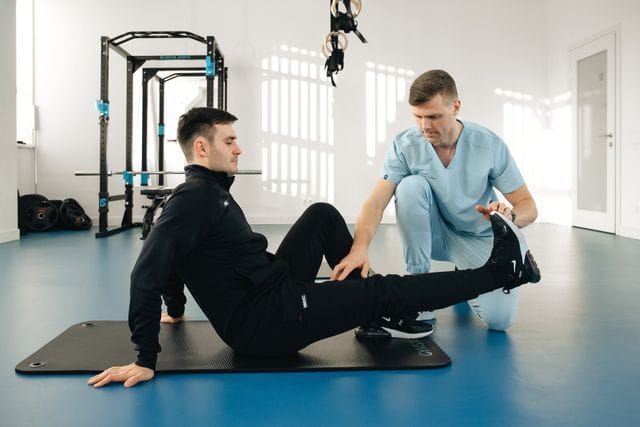
Yes. Physiotherapy can help assess contributing factors, modify aggravating activities, improve strength and mobility, and create a gradual return-to-activity plan.
If running repeatedly increases your pain, temporarily reducing running volume or changing to lower-impact activity may be appropriate. Your rehabilitation plan can then gradually reintroduce running.
No. Although it is common among runners, IT band syndrome can also affect cyclists and people involved in other repetitive aerobic activities.
Hip strength and movement control can be relevant factors. A physiotherapist can assess whether weakness or poor control is contributing to your symptoms.
Gradual training progression, appropriate recovery, strength development, and addressing movement or training factors can help reduce the likelihood of recurring symptoms.
Persistent pain on the outside of your knee or hip should not automatically be dismissed as normal exercise soreness. Repetitive loading, sudden changes in training, strength deficits, and movement factors can all contribute to IT band symptoms.
If pain is limiting your running, cycling, exercise, or everyday movement, IT Band Syndrome Physiotherapy in Brooks can provide an individualized approach to assessment, rehabilitation, and a gradual return to activity.
Visit Mission Health Physiotherapy & Sports Rehab to learn more about physiotherapy and sports rehabilitation in Brooks.