
Hamstring Strain Physiotherapy in Brooks for pain, strength, mobility and safe return to sports with personalized rehabilitation in 2026.
A sudden sprint, awkward movement, intense workout, or sports activity can leave you with pain at the back of your thigh. If walking, bending your knee, running, or returning to sports becomes difficult, Hamstring Strain Physiotherapy in Brooks can help you understand the injury and work toward a safe return to normal movement.
A hamstring strain occurs when the muscles at the back of the thigh are overstretched or pulled. Symptoms may include pain, tenderness, swelling, bruising, and difficulty moving the leg normally. The severity can vary considerably, so rehabilitation should be based on your symptoms, activity level, and recovery progress. MyHealth Alberta’s hamstring strain care instructions also recommends gradually returning to activity rather than pushing through worsening pain.
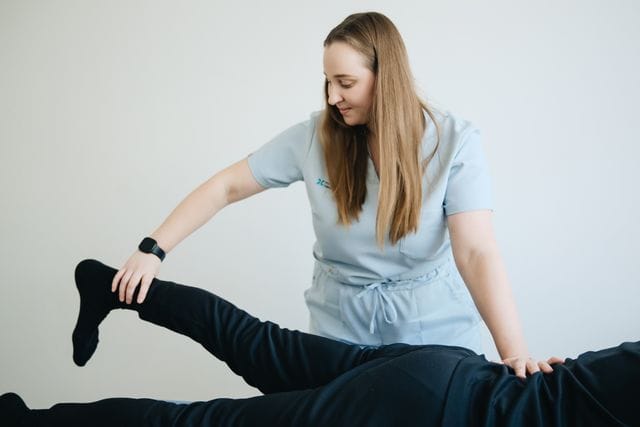
The hamstrings are a group of muscles located along the back of the thigh. They help with movements such as bending the knee and extending the hip.
A strain can happen when these muscles are stretched beyond their current capacity or subjected to a sudden force. Running, jumping, kicking, lifting, and other high-speed movements can place substantial demands on the hamstrings.
Depending on the severity, you may experience:
A mild strain may improve with appropriate care, while a more significant injury may require professional assessment and structured rehabilitation.
Hamstring strains commonly occur when the muscles have to produce force quickly or while being lengthened.
Some common situations include:
Accelerating quickly during soccer, hockey, basketball, running, or other sports can place considerable stress on the hamstrings.
Explosive movements require the hamstrings to work rapidly. Poor preparation, fatigue, or an unexpected movement can increase the physical demand.
Returning to intense exercise before the leg has regained sufficient strength and control may make recovery more difficult.
If the hamstrings, glutes, or surrounding muscles are not adequately conditioned for a particular activity, the body may struggle with higher physical demands.
Not every minor muscle ache requires professional treatment. However, an assessment can be useful when pain continues to interfere with everyday movement, exercise, work, or sports.
Consider Hamstring Strain Physiotherapy in Brooks if:
A physiotherapist can assess your movement, strength, flexibility, symptoms, and functional limitations before developing an appropriate rehabilitation plan.
For broader injury assessment and rehabilitation, you can also explore Physiotherapy in Brooks.
The rehabilitation process depends on the injury and your individual goals. Treatment may progress through several stages rather than using the same exercises for everyone.
Your physiotherapist can evaluate the location and behaviour of your pain along with strength, mobility, movement patterns, and functional limitations.
This helps determine what activities currently aggravate the injury and what needs to improve before you progress.
During the early phase, rehabilitation may focus on protecting the injured area and controlling symptoms.
Your therapist can provide guidance on activity modification and appropriate movement while helping you avoid unnecessary aggravation.
Once appropriate, strengthening becomes an important part of rehabilitation.
Exercises may gradually challenge the hamstrings and surrounding muscles. The goal is not simply to make the pain disappear but to rebuild the capacity needed for everyday activities, exercise, work, and sport.
MyHealth Alberta provides examples of progressive hamstring exercises, including hamstring sets, curls, and hip-extension exercises. These should be introduced according to the individual’s condition and rehabilitation stage rather than copied without assessment. Hamstring strain rehabilitation exercises provide additional patient education.
As strength and movement improve, rehabilitation can become more activity-specific.
For an athlete, this might include:
Mission Health’s Sports Injury Rehab in Brooks program describes progressive strengthening, agility, plyometrics, conditioning, and sport-specific drills as part of rehabilitation.
Exercise may still be possible, but the type and intensity should match your stage of recovery.
Early on, activities that increase pain may need to be reduced or temporarily avoided. As symptoms improve, controlled movements can gradually be reintroduced.
The important distinction is between productive rehabilitation and simply pushing through pain.
A structured program can progress from basic movement to strengthening and eventually to higher-speed or sport-specific activities.
MyHealth Alberta advises avoiding activities that worsen symptoms and returning to normal activity gradually.
The exercises used during rehabilitation depend on your injury and current capabilities.
Potential exercises may include:
These involve activating the hamstring without significant joint movement and may be appropriate during an earlier stage of rehabilitation.
Controlled knee-bending movements can progressively challenge the hamstring muscles.
These can help strengthen the muscles involved in hip movement while gradually increasing resistance.
For athletes, rehabilitation may eventually move toward jogging, acceleration, changes of direction, and sport-specific movements.
The key is progression. Exercises that are appropriate at one stage may be too demanding at another.
There is no single recovery timeline for every hamstring strain.
Recovery can depend on factors such as:
A mild strain may improve with appropriate care, while a more severe injury can require longer rehabilitation and medical assessment. MyHealth Alberta notes that severe hamstring strains may require medical treatment and that untreated severe injuries can lead to longer-lasting problems.
Yes. Previous hamstring injury can be an important consideration when returning to demanding physical activity.
Simply reaching a point where everyday walking feels comfortable does not necessarily mean the leg is ready for sprinting, jumping, or competitive sport.
A comprehensive rehabilitation program can therefore focus on rebuilding strength, movement control, conditioning, and tolerance to sport-specific demands.
This is one reason why Hamstring Strain Physiotherapy in Brooks can be valuable for athletes who want a structured return rather than immediately resuming full-intensity activity.
Seek prompt medical assessment if you experience severe or increasing pain, significant difficulty moving the leg, or symptoms that are worsening rather than improving.
MyHealth Alberta advises seeking immediate medical care for severe or increasing pain and provides additional warning signs in its hamstring strain care instructions.
A physiotherapist can also help determine whether your symptoms are consistent with a straightforward muscle strain or whether further medical evaluation may be appropriate.
Mission Health Physiotherapy & Sports Rehab provides personalized sports injury rehabilitation in Brooks.
Treatment can be adjusted according to your injury, activity level, recovery stage, and goals. The clinic’s sports injury program includes assessment, progressive strengthening, mobility work, conditioning, agility, and sport-specific rehabilitation.
If you are recovering from a hamstring injury and want to understand the next steps, you can learn more about Sports Injury Rehab in Brooks or explore the clinic’s physiotherapy services in Brooks.
Yes. Physiotherapy can help address pain, mobility, strength, movement, conditioning, and functional limitations associated with a hamstring strain. Rehabilitation is adjusted according to the individual’s injury and recovery stage.
Stretching is not automatically appropriate at every stage. Early rehabilitation may focus on protecting the injured tissue and controlling symptoms. Your physiotherapist can determine when and how stretching should be introduced.
Yes, but returning to sport should generally be progressive. Running, acceleration, agility, jumping, and sport-specific activities may be introduced as strength and function improve.
Gradual conditioning, appropriate strengthening, adequate recovery, proper warm-up, and a progressive return to high-speed activity can all form part of an injury-prevention strategy.
No. Pain in the back of the thigh can have different causes. A proper assessment can help determine whether the symptoms are consistent with a hamstring strain or another condition.
A hamstring strain can interfere with walking, exercise, work, and sports, but appropriate rehabilitation can help you progressively rebuild movement and strength.
If pain at the back of your thigh is limiting your activity, Hamstring Strain Physiotherapy in Brooks can provide a structured approach to assessment, rehabilitation, strengthening, and return to activity.
For more information or to arrange an assessment, visit Mission Health Physiotherapy & Sports Rehab.