
Calf Strain Physiotherapy in Brooks for pain, mobility, strengthening and safe return to running, exercise and sports.
A sudden sprint, jump, change of direction, or forceful push-off can cause pain in the back of your lower leg. If walking, climbing stairs, exercising, or playing sports becomes uncomfortable, Calf Strain Physiotherapy in Brooks can help you understand the injury and progress through rehabilitation safely.
A calf muscle injury can range from a mild strain to a more serious tear. The calf includes the gastrocnemius and soleus muscles, which play an important role in walking, running, jumping, and pushing off the ground. MyHealth Alberta notes that sudden movements during activities such as running, soccer, tennis, and baseball can overstretch the calf muscles. MyHealth Alberta’s information on calf muscle injuries provides additional guidance on symptoms and recovery.

A calf strain occurs when one or more calf muscles are overstretched or pulled beyond their normal capacity.
The injury may happen suddenly during physical activity or develop gradually because of repeated stress. Symptoms can vary depending on the severity of the injury.
Common symptoms include:
A mild strain may cause discomfort without significantly affecting walking. More serious injuries can cause sharp pain and make it difficult to put weight on the affected leg.
Calf strains are particularly common during activities that require sudden acceleration or forceful movement.
Accelerating quickly places significant demand on the calf muscles. This is especially relevant to sports involving repeated starts and stops.
Basketball, volleyball, tennis, and similar activities can repeatedly load the calf during jumping and landing.
Changing direction quickly requires the lower leg to absorb and produce force while the body is moving at speed.
After a period of inactivity, suddenly returning to intense exercise can place more stress on the calf than it is currently prepared to handle.
A previous injury may also affect how the calf responds to demanding activity. Proper rehabilitation and gradual progression can therefore be important when returning to sport.
Not every minor calf ache requires professional rehabilitation. However, an assessment can be useful when symptoms interfere with normal activities or fail to improve as expected.
Consider Calf Strain Physiotherapy in Brooks if:
For a broader assessment of your movement and injury, you can also explore Physiotherapy in Brooks.
Rehabilitation depends on the severity of the injury, your symptoms, and your activity goals. Treatment is generally progressed rather than jumping directly into demanding exercises.
Your physiotherapist can assess pain, swelling, range of motion, strength, walking mechanics, and functional limitations.
The assessment can also help determine what activities currently aggravate your symptoms and which movements are appropriate during the early stage of recovery.
Early rehabilitation may involve modifying activities that increase pain while maintaining appropriate movement.
MyHealth Alberta recommends resting the injured leg initially, avoiding activities that make symptoms worse, and returning to exercise gradually as the calf improves.
As symptoms settle, appropriate mobility exercises may be introduced.
The objective is to gradually restore comfortable ankle and calf movement without unnecessarily irritating the healing tissue.
Strengthening becomes increasingly important as recovery progresses.
Depending on your condition, rehabilitation may eventually include calf raises, resisted ankle movements, controlled loading, and other exercises designed to rebuild calf capacity.
MyHealth Alberta provides examples of calf rehabilitation exercises, including calf stretches, ankle plantar flexion, ankle dorsiflexion, and heel raises. These exercises should be introduced at an appropriate stage rather than performed aggressively immediately after an injury. Calf strain rehabilitation exercises provide additional patient information.
The appropriate exercises depend on your recovery stage.
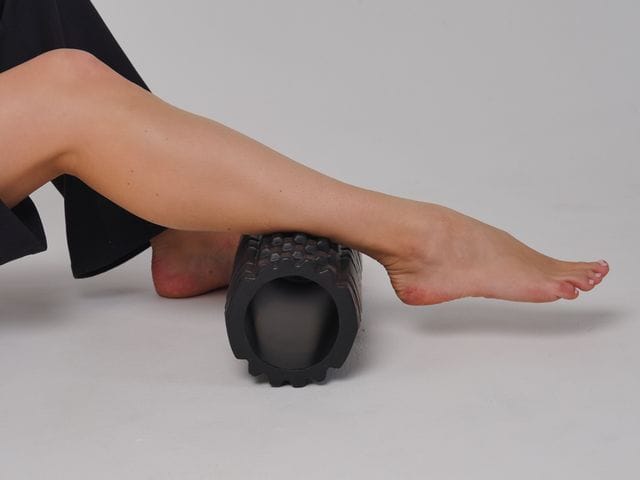
Once appropriate, controlled calf stretching may help restore mobility.
MyHealth Alberta describes both straight-knee and bent-knee calf stretches as part of calf rehabilitation.
Controlled ankle plantar flexion and dorsiflexion can help restore movement while gradually introducing muscular activity.
Heel raises can progressively challenge the calf muscles as strength improves.
However, the exercise should be appropriate for your current stage. If an exercise significantly increases pain, your rehabilitation plan may need to be modified.
Walking may be possible with a mild calf strain, but it depends on the severity of the injury.
If walking causes significant pain, produces a noticeable limp, or you are unable to comfortably put weight through the leg, professional assessment may be appropriate.
Rather than testing the injury repeatedly, gradual progression is generally more useful. As symptoms improve, your physiotherapist can help determine when walking, jogging, and more demanding activities can be reintroduced.
There is no single recovery timeline for every calf injury.
Recovery can depend on:
A mild injury may settle relatively quickly, while a more serious tear can require substantially longer rehabilitation. MyHealth Alberta notes that more serious calf muscle injuries may require physiotherapy or other medical treatment.
Returning to sports should be progressive rather than based solely on whether the calf feels better during everyday walking.
For an athlete, rehabilitation may gradually progress through:
Mission Health’s Sports Injury Rehab in Brooks program uses progressive strengthening, conditioning, agility, plyometrics, and sport-specific drills to help patients work toward returning to their activities.
Yes. Returning to demanding activity before the calf has regained adequate strength and tolerance may leave you vulnerable to another problem.
A rehabilitation program can therefore focus on more than reducing pain. Strength, mobility, balance, running capacity, and sport-specific demands can all be considered before returning to full activity.
For athletes in Brooks, this makes Calf Strain Physiotherapy in Brooks relevant not only for recovery but also for planning a controlled return to training.
Yes. Not every episode of calf pain is caused by a muscle strain.
Calf symptoms can have different causes, including other musculoskeletal problems. Certain symptoms can also require urgent medical assessment.
MyHealth Alberta advises seeking immediate medical care for severe or increasing pain, numbness, tingling, weakness, colour changes, or other concerning symptoms. It also lists calf pain with redness and swelling among symptoms that can occur with a blood clot and require urgent medical attention.
If you are unsure about the cause of your symptoms, professional assessment is preferable to assuming that every calf problem is a muscle strain.
Mission Health Physiotherapy & Sports Rehab provides personalized rehabilitation for sports injuries and acute strains in Brooks.
The clinic’s sports injury program focuses on assessing the injury, restoring strength and range of motion, progressing exercise difficulty, improving movement, and preparing patients for their specific activities.
If calf pain is affecting your activity, you can learn more about Sports Injury Rehab in Brooks or explore Physiotherapy in Brooks to understand the available services.
Yes. Physiotherapy can help with assessment, symptom management, mobility, progressive strengthening, functional rehabilitation, and return-to-sport planning.
Stretching is not necessarily appropriate immediately after every calf injury. The timing and intensity should match the injury and recovery stage.
Some forms of activity may be appropriate during rehabilitation, while painful or high-impact activities may need to be temporarily reduced. Exercise can generally be progressed as symptoms and strength improve.
Severe pain, significant difficulty walking, substantial swelling or bruising, weakness, numbness, or worsening symptoms can indicate that further assessment is needed.
Gradual conditioning, appropriate warm-up, progressive strengthening, adequate recovery, and avoiding sudden increases in training intensity can all support injury prevention. MyHealth Alberta also recommends warming up before intense activity and gradually returning to exercise.
A calf strain can affect walking, exercise, work, and sports, but rehabilitation can help you gradually rebuild strength and movement.
If you are dealing with persistent calf pain or are unsure when it is safe to return to activity, Calf Strain Physiotherapy in Brooks can provide a structured approach to assessment, strengthening, and recovery.
For personalized rehabilitation, visit Mission Health Physiotherapy & Sports Rehab.