
Get Achilles tendon physiotherapy in Brooks with personalized treatment, strengthening, and rehabilitation to improve mobility, tendon function, and recovery.
Pain at the back of the ankle can make walking, climbing stairs, running, or participating in sports difficult. When symptoms involve the Achilles tendon, everyday activities can become uncomfortable and athletic performance may be significantly affected.
The Achilles tendon connects the calf muscles to the heel bone and plays an important role in walking, running, jumping, and pushing off the ground. Problems may develop gradually because of repeated loading or occur suddenly during a high-force movement.
For people experiencing persistent Achilles pain or recovering from an injury, Achilles Tendon Treatment in Brooks can provide a structured approach to restoring movement, strength, tendon capacity, and confidence.
At Mission Health Physiotherapy & Sports Rehab in Brooks, treatment is based on an individualized assessment. Your physiotherapist can consider your symptoms, activity level, injury history, strength, movement, work requirements, and sports goals when developing a rehabilitation plan.
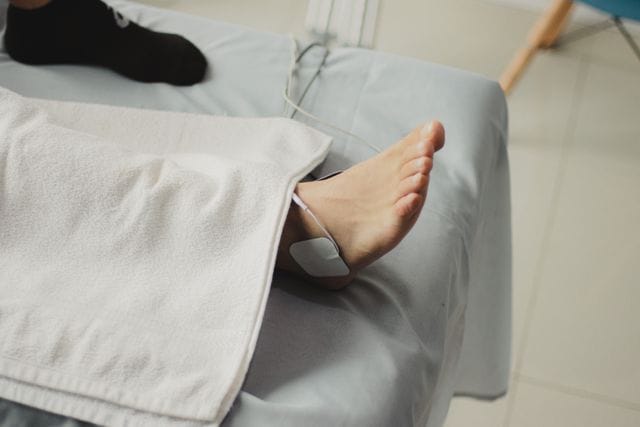
The Achilles tendon is a strong band of connective tissue that connects the calf muscles to the back of the heel.
It transfers force from the calf to the foot, allowing you to push off during walking, running, jumping, and climbing stairs.
Because the tendon handles substantial physical loads, problems can occur when activity demands increase faster than the body’s ability to tolerate them.
Achilles conditions can include tendinopathy, partial tears, and complete ruptures. Treatment depends on the type and severity of the problem.
According to MyHealth Alberta’s Achilles Tendon Injury: Physiotherapy and Rehab guidance, rehabilitation and physiotherapy are commonly used for Achilles tendon injuries and may include stretching, strengthening, and progressive functional exercises.
Achilles pain can develop for several reasons.
Common contributing factors include:
Some people develop symptoms gradually, while others experience an acute injury during sprinting, jumping, or another explosive movement.
For this reason, identifying the cause of your symptoms is important before deciding which treatment approach is appropriate.
Symptoms vary depending on the underlying condition and its severity.
Common signs include:
Some people notice discomfort when they first begin moving, while others experience increasing pain as physical activity continues.
Achilles tendinopathy can also produce stiffness after periods of rest. NHS guidance notes that pain may be particularly noticeable in the morning or when beginning to walk after sitting or resting. NHS Achilles Tendinopathy Information
Persistent or worsening symptoms should be assessed rather than ignored.
Minor Achilles discomfort may sometimes improve after temporarily modifying the activity that aggravated it. However, professional assessment can be useful when symptoms continue or begin affecting normal activities.
Consider Achilles Tendon Treatment in Brooks if:
A physiotherapist can assess your current physical capacity and determine whether rehabilitation is appropriate.
Achilles rehabilitation is generally progressive.
The tendon needs appropriate loading to rebuild capacity, but the amount and type of loading should match your condition and stage of recovery.
Your physiotherapist may evaluate:
This information helps establish an appropriate starting point for rehabilitation.
Load management is an important part of Achilles rehabilitation.
Doing too much too quickly may aggravate symptoms. On the other hand, avoiding all physical activity for an extended period can reduce strength and overall physical capacity.
Instead, rehabilitation can focus on finding an appropriate level of activity and gradually increasing the demands placed on the tendon.
NHS guidance for Achilles tendinopathy also emphasizes relative rest, meaning reducing aggravating activities while maintaining appropriate forms of exercise where possible. NHS Achilles Tendinopathy Guidance
Ankle mobility can influence walking, running, squatting, and other lower-limb movements.
Depending on your condition, your physiotherapist may include controlled mobility exercises as part of your rehabilitation.
However, mobility exercises should be appropriate for your injury and should not be forced through significant pain.
Calf strength is a major component of Achilles rehabilitation.
Depending on your stage of recovery, exercises may include:
As your capacity improves, resistance and exercise difficulty can gradually increase.
MyHealth Alberta includes stretching and strengthening as part of rehabilitation for Achilles tendon injuries. MyHealth Alberta Achilles Tendon Rehabilitation
Achilles tendinopathy involves pain and changes in the tendon associated with loading.
It commonly affects active people, particularly those involved in running and jumping activities, although it can occur across different activity levels.
Treatment generally focuses on progressively improving the tendon’s ability to tolerate physical load.
A rehabilitation program may include:
The objective is not necessarily to avoid every activity that produces discomfort. Instead, rehabilitation can gradually build the physical capacity needed for normal activities.
Running places repetitive loads through the Achilles tendon.
Symptoms may appear after:
Consequently, a runner’s rehabilitation program should consider the actual training schedule.
Your physiotherapist may help determine:
A gradual return to running is generally more useful than simply avoiding the activity indefinitely.
Athletes involved in soccer, basketball, volleyball, tennis, sprinting, and other running or jumping sports place substantial demands on the Achilles tendon.
Returning to sport therefore requires more than being able to walk comfortably.
Later stages of rehabilitation may include:
Mission Health’s Sports Injury Rehab in Brooks program provides personalized rehabilitation and progressive exercise for athletes and active individuals.
A gradual return may involve:
The exact progression depends on the injury, recovery stage, and physical demands of the sport.
An Achilles tendon rupture is different from routine Achilles tendinopathy.
A complete rupture can occur during a sudden forceful movement such as sprinting, jumping, or pushing off. People may describe a sudden sharp pain or a feeling as though they have been struck in the back of the leg.
Difficulty pushing off, walking, or standing on the toes can also occur.
A suspected rupture requires prompt medical assessment.
Cambridge University Hospitals explains that Achilles rupture can occur during sudden calf activity such as running or sprinting and may cause sudden pain, a popping sensation, swelling, and difficulty walking or pushing off. Cambridge University Hospitals: Achilles Tendon Rupture
Treatment can involve either surgical or non-surgical management depending on the individual situation.
Rehabilitation following an Achilles rupture is significantly different from treating mild tendon pain.
Depending on the treatment approach and healing stage, rehabilitation may gradually address:
The progression must follow the instructions of your physician and rehabilitation team.
Cambridge University Hospitals notes that physiotherapy is introduced progressively following Achilles rupture treatment, with later rehabilitation focusing on strength, balance, running, and sport-specific activity. Achilles Tendon Rupture Management and Rehabilitation
It depends on the cause and severity.
Someone with mild Achilles tendinopathy may still be able to walk, although prolonged activity can increase symptoms.
A person with a significant tear or rupture may have substantial difficulty walking or pushing off the affected foot.
Therefore, sudden severe Achilles pain following an explosive movement should not simply be treated as ordinary muscle soreness.
Home management depends on the diagnosis and stage of recovery.
Some general strategies may include:
MyHealth Alberta recommends an appropriate rehabilitation program for Achilles tendon injuries and includes stretching and strengthening as part of recovery.
However, generic exercises are not suitable for every Achilles problem. A complete rupture requires very different management from uncomplicated tendinopathy.
Footwear can influence how the foot and ankle are loaded during activity.
Supportive athletic shoes may be useful during exercise, particularly when returning to activity.
Some people may also benefit from heel lifts or orthotics depending on their individual presentation.
However, footwear should not be considered a complete treatment for persistent Achilles symptoms.
Custom orthotics may be appropriate for some individuals depending on their foot mechanics and overall movement pattern.
Mission Health provides Custom Orthotics in Brooks and assesses factors such as foot mechanics, gait, posture, and alignment when determining whether orthotics may be useful.
For some patients, orthotics can form part of a broader treatment plan alongside exercise, education, and activity modification.
There is no universal recovery timeline.
Recovery depends on whether you are dealing with tendinopathy, a partial tear, a complete rupture, or another condition.
Other factors include:
Less severe tendon problems may improve with progressive rehabilitation, while Achilles ruptures generally require a much longer recovery period.
NHS physiotherapy guidance notes that Achilles tendinopathy can require several months of rehabilitation, with recovery varying between individuals. NHS Achilles Tendinopathy
For this reason, an individualized assessment is more useful than relying on a fixed number of days.
Recurring symptoms are possible, particularly when physical demands increase faster than the tendon can tolerate.
Maintaining appropriate calf strength and gradually progressing activity can help build physical capacity.
For runners and athletes, training volume should also be increased progressively rather than making sudden changes in mileage, intensity, or frequency.
A rehabilitation program can help identify areas that need continued attention after symptoms improve.
Some Achilles injuries require urgent medical evaluation.
Seek medical attention if:
A sudden injury with a popping sensation and difficulty pushing off may indicate an Achilles rupture.
Cambridge University Hospitals advises medical assessment for suspected Achilles rupture, particularly when there is sudden pain, a snapping sensation, swelling, or difficulty walking and pushing off. Achilles Tendon Rupture Information
Achilles rehabilitation should match your current physical capacity and the activities you eventually want to return to.
Mission Health Physiotherapy & Sports Rehab in Brooks provides personalized physiotherapy focused on assessment, exercise, movement, education, and functional rehabilitation.
Treatment may include:
For athletes, Mission Health’s Sports Injury Rehab in Brooks service can help progress rehabilitation toward the physical demands of running, jumping, and sport.
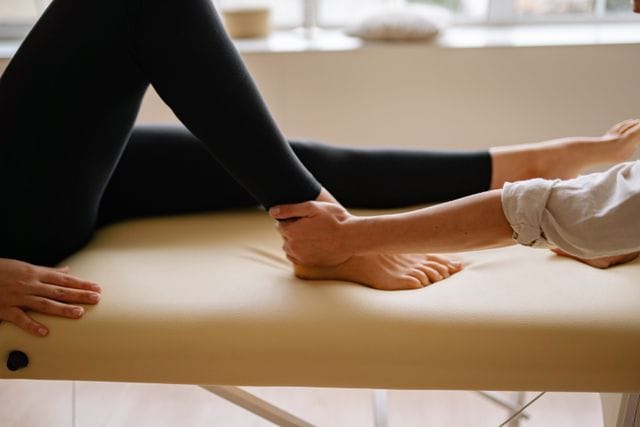
Yes. Physiotherapy is commonly used for Achilles tendon injuries and can include progressive strengthening, stretching, education, activity modification, and rehabilitation.
You can generally contact a physiotherapy clinic directly in Alberta. However, some insurance plans may have their own requirements, so check your coverage before submitting a claim.
That depends on the cause and severity of your symptoms. A physiotherapist can help determine whether running should be modified and how to gradually rebuild your running capacity.
Recovery varies between individuals. Tendon problems can require a gradual loading program, and improvement depends on factors such as symptom duration, activity demands, and rehabilitation consistency.
Yes. Rehabilitation is an important part of recovery following Achilles tendon repair. The program should follow the surgeon’s instructions and progress according to healing.
Some Achilles ruptures can be managed without surgery, while others may be treated surgically. The appropriate option depends on the injury and the individual’s circumstances. This decision should be made with the appropriate medical team.
It can. Maintaining appropriate strength, gradually progressing physical activity, and addressing training or loading factors may help reduce the risk of recurring problems.
Sudden severe pain, a popping sensation, inability to push off, or difficulty walking after an acute injury can indicate a more serious tendon injury and should be medically assessed.
Achilles tendon problems can affect walking, running, work, exercise, and sports. While some mild symptoms may improve with appropriate activity modification, persistent or significant problems can require structured rehabilitation.
Through assessment, progressive strengthening, mobility work, load management, education, and functional rehabilitation, Achilles Tendon Treatment in Brooks can help you work toward restoring movement and physical capacity.
If Achilles pain is limiting your activities or preventing you from returning to running, exercise, work, or sports, consider booking an assessment with Mission Health Physiotherapy & Sports Rehab.
Mission Health Physiotherapy & Sports Rehab
740 Alberta Street W
Brooks, AB T1R 1A9
Phone: (403) 794-0111