
Get wrist pain physiotherapy in Brooks with personalized treatment, exercises, and rehabilitation to improve mobility, strength, and hand function.
Wrist pain can interfere with much more than exercise. Typing, lifting, gripping, driving, cooking, working with tools, playing sports, or even opening a jar can become uncomfortable when the wrist is injured or irritated.
Some problems develop suddenly after a fall, twist, or sports injury. Others appear gradually because of repetitive movements, overuse, tendon problems, or changes in the way the wrist and hand are being used.
For people dealing with persistent or recurring symptoms, Wrist Pain Physiotherapy in Brooks can provide a structured approach to restoring movement, rebuilding strength, improving function, and returning to everyday activities.
At Mission Health Physiotherapy & Sports Rehab in Brooks, treatment is based on an individualized assessment. The physiotherapy team considers your symptoms, injury history, movement, strength, lifestyle, work requirements, and personal goals when developing a rehabilitation plan. Mission Health Physiotherapy in Brooks
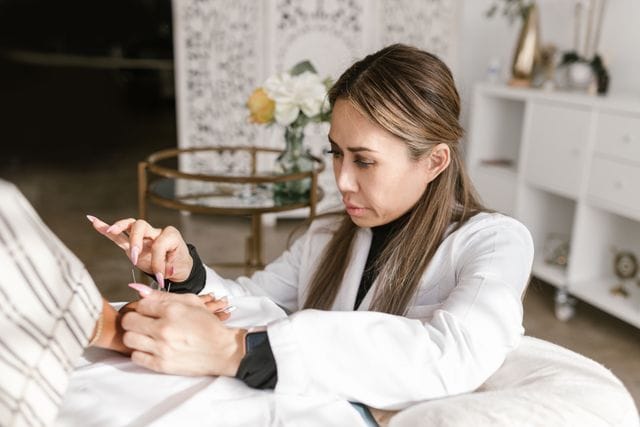
The wrist contains multiple small bones, joints, ligaments, tendons, nerves, and other structures that work together to allow the hand and forearm to move.
Because the wrist is involved in gripping, lifting, pushing, pulling, typing, and many other activities, different problems can cause pain.
Common causes include:
MyHealth Alberta explains that hand and wrist problems can include sprains, strains, tendon injuries, fractures, dislocations, and overuse conditions such as carpal tunnel syndrome and De Quervain’s tenosynovitis. Treatment varies according to the type and severity of the injury. MyHealth Alberta: Finger, Hand and Wrist Injuries
Therefore, persistent wrist symptoms should not automatically be assumed to be a simple strain.
Different wrist conditions can produce different symptoms.
You may experience:
Symptoms may appear only during certain activities. For example, someone who works at a computer may notice discomfort after prolonged typing, while an athlete may experience pain during gripping, pushing, or weight-bearing activities.
Minor symptoms may improve after modifying the activity that caused them. However, professional assessment can be useful when pain continues, movement remains restricted, or the injury is affecting work, sports, or daily activities.
Consider Wrist Pain Physiotherapy in Brooks if:
Physiotherapy may be included in the treatment of certain hand and wrist injuries, depending on the location, severity, and stage of the injury. MyHealth Alberta
Rehabilitation is not simply about reducing pain.
A comprehensive program may also focus on restoring mobility, rebuilding strength, improving grip function, and gradually increasing your ability to tolerate the activities that matter to you.
Your physiotherapist may evaluate:
This assessment helps identify which areas may require rehabilitation.
Pain and swelling can limit wrist movement.
Reduced mobility can make everyday activities such as typing, gripping, lifting, or turning a door handle more difficult.
Depending on your condition, rehabilitation may include controlled mobility exercises to gradually restore comfortable movement.
The type and timing of exercises should depend on the injury. For example, rehabilitation following a fracture should follow appropriate medical guidance rather than a generic wrist exercise program.
Wrist injuries can lead to reduced strength, particularly when activity has been limited.
Progressive strengthening may target:
Resistance can be gradually increased as your wrist becomes more tolerant of physical demand.
MyHealth Alberta provides rehabilitation exercises for certain wrist injuries that include wrist flexion, extension, and side-to-side movements, while emphasizing that exercises should be started according to professional guidance and adjusted if they cause pain. MyHealth Alberta: Wrist Injury Rehabilitation Exercises
Grip strength is important for many daily activities.
Weakness can make it difficult to:
Rehabilitation may gradually reintroduce gripping and resistance exercises according to your injury and stage of recovery.
A wrist sprain occurs when ligaments supporting the wrist are stretched or torn.
Symptoms can include pain, swelling, bruising, and difficulty using the wrist.
According to MyHealth Alberta, wrist sprains commonly take around two to ten weeks to heal, although some injuries take longer depending on severity. MyHealth Alberta: Wrist Sprain Care Instructions
Rehabilitation may focus on restoring movement and strength once the wrist is ready for progressive activity.
The exact program depends on the severity of the sprain and whether additional medical treatment is required.
A fracture requires appropriate medical assessment and management.
Depending on the injury, a wrist may require a cast, splint, or other form of protection before rehabilitation progresses.
Once medically appropriate, physiotherapy may help address problems such as:
MyHealth Alberta’s care instructions for a broken wrist emphasize following medical instructions regarding the cast or splint and completing recommended exercises to maintain strength. MyHealth Alberta: Broken Wrist Care Instructions
Therefore, rehabilitation should be progressed according to the specific fracture and medical recommendations.
Not all wrist problems come from one obvious injury.
Repeated movements can gradually increase stress on the wrist and surrounding tissues.
Activities that may involve repetitive wrist use include:
MyHealth Alberta identifies overuse injuries as conditions that can develop when too much stress is repeatedly placed on a joint or tissue. MyHealth Alberta: Hand, Finger and Wrist Injuries
For this reason, rehabilitation may include both physical treatment and strategies for modifying the activities contributing to symptoms.
Athletes can place significant demands on their wrists.
Gymnastics, hockey, tennis, volleyball, basketball, weight training, cycling, and other sports may require repeated gripping, pushing, pulling, catching, or weight-bearing through the hands.
For an athlete, rehabilitation should eventually reflect those specific demands.
Mission Health’s sports injury rehabilitation program uses individualized treatment plans and progressive exercise based on the athlete’s injury, sport, recovery stage, and goals. Sports Injury Rehab in Brooks
A gradual return may involve:
The progression should depend on your injury and physical readiness rather than a fixed timeline.
Carpal tunnel syndrome involves pressure on the median nerve at the wrist and can cause symptoms such as numbness, tingling, weakness, or pain affecting the hand and fingers.
MyHealth Alberta lists carpal tunnel syndrome among common overuse-related hand and wrist conditions. MyHealth Alberta: Finger, Hand and Wrist Injuries
Because numbness and weakness can have multiple causes, an appropriate assessment is important.
Depending on the presentation, treatment may involve activity modification, education, exercises, or other approaches. Some cases may require additional medical evaluation.
Absolutely.
A wrist problem can become particularly frustrating when your job involves repetitive hand use or physical tasks.
Examples include:
A rehabilitation plan can consider your actual work requirements rather than focusing only on symptoms inside the clinic.
For example, someone with a physically demanding job may eventually need to rebuild the ability to grip, carry, push, and pull safely.
Some wrist conditions require surgical treatment.
Physiotherapy may form part of rehabilitation after surgery, depending on the procedure, medical recommendations, healing stage, and individual progress.
Rehabilitation may address:
Post-surgical rehabilitation should always follow the restrictions and instructions provided by the surgical or medical team.
Recovery depends heavily on the underlying condition.
A mild wrist sprain may improve within several weeks, while a fracture, surgical recovery, nerve-related problem, or persistent overuse condition may require considerably more time.
Recovery can be influenced by:
Consequently, an individualized assessment is more useful than assuming every wrist injury should recover within the same timeframe.
Home management depends on the cause and stage of your injury.
For an acute injury, appropriate protection and swelling management may be important. MyHealth Alberta recommends measures such as cold therapy, elevation, and following medical instructions for certain wrist injuries. MyHealth Alberta
As recovery progresses, appropriate mobility and strengthening exercises may be introduced.
However, avoid randomly adding exercises simply because they are advertised as “wrist pain exercises.” The right exercise depends on what is actually causing your symptoms.
Some wrist problems require medical attention rather than self-management alone.
Seek medical assessment if:
A fracture, significant ligament injury, or nerve problem may require specific medical management.
Physiotherapy can be an important part of rehabilitation, but it should not replace appropriate medical assessment when a serious injury is suspected.
Effective rehabilitation should be based on your specific injury, activities, and goals.
Mission Health Physiotherapy & Sports Rehab in Brooks provides personalized physiotherapy for people recovering from injuries, managing persistent pain, and working toward improved physical function. Physiotherapy in Brooks
Treatment may include:
For active individuals, the clinic’s sports injury rehabilitation program can also incorporate progressive exercises and sport-specific conditioning designed around the demands of the individual’s activity. Sports Injury Rehab in Brooks
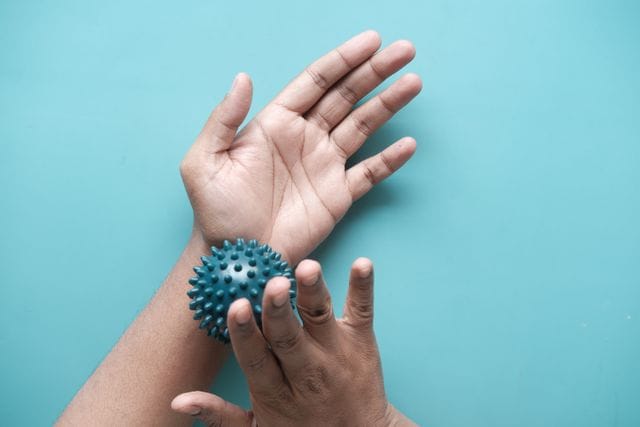
Physiotherapy may help with many musculoskeletal wrist problems by addressing mobility, strength, function, and activity tolerance. The appropriate treatment depends on the cause of the pain.
You can generally contact a physiotherapy clinic directly in Alberta. However, individual insurance plans may have their own requirements, so check your coverage if you plan to claim treatment through benefits.
Yes. Once the injury is appropriate for rehabilitation, physiotherapy may help restore movement, strength, grip function, and confidence with activity.
It depends on the underlying problem. Some activities may need to be temporarily modified, while appropriate exercises can be gradually introduced as part of rehabilitation.
MyHealth Alberta states that wrist sprains commonly take about two to ten weeks to heal, although recovery can take longer in some cases. (MyHealth Alberta)
Yes. Rehabilitation can progressively rebuild strength, grip function, movement, and sport-specific capacity before returning to full participation.
Yes. Previous injuries may leave stiffness, weakness, reduced mobility, or altered movement. An assessment can help determine whether these factors are contributing to your current symptoms.
Significant trauma, deformity, severe pain, substantial swelling, inability to use the hand, major numbness, or suspected fracture should be medically assessed.
Wrist pain can affect work, exercise, sports, and simple everyday tasks. While some minor problems improve with time and appropriate activity modification, persistent symptoms may require a more structured rehabilitation approach.
Through assessment, progressive exercise, mobility work, strengthening, education, and functional rehabilitation, Wrist Pain Physiotherapy in Brooks can help you work toward better movement and hand function.
If wrist pain is affecting your daily activities or preventing you from returning to work, exercise, or sports, consider booking an assessment with Mission Health Physiotherapy & Sports Rehab.
Mission Health Physiotherapy & Sports Rehab
740 Alberta Street W
Brooks, AB T1R 1A9
Phone: (403) 794-0111