
Learn how shoulder pain physiotherapy in Brooks may improve movement, strength and recovery in this complete 2026 guide.
Shoulder pain can make simple activities surprisingly difficult. Reaching overhead, lifting objects, getting dressed, exercising, working, or even sleeping comfortably may become challenging when the shoulder is painful or stiff.
For people dealing with persistent discomfort or reduced movement, Shoulder Pain Physiotherapy in Brooks may provide a structured approach to assessment, rehabilitation, and improving everyday function.
Shoulder problems can develop after an injury, gradually over time, or without one obvious event. Sports activities, repetitive movements, falls, work demands, and changes in physical activity can all play a role.
However, not every painful shoulder has the same cause. Therefore, an appropriate assessment is important before assuming that one exercise, treatment technique, or online diagnosis will solve the problem.
This complete 2026 guide explains common causes of shoulder pain, how physiotherapy may help, what rehabilitation can involve, and when shoulder symptoms require medical attention.

The shoulder is designed to allow a wide range of movement. As a result, several muscles, tendons, joints, and other structures work together to help you lift, reach, rotate, and carry.
Pain can affect different areas, including:
Some people experience a dull ache, while others notice sharp pain, weakness, stiffness, or difficulty moving the arm.
In addition, shoulder discomfort may interfere with everyday activities such as:
The right treatment depends on the specific problem and the person’s functional goals. For this reason, Shoulder Pain Physiotherapy in Brooks should begin with an individualized assessment.
Shoulder pain can have many possible causes.
Common contributing factors may include:
Sometimes symptoms appear immediately after an injury. In other cases, discomfort develops gradually.
For example, a person may experience shoulder pain after increasing gym training too quickly. Similarly, repetitive overhead movements at work may gradually become difficult.
According to Alberta Health information, rotator cuff problems can develop through overuse, wear over time, or injury, and symptoms may include pain, weakness, difficulty reaching, and sleep disturbance.
Shoulder symptoms can vary considerably.
Common signs may include:
Some people may also notice clicking or popping.
However, sounds alone do not always indicate a serious problem. What matters more is whether symptoms include significant pain, weakness, loss of function, or other concerning changes.
Not every episode of shoulder discomfort requires immediate treatment.
However, a physiotherapy assessment may be helpful when symptoms:
Early assessment may help identify movement limitations, strength deficits, or activity-related factors that could be relevant to recovery.
Mission Health Physiotherapy & Sports Rehab provides individualized physiotherapy assessments in Brooks, with treatment plans designed around a person’s symptoms, activity level, and goals.
Shoulder Pain Physiotherapy in Brooks may involve a combination of assessment, education, exercise, strengthening, and other treatment approaches when appropriate.
Depending on your individual situation, rehabilitation may include:
The goal should not simply be to reduce pain for a few days.
Instead, a strong rehabilitation plan should focus on helping you regain the physical capacity required for everyday activities.
A physiotherapist will typically begin by learning more about your symptoms and medical history.
Questions may include:
The physical assessment may then consider:
This information helps create a more personalized rehabilitation plan.
For instance, someone who wants to return to swimming may require a different rehabilitation strategy from someone whose primary goal is lifting equipment at work.
The rotator cuff is a group of muscles and tendons that helps support and stabilize the shoulder.
Rotator cuff problems may involve:
These problems can develop following an injury or gradually through repetitive use and age-related changes.
Physiotherapy and exercise are commonly used as part of non-surgical management for many rotator cuff conditions. Rehabilitation can focus on improving movement, shoulder strength, and overall function.
The correct approach, however, depends on the specific injury and its severity.
Frozen shoulder can cause pain, stiffness, and difficulty moving the shoulder.
People may notice that activities such as reaching overhead, getting dressed, or reaching behind the body become increasingly difficult.
Physiotherapy may play a role in helping improve movement and function. Recovery can take time, and frozen shoulder may take a year or longer to improve in some cases.
A gradual rehabilitation approach may involve:
The objective is to support recovery without forcing the shoulder beyond what is appropriate for the individual’s condition.
Sports and gym activities can place significant demands on the shoulder.
Common activities involving repetitive or overhead movement include:
Pain can sometimes develop when training volume or intensity increases faster than the body can adapt.
For example, increasing the number of overhead presses, pull-ups, or throwing sessions within a short period may place greater demands on the shoulder.
Therefore, rehabilitation may involve more than simply resting until the pain decreases.
A structured program can gradually address:
Mission Health offers sports injury rehabilitation in Brooks for athletes and active individuals working toward recovery and a return to activity.
Shoulder problems can also affect people whose work involves physical activity.
Examples may include:
Complete avoidance of activity is not always realistic.
Instead, rehabilitation may focus on gradually preparing the shoulder for the actual demands of the job.
For example, someone who regularly lifts objects at work may eventually progress toward controlled lifting exercises.
Meanwhile, a worker who performs repetitive overhead movements may need rehabilitation that improves strength and tolerance for those specific activities.
Exercise is often a key part of shoulder rehabilitation.
Depending on the condition, a physiotherapy program may include exercises designed to improve:
Exercise programs should be individualized.
The right program for someone recovering from surgery may be very different from the program used for an athlete with a gradual onset shoulder problem.
Alberta Health guidance notes that shoulder rehabilitation programs can include exercises to improve range of motion, strength, function, and stability.
Strengthening is often important because the shoulder must tolerate real-life demands.
Those demands may include:
The purpose of strengthening is not necessarily to make every person an elite athlete.
Instead, the goal is to build enough physical capacity for the activities that matter to you.
A gradual progression is generally more practical than suddenly returning to heavy training.
For example, a person recovering from shoulder pain may begin with basic exercises before progressing toward more demanding movements.
Later stages can include activities that more closely reflect work, gym training, or sport.
Manual therapy may sometimes be included as part of a physiotherapy treatment plan.
Depending on the assessment, treatment may involve hands-on techniques intended to address symptoms or movement restrictions.
However, manual therapy should usually be considered one component of a broader rehabilitation strategy.
A comprehensive approach may also include:
Temporary symptom relief can be useful. Nevertheless, improving long-term function often requires developing the strength and capacity needed for everyday activities.
Dry needling may be considered for selected muscular conditions when a qualified physiotherapist determines that it is appropriate.
At Mission Health, dry needling is one of the available treatment options for certain musculoskeletal concerns.
However, it is not automatically necessary for every person with shoulder pain.
If the problem involves reduced strength, limited movement, or poor tolerance to activity, rehabilitation may also need to address those factors.
The treatment plan should be based on what the person actually needs.
Using every available treatment method simply because it exists would not make the treatment plan better. It would just make it busier.
For some chronic musculoskeletal conditions, shockwave therapy may be considered as part of a broader treatment approach.
Mission Health offers shockwave therapy in Brooks for certain chronic musculoskeletal concerns. The clinic describes it as a non-invasive treatment option intended to support tissue healing and function in appropriate cases.
Suitability depends on the individual’s condition and assessment.
Therefore, shockwave therapy should not be viewed as a universal solution for every type of shoulder pain.
Shoulder discomfort can make sleeping difficult.
Some people experience increased symptoms when lying on the affected side. Others may wake because of discomfort when changing position.
Rotator cuff problems, for example, may be associated with shoulder pain during the night and difficulty sleeping.
If shoulder pain consistently disrupts your sleep, affects daily function, or continues to worsen, seeking appropriate professional assessment may be helpful.
Recovery time varies significantly.
Factors that may affect progress include:
Some people improve relatively quickly.
Others may require a longer rehabilitation process.
Recovery should be measured by more than the number of treatment sessions. Instead, meaningful progress may include improvements in movement, strength, confidence, and the ability to perform important activities.
Returning to exercise should usually involve a gradual progression.
The goal is not simply to test whether the shoulder hurts.
Instead, rehabilitation should consider whether the shoulder can tolerate:
A person may be able to lift a light weight comfortably but still struggle with repeated or heavier movements.
Similarly, being pain-free during one exercise does not necessarily mean the shoulder is ready for a complete return to a demanding training routine.
Gradually increasing the challenge allows you to monitor how the shoulder responds while rebuilding capacity.
There is no guaranteed method for preventing every shoulder problem.
However, several strategies may help improve physical resilience:
The aim should not be to avoid all potentially uncomfortable movement.
Instead, the focus should be on developing enough capacity to handle the movements your daily life requires.
Some shoulder symptoms require more than routine rehabilitation.
Seek appropriate medical assessment if you experience:
Alberta Health guidance advises medical assessment for severe shoulder symptoms, inability to move the shoulder or arm, and concerning neurological or circulation-related changes.
If you are unsure about the seriousness of your symptoms, it is better to seek appropriate medical advice.
Shoulder Pain Physiotherapy in Brooks can provide an individualized approach to improving movement, strength, and functional capacity.
Mission Health Physiotherapy & Sports Rehab in Brooks offers physiotherapy services and sports rehabilitation for people dealing with pain, injuries, and movement-related limitations.
Depending on the assessment, a treatment plan may include:
The objective should remain practical.
Whether your goal is returning to work, lifting at the gym, playing sports, sleeping more comfortably, or performing daily activities with less restriction, your rehabilitation should be connected to that goal.
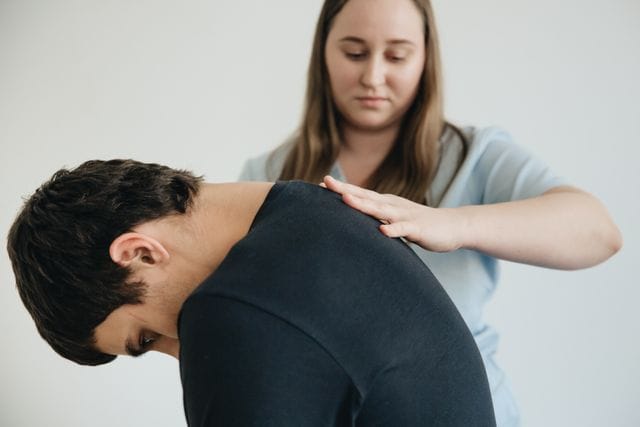
Physiotherapy may help many people with musculoskeletal shoulder problems by addressing movement, strength, physical capacity, and functional limitations.
The number of sessions varies depending on your symptoms, diagnosis, goals, and response to treatment.
In many cases, some form of modified exercise may be appropriate. However, the correct level of activity depends on the specific condition.
Physiotherapy may be part of the treatment approach for many rotator cuff conditions and can focus on improving movement, strength, stability, and function.
Physiotherapy may help improve movement and function as part of the management of frozen shoulder. Recovery can take time and should be guided by the individual’s condition.
Several shoulder conditions can contribute to nighttime pain. Rotator cuff problems, for example, may be associated with sleep disturbance.
Yes, many rehabilitation programs include a gradual return to exercise. The progression should depend on your recovery and the demands of your training.
Not always. Many shoulder conditions can be managed without surgery, although the appropriate treatment depends on the specific diagnosis and severity.
Shoulder pain can affect work, exercise, sleep, sports, and everyday activities.
However, recovery should involve more than simply waiting for symptoms to disappear.
Shoulder Pain Physiotherapy in Brooks may help you work toward improved movement, strength, and functional capacity through an individualized rehabilitation approach.
A good rehabilitation plan should focus on what you need to do in real life.
That could mean lifting at work, reaching overhead, returning to the gym, playing sports, or simply getting through daily activities more comfortably.
If shoulder pain is persistent, recurring, or limiting your ability to stay active, consider seeking a professional assessment to determine the most appropriate next steps.